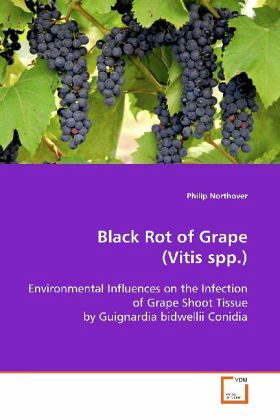
Black Rot of Grape (Vitis spp.)
Environmental Influences on the Infection of Grape Shoot Tissue by Guignardia bidwellii Conidia
Versandkostenfrei!
Versandfertig in 6-10 Tagen
52,99 €
inkl. MwSt.

PAYBACK Punkte
26 °P sammeln!

Black rot of grape, (caused by the fungus Guignardiabidwellii) is a serious disease that has impacted grape production around the world. Black rot outbreaks are significantly influenced by environment, the growth status and genetic background of the grapevine. Understanding the influence of these factors could enhance existing management practices through the capability to predict black rot development. Temperature and moisture during the infection process, and relative humidity conditions after infection are the subject of investigations into the environmental influences of black rot developm...
Black rot of grape, (caused by the fungus Guignardia
bidwellii) is a serious disease that has impacted
grape production around the world. Black rot
outbreaks are significantly influenced by
environment, the growth status and genetic
background of the grapevine. Understanding the
influence of these factors could enhance existing
management practices through the capability to
predict black rot development. Temperature and
moisture during the infection process, and relative
humidity conditions after infection are the subject
of investigations into the environmental influences
of black rot development on shoot tissue.
Cultivar background and conidiospore concentration
also influence symptom severity and fungal
development, and are explored. Additional features
include photographs of symptoms, use of an
inoculation technique that could be applied
to work with other diseases, and studies conducted
on the temperature and wetness influence on the
latent period of shoot symptoms. This book would be
useful to researchers and students working with
black rot, searching for a review of past work and
recent investigations related to grape black rot.
bidwellii) is a serious disease that has impacted
grape production around the world. Black rot
outbreaks are significantly influenced by
environment, the growth status and genetic
background of the grapevine. Understanding the
influence of these factors could enhance existing
management practices through the capability to
predict black rot development. Temperature and
moisture during the infection process, and relative
humidity conditions after infection are the subject
of investigations into the environmental influences
of black rot development on shoot tissue.
Cultivar background and conidiospore concentration
also influence symptom severity and fungal
development, and are explored. Additional features
include photographs of symptoms, use of an
inoculation technique that could be applied
to work with other diseases, and studies conducted
on the temperature and wetness influence on the
latent period of shoot symptoms. This book would be
useful to researchers and students working with
black rot, searching for a review of past work and
recent investigations related to grape black rot.
Andere Kunden interessierten sich für