KI-Beratung Beta

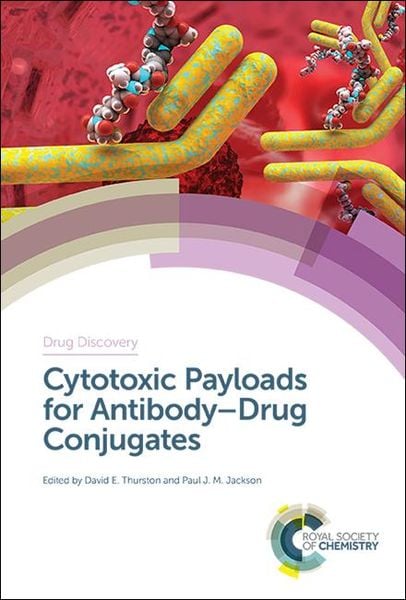
Produktbild: Cytotoxic Payloads for AntibodyDrug Conjugates

Cytotoxic Payloads for AntibodyDrug Conjugates

Aus der Reihe ISSN

260,99 €

inkl. gesetzl. MwSt.

Beschreibung

Antibody-drug conjugates (ADCs) represent one of the most promising and exciting areas of anticancer drug discovery. Five ADCs are now approved in the US and EU [i.e., ado-trastuzumab emtansine (Kadcyla(TM)), brentuximab vedotin (Adcetris(TM)), inotuzumab ozogamicin (Besponsa(TM)), gemtuzumab ozogamicin...

Beschreibung

Antibody-drug conjugates (ADCs) represent one of the most promising and exciting areas of anticancer drug discovery. Five ADCs are now approved in the US and EU [i.e., ado-trastuzumab emtansine (Kadcyla(TM)), brentuximab vedotin (Adcetris(TM)), inotuzumab ozogamicin (Besponsa(TM)), gemtuzumab ozogamicin (Mylotarg(TM)) and moxetumomab pasudotox-tdfk (Lumoxiti®)] and over 70 others are in various stages of clinical development, with impressive interim results being reported for many.

The technology is based on the concept of delivering a cytotoxic payload selectively to cancer cells by attaching it to an antibody targeted to antigens on the cell surfaces. This approach has several advantages including the ability to select patients as likely responders based on the presence of antigen on the surface of their cancer cells and a wider therapeutic index, given that ADC targeting enables a more efficient delivery of cytotoxic agents to cancer cells than can be achieved by conventional chemotherapy, thus minimising systemic toxicity.

Although there are many examples of antibodies that have been developed for this purpose, along with numerous linker technologies used to attach the cytotoxic agent to the antibody, there is presently a relatively small number of payload molecules in clinical use. The purpose of this book is to describe the variety of payloads used to date, along with a discussion of their advantages and disadvantages and to provide information on novel payloads at the research stage that may be used clinically in the future.

Produktdetails

Format

PDF

Kopierschutz

Ja

Family Sharing

Nein

Text-to-Speech

Nein

Produktdetails

Format

PDF

Format

eBooks im PDF-Format haben eine festgelegte Seitengröße und eignen sich daher nur bedingt zum Lesen auf einem tolino eReader oder Smartphone. Für den vollen Lesegenuss empfehlen wir Ihnen bei PDF-eBooks die Verwendung eines Tablets oder Computers.

Kopierschutz

Ja

Kopierschutz

Zum Lesen dieses eBooks auf eReadern außerhalb der tolino Familie sowie am PC benötigen Sie eine Adobe ID. Weitere Hinweise zum Lesen von kopiergeschützten eBooks finden Sie unter Hilfe/Downloads.

Family Sharing

Nein

Family Sharing

Mit Family Sharing können Sie eBooks innerhalb Ihrer Familie (max. sechs Mitglieder im gleichen Haushalt) teilen. Sie entscheiden selbst, welches Buch Sie mit welchem Familienmitglied teilen möchten. Auch das parallele Lesen durch verschiedene Familienmitglieder ist durch Family Sharing möglich. Um eBooks zu teilen oder geteilt zu bekommen, muss jedes Familienmitglied ein Konto bei Thalia oder einem anderen tolino-Buchhändler haben. Weitere Informationen finden Sie unter Hilfe/Family-Sharing.

Text-to-Speech

Nein

Text-to-Speech

Bedeutet Ihnen Stimme mehr als Text? Mit der Funktion Text-to-Speech können Sie sich im tolino webReader und in der aktuellen Thalia – Lesen & Hören App das eBook vorlesen lassen. Weitere Informationen finden Sie unter Hilfe/Text-to-Speech.

Erscheinungsdatum

11.07.2019

Herausgeber
Verlag Royal Society of Chemistry
Seitenzahl

480 (Printausgabe)

Dateigröße

43129 KB

Auflage

1. Auflage

Sprache

Englisch

EAN

9781788012898

Barrierefreiheit
  • keine Information zur Barrierefreiheit bekannt

Noch keine Bewertungen vorhanden

Verfassen Sie die erste Bewertung zu diesem Artikel

Helfen Sie anderen Kundinnen und Kunden durch Ihre Meinung.

Kundinnen und Kunden meinen

Bewertungen (0)

Weitere Artikel findest du in

Die Leseprobe wird geladen.
  • Produktbild: Cytotoxic Payloads for AntibodyDrug Conjugates