KI-Beratung Beta

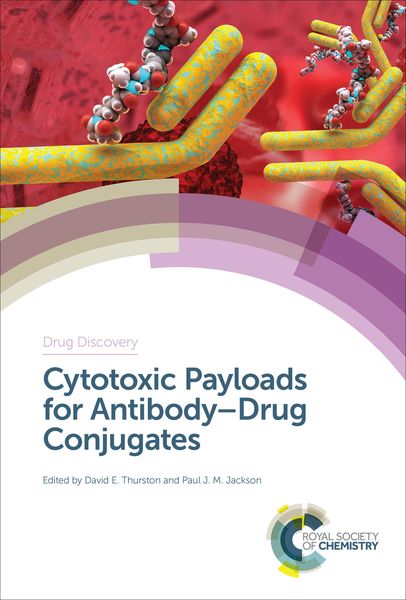
Produktbild: Cytotoxic Payloads for Antibody-Drug Conjugates

Cytotoxic Payloads for Antibody-Drug Conjugates

260,99 €

inkl. gesetzl. MwSt.

Beschreibung

Antibody-drug conjugates (ADCs) represent one of the most promising and exciting areas of anticancer drug discovery. Five ADCs are now approved in the US and EU [i.e., ado-trastuzumab emtansine (Kadcyla(TM)), brentuximab vedotin (Adcetris(TM)), inotuzumab ozogamicin (Besponsa(TM)), gemtuzumab ozogamicin...

Beschreibung

Antibody-drug conjugates (ADCs) represent one of the most promising and exciting areas of anticancer drug discovery. Five ADCs are now approved in the US and EU [i.e., ado-trastuzumab emtansine (Kadcyla(TM)), brentuximab vedotin (Adcetris(TM)), inotuzumab ozogamicin (Besponsa(TM)), gemtuzumab ozogamicin (Mylotarg(TM)) and moxetumomab pasudotox-tdfk (Lumoxiti®)] and over 70 others are in various stages of clinical development, with impressive interim results being reported for many.

The technology is based on the concept of delivering a cytotoxic payload selectively to cancer cells by attaching it to an antibody targeted to antigens on the cell surfaces. This approach has several advantages including the ability to select patients as likely responders based on the presence of antigen on the surface of their cancer cells and a wider therapeutic index, given that ADC targeting enables a more efficient delivery of cytotoxic agents to cancer cells than can be achieved by conventional chemotherapy, thus minimising systemic toxicity.

Although there are many examples of antibodies that have been developed for this purpose, along with numerous linker technologies used to attach the cytotoxic agent to the antibody, there is presently a relatively small number of payload molecules in clinical use. The purpose of this book is to describe the variety of payloads used to date, along with a discussion of their advantages and disadvantages and to provide information on novel payloads at the research stage that may be used clinically in the future.

Produktdetails

Format

ePUB

Kopierschutz

Nein

Family Sharing

Nein

Text-to-Speech

Ja

Produktdetails

Format

ePUB

Format

eBooks im ePUB-Format erlauben eine dynamische Anpassung des Inhalts an die jeweilige Display-Größe des Lesegeräts. Das Format eignet sich daher besonders für das Lesen auf mobilen Geräten, wie z.B. Ihrem tolino, Tablets oder Smartphones.

Kopierschutz

Nein

Kopierschutz

Dieses eBook können Sie uneingeschränkt auf allen Geräten der tolino Familie, allen sonstigen eReadern und am PC lesen. Das eBook ist nicht kopiergeschützt und kann ein personalisiertes Wasserzeichen enthalten. Weitere Hinweise zum Lesen von eBooks mit einem personalisierten Wasserzeichen finden Sie unter Hilfe/Downloads.

Family Sharing

Nein

Family Sharing

Mit Family Sharing können Sie eBooks innerhalb Ihrer Familie (max. sechs Mitglieder im gleichen Haushalt) teilen. Sie entscheiden selbst, welches Buch Sie mit welchem Familienmitglied teilen möchten. Auch das parallele Lesen durch verschiedene Familienmitglieder ist durch Family Sharing möglich. Um eBooks zu teilen oder geteilt zu bekommen, muss jedes Familienmitglied ein Konto bei Thalia oder einem anderen tolino-Buchhändler haben. Weitere Informationen finden Sie unter Hilfe/Family-Sharing.

Text-to-Speech

Ja

Text-to-Speech

Bedeutet Ihnen Stimme mehr als Text? Mit der Funktion Text-to-Speech können Sie sich im tolino webReader und in der aktuellen Thalia – Lesen & Hören App das eBook vorlesen lassen. Weitere Informationen finden Sie unter Hilfe/Text-to-Speech.

Erscheinungsdatum

11.07.2019

Herausgeber
Verlag RSC
Seitenzahl

480 (Printausgabe)

Auflage

1. Auflage

Sprache

Englisch

EAN

9781788018456

Barrierefreiheit
  • keine Information zur Barrierefreiheit bekannt

Noch keine Bewertungen vorhanden

Verfassen Sie die erste Bewertung zu diesem Artikel

Helfen Sie anderen Kundinnen und Kunden durch Ihre Meinung.

Kundinnen und Kunden meinen

Bewertungen (0)

Weitere Artikel findest du in

Die Leseprobe wird geladen.
  • Produktbild: Cytotoxic Payloads for Antibody-Drug Conjugates