KI-Beratung Beta

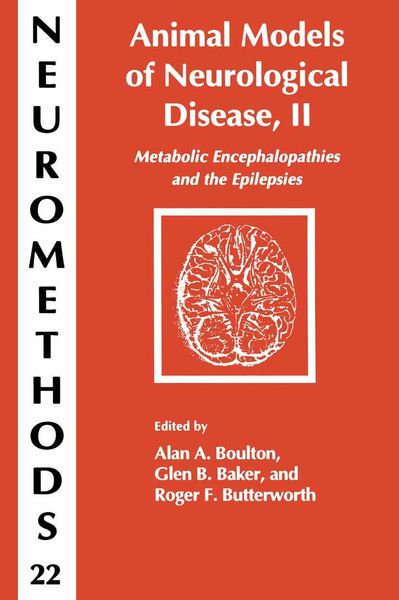
Produktbild: Animal Models of Neurological Disease, II
Band 22

Animal Models of Neurological Disease, II Metabolic Encephalopathies and Epilepsies

Aus der Reihe Neuromethods

149,79 €

inkl. gesetzl. MwSt.

Beschreibung

to the Animal Models Volumes This and several other volumes in the Neuromethods series will describe a number of animal models of neuropsychiatric disorders. Because of increasing public concern over the ethical treatment of animals in research, we felt it incumbent upon us to include this general preface...

Beschreibung

to the Animal Models Volumes This and several other volumes in the Neuromethods series will describe a number of animal models of neuropsychiatric disorders. Because of increasing public concern over the ethical treatment of animals in research, we felt it incumbent upon us to include this general preface to these volumes in order to indicate why we think further - search using animals is necessary and why animal models of psychiatric disorders, in particular, are so important. We recognize that animals should only be used when suitable alternatives are not available. We think it self-e- dent, however, that humans can only be experimented upon in severely proscribed circumstances and alternative pro- dures using cell or tissue culture are inadequate in any models requiring assessments of behavioral change or of complex in vivo processes. However, when the distress, discomfort, or pain to the animals outweighs the anticipated gains for human welfare, then the research is not ethical and should not be carried out. It is imperative that each individual researcher examine his/her own research from a critical moral standpoint - fore engaging in it, taking into consideration the animals' welfare as well as the anticipated gains. Furthermore, once a decision to proceed with research is made, it is the researcher's responsibility to ensure that the animals' w- fare is of prime concern in terms of appropriate housing, feeding, and maximum reduction of any uncomfortable or distressing effects of the experimental conditions, and that these conditions undergo frequent formalized monitoring.

Produktdetails

Format

PDF

Kopierschutz

Nein

Family Sharing

Nein

Text-to-Speech

Nein

Produktdetails

Format

PDF

Format

eBooks im PDF-Format haben eine festgelegte Seitengröße und eignen sich daher nur bedingt zum Lesen auf einem tolino eReader oder Smartphone. Für den vollen Lesegenuss empfehlen wir Ihnen bei PDF-eBooks die Verwendung eines Tablets oder Computers.

Kopierschutz

Nein

Kopierschutz

Dieses eBook können Sie uneingeschränkt auf allen Geräten der tolino Familie, allen sonstigen eReadern und am PC lesen. Das eBook ist nicht kopiergeschützt und kann ein personalisiertes Wasserzeichen enthalten. Weitere Hinweise zum Lesen von eBooks mit einem personalisierten Wasserzeichen finden Sie unter Hilfe/Downloads.

Family Sharing

Nein

Family Sharing

Mit Family Sharing können Sie eBooks innerhalb Ihrer Familie (max. sechs Mitglieder im gleichen Haushalt) teilen. Sie entscheiden selbst, welches Buch Sie mit welchem Familienmitglied teilen möchten. Auch das parallele Lesen durch verschiedene Familienmitglieder ist durch Family Sharing möglich. Um eBooks zu teilen oder geteilt zu bekommen, muss jedes Familienmitglied ein Konto bei Thalia oder einem anderen tolino-Buchhändler haben. Weitere Informationen finden Sie unter Hilfe/Family-Sharing.

Text-to-Speech

Nein

Text-to-Speech

Bedeutet Ihnen Stimme mehr als Text? Mit der Funktion Text-to-Speech können Sie sich im tolino webReader und in der aktuellen Thalia – Lesen & Hören App das eBook vorlesen lassen. Weitere Informationen finden Sie unter Hilfe/Text-to-Speech.

Erscheinungsdatum

06.02.2008

Herausgeber
Verlag Humana Press
Seitenzahl

373 (Printausgabe)

Dateigröße

48728 KB

Sprache

Englisch

EAN

9781592596270

Barrierefreiheit
  • keine Information zur Barrierefreiheit bekannt

Noch keine Bewertungen vorhanden

Verfassen Sie die erste Bewertung zu diesem Artikel

Helfen Sie anderen Kundinnen und Kunden durch Ihre Meinung.

Kundinnen und Kunden meinen

Bewertungen (0)

Weitere Artikel findest du in

  • Produktbild: Animal Models of Neurological Disease, II