KI-Beratung Beta

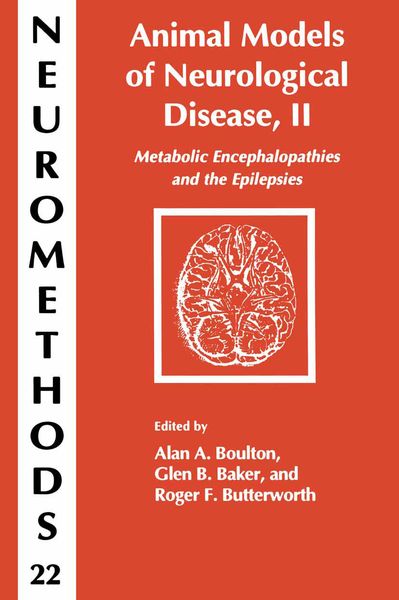
Produktbild: Animal Models of Neurological Disease, II
Band 22

Animal Models of Neurological Disease, II Metabolic Encephalopathies and Epilepsies

Aus der Reihe Neuromethods

146,99 €

inkl. gesetzl. MwSt., Versandkostenfrei


Beschreibung

to the Animal Models Volumes This and several other volumes in the Neuromethods series will describe a number of animal models of neuropsychiatric disorders. Because of increasing public concern over the ethical treatment of animals in research, we felt it incumbent upon us to include this general preface...

Beschreibung

to the Animal Models Volumes This and several other volumes in the Neuromethods series will describe a number of animal models of neuropsychiatric disorders. Because of increasing public concern over the ethical treatment of animals in research, we felt it incumbent upon us to include this general preface to these volumes in order to indicate why we think further - search using animals is necessary and why animal models of psychiatric disorders, in particular, are so important. We recognize that animals should only be used when suitable alternatives are not available. We think it self-e- dent, however, that humans can only be experimented upon in severely proscribed circumstances and alternative pro- dures using cell or tissue culture are inadequate in any models requiring assessments of behavioral change or of complex in vivo processes. However, when the distress, discomfort, or pain to the animals outweighs the anticipated gains for human welfare, then the research is not ethical and should not be carried out. It is imperative that each individual researcher examine his/her own research from a critical moral standpoint - fore engaging in it, taking into consideration the animals’ welfare as well as the anticipated gains. Furthermore, once a decision to proceed with research is made, it is the researcher’s responsibility to ensure that the animals’ w- fare is of prime concern in terms of appropriate housing, feeding, and maximum reduction of any uncomfortable or distressing effects of the experimental conditions, and that these conditions undergo frequent formalized monitoring.

Rezension

These books go out of their way to be helpful. Most chapters introduce the animal models against the background of the human (i.e., clinical) context and conclude with a brief summary. Detailed experimental protocols and useful tabulations abound. Descriptions are exhaustive.-Trends in Neurosciences

Produktdetails

Einband

Taschenbuch

Erscheinungsdatum

11.08.2013

Abbildungen

XVIII, 373 p.

Herausgeber Alan A. Boulton + weitere

Produktdetails

Einband

Taschenbuch

Erscheinungsdatum

11.08.2013

Abbildungen

XVIII, 373 p.

Herausgeber
Verlag Humana Press
Seitenzahl

373

Maße (L/B/H)

22,9/15,2/2,2 cm

Gewicht

566 g

Auflage

Softcover reprint of the original 1st edition 1992

Sprache

Englisch

ISBN

978-1-4899-4389-7

Herstelleradresse


Noch keine Bewertungen vorhanden

Verfassen Sie die erste Bewertung zu diesem Artikel

Helfen Sie anderen Kundinnen und Kunden durch Ihre Meinung.

Kundinnen und Kunden meinen

Bewertungen (0)

  • Produktbild: Animal Models of Neurological Disease, II
  • Experimental Models of Human Stroke.- Animal Models of Brain Hypoxia.- Animal Models of the Wernicke-Korsakoff Syndrome.- Chemically Induced Models of Seizures.- The Kindling Model of Epilepsy.- Genetically Based Animal Models of Seizures.- Animal Models of Hepatic Encephalopathies.- Animal Models for Reye’s Syndrome.- Animal Models of Niacin-Nicotinamide Deficiency.- Pyridoxine Deficiency.- Animal Models of Hereditary Hyperammonemias.