• Produktbild: Oxford Handbook of Cuneiform Culture
  • Produktbild: Oxford Handbook of Cuneiform Culture

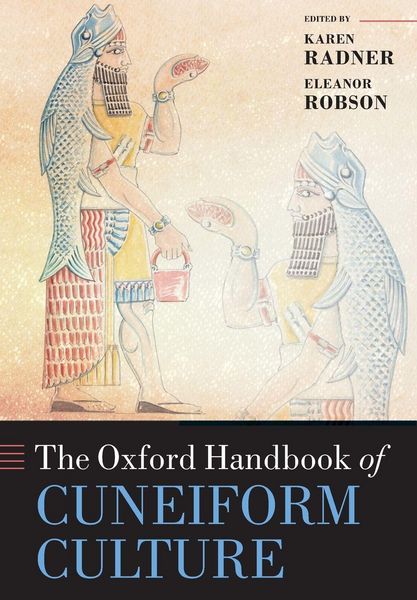
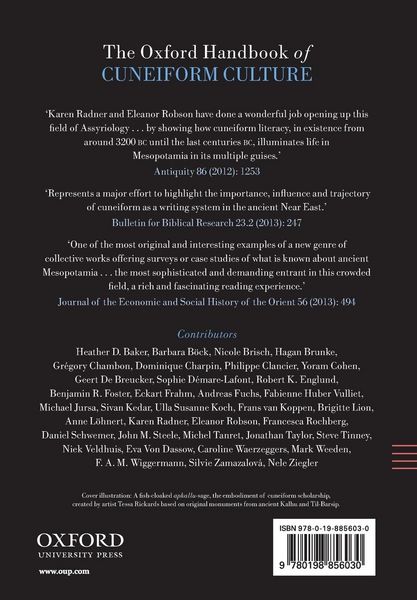
Oxford Handbook of Cuneiform Culture

72,99 €

inkl. gesetzl. MwSt., Versandkostenfrei

Lieferung nach Hause

Beschreibung

Produktdetails

Einband

Taschenbuch

Erscheinungsdatum

25.03.2020

Herausgeber

Radner Karen + weitere

Verlag

Oxford University Press

Seitenzahl

838

Maße (L/B/H)

24,4/17/4,5 cm

Gewicht

1588 g

Sprache

Englisch

ISBN

978-0-19-885603-0

Beschreibung

Produktdetails

Einband

Taschenbuch

Erscheinungsdatum

25.03.2020

Herausgeber

Verlag

Oxford University Press

Seitenzahl

838

Maße (L/B/H)

24,4/17/4,5 cm

Gewicht

1588 g

Sprache

Englisch

ISBN

978-0-19-885603-0

Herstelleradresse

Libri GmbH
Europaallee 1
36244 Bad Hersfeld
DE

Email: GPSR Kontakt

Noch keine Bewertungen vorhanden

Verfassen Sie die erste Bewertung zu diesem Artikel

Helfen Sie anderen Kundinnen und Kunden durch Ihre Meinung.

Kundinnen und Kunden meinen

Bewertungen (0)

  • Produktbild: Oxford Handbook of Cuneiform Culture
  • Produktbild: Oxford Handbook of Cuneiform Culture
    • I. Materiality and literacies

    • 1: Jonathan Taylor: Tablets as artefacts, scribes as artisans

    • 2: Robert K. Englund: Accounting in proto-cuneiform

    • 3: GrÃ(c)gory Chambon: Numeracy and metrology

    • 4: Niek Veldhuis: Levels of literacy

    • 5: Brigitte Lion: Literacy and gender

    • II. Individuals and communities

    • 6: Benjamin R. Foster: The person in Mesopotamian thought

    • 7: Frans van Koppen: The scribe of the Flood Story and his circle

    • 8: Hagan Brunke: Feasts for the living, the dead, and the gods

    • 9: Michael Jursa: Cuneiform writing in Neo-Babylonian temple communities

    • 10: Eva von Dassow: Freedom in ancient Near Eastern societies

    • III. Experts and novices

    • 11: Yoram Cohen and Sivan Kedar: Teacher-student relationships: two case studies

    • 12: Dominique Charpin: Patron and client: Zimri-Lim and Asqudum the diviner

    • 13: Michel Tanret: Learned, rich, famous and unhappy: Ur-Utu of Sippar

    • 14: Nele Ziegler: Music, the work of professionals

    • 15: Silvie Zamazalová: The education of Neo-Assyrian princes

    • IV. Decisions

    • 16: Sophie DÃ(c)mare-Lafont: Judicial decision-making: judges and arbitrators

    • 17: Karen Radner: Royal decision-making: kings, magnates and scholars

    • 18: Andreas Fuchs: Assyria at war: strategy and conduct

    • 19: Anne Löhnert: Manipulating the gods: lamenting in context

    • 20: Daniel Schwemer: Magic rituals: conceptualisation and performance

    • V. Interpretations

    • 21: Ulla Susanne Koch: Sheep and sky: systems of divinatory interpretation

    • 22: John M. Steele: Making sense of time: observational and theoretical calendars

    • 23: Fabienne Huber Vulliet: Letters as correspondence, letters as literature

    • 24: Eckart Frahm: Keeping company with men of learning: the king as scholar

    • 25: Heather D. Baker: From street altar to palace: reading the built environment of urban Babylonia

    • VI. Making knowledge

    • 26: Eleanor Robson: The production and dissemination of scholarly knowledge

    • 27: Steve Tinney: Tablets of schools and scholars: a portrait of the Old Babylonian corpus

    • 28: Mark Weeden: Adapting to new contexts: cuneiform in Anatolia

    • 29: Francesca Rochberg: Observing and describing the world through divination and astronomy

    • 30: Geert De Breucker: Berossos between tradition and innovation

    • VII. Shaping tradition

    • 31: Frans Wiggermann: Agriculture as civilization: sages, farmers, and barbarians

    • 32: Barbara Böck: Sourcing, organising, and administering medicinal ingredients

    • 33: Nicole Brisch: Changing images of kingship in Sumerian literature

    • 34: Caroline Waerzeggers: The pious king: royal patronage of temples

    • 35: Philippe Clancier: Cuneiform culture's last guardians: the old urban notability of Hellenistic Uruk