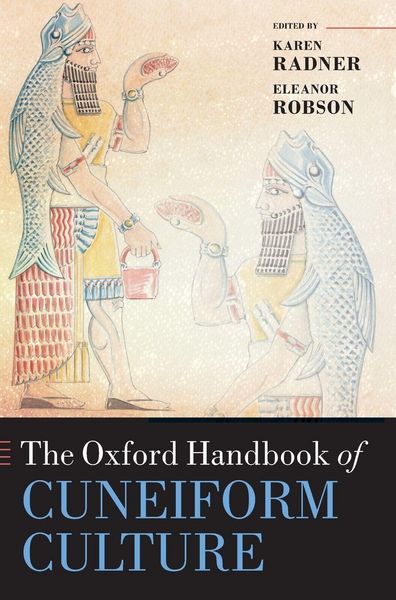
Produktbild: Ohb Cuneiform Culture Ohbk C

Ohb Cuneiform Culture Ohbk C

275,99 €

inkl. gesetzl. MwSt., Versandkostenfrei

Lieferung nach Hause

Beschreibung

Produktdetails

Einband

Gebundene Ausgabe

Erscheinungsdatum

22.09.2011

Abbildungen

111 in-text illustrations

Herausgeber

Radner Karen + weitere

Verlag

Oxford Academic

Seitenzahl

838

Maße (L/B/H)

25/17,5/4,9 cm

Gewicht

1814 g

Sprache

Englisch

ISBN

978-0-19-955730-1

Beschreibung

Produktdetails

Einband

Gebundene Ausgabe

Erscheinungsdatum

22.09.2011

Abbildungen

111 in-text illustrations

Herausgeber

Verlag

Oxford Academic

Seitenzahl

838

Maße (L/B/H)

25/17,5/4,9 cm

Gewicht

1814 g

Sprache

Englisch

ISBN

978-0-19-955730-1

Herstelleradresse

Libri GmbH
Europaallee 1
36244 Bad Hersfeld
DE

Email: gpsr@libri.de

Kundinnen und Kunden meinen

0 Bewertungen

Informationen zu Bewertungen

Zur Abgabe einer Bewertung ist eine Anmeldung im Konto notwendig. Die Authentizität der Bewertungen wird von uns nicht überprüft. Wir behalten uns vor, Bewertungstexte, die unseren Richtlinien widersprechen, entsprechend zu kürzen oder zu löschen.

Die Bewertungen sind nach Format, Anzahl Sterne und Datum sortiert.

Verfassen Sie die erste Bewertung zu diesem Artikel

Helfen Sie anderen Kund*innen durch Ihre Meinung

Kundinnen und Kunden meinen

0 Bewertungen filtern

  • Produktbild: Ohb Cuneiform Culture Ohbk C
    • I. Materiality and literacies

    • 1: Jonathan Taylor: Tablets as artefacts, scribes as artisans

    • 2: Robert K. Englund: Accounting in proto-cuneiform

    • 3: Grégory Chambon: Numeracy and metrology

    • 4: Niek Veldhuis: Levels of literacy

    • 5: Brigitte Lion: Literacy and gender

    • II. Individuals and communities

    • 6: Benjamin R. Foster: The person in Mesopotamian thought

    • 7: Frans van Koppen: The scribe of the Flood Story and his circle

    • 8: Hagan Brunke: Feasts for the living, the dead, and the gods

    • 9: Michael Jursa: Cuneiform writing in Neo-Babylonian temple communities

    • 10: Eva von Dassow: Freedom in ancient Near Eastern societies

    • III. Experts and novices

    • 11: Yoram Cohen and Sivan Kedar: Teacher-student relationships: two case studies

    • 12: Dominique Charpin: Patron and client: Zimri-Lim and Asqudum the diviner

    • 13: Michel Tanret: Learned, rich, famous and unhappy: Ur-Utu of Sippar

    • 14: Nele Ziegler: Music, the work of professionals

    • 15: Silvie Zamazalová: The education of Neo-Assyrian princes

    • IV. Decisions

    • 16: Sophie Démare-Lafont: Judicial decision-making: judges and arbitrators

    • 17: Karen Radner: Royal decision-making: kings, magnates and scholars

    • 18: Andreas Fuchs: Assyria at war: strategy and conduct

    • 19: Anne Löhnert: Manipulating the gods: lamenting in context

    • 20: Daniel Schwemer: Magic rituals: conceptualisation and performance

    • V. Interpretations

    • 21: Ulla Susanne Koch: Sheep and sky: systems of divinatory interpretation

    • 22: John M. Steele: Making sense of time: observational and theoretical calendars

    • 23: Fabienne Huber Vulliet: Letters as correspondence, letters as literature

    • 24: Eckart Frahm: Keeping company with men of learning: the king as scholar

    • 25: Heather D. Baker: From street altar to palace: reading the built environment of urban Babylonia

    • VI. Making knowledge

    • 26: Eleanor Robson: The production and dissemination of scholarly knowledge

    • 27: Steve Tinney: Tablets of schools and scholars: a portrait of the Old Babylonian corpus

    • 28: Mark Weeden: Adapting to new contexts: cuneiform in Anatolia

    • 29: Francesca Rochberg: Observing and describing the world through divination and astronomy

    • 30: Geert De Breucker: Berossos between tradition and innovation

    • VII. Shaping tradition

    • 31: Frans Wiggermann: Agriculture as civilization: sages, farmers, and barbarians

    • 32: Barbara Böck: Sourcing, organising, and administering medicinal ingredients

    • 33: Nicole Brisch: Changing images of kingship in Sumerian literature

    • 34: Caroline Waerzeggers: The pious king: royal patronage of temples

    • 35: Philippe Clancier: Cuneiform culture's last guardians: the old urban notability of Hellenistic Uruk