• Produktbild: International Human Resource Development
  • Produktbild: International Human Resource Development

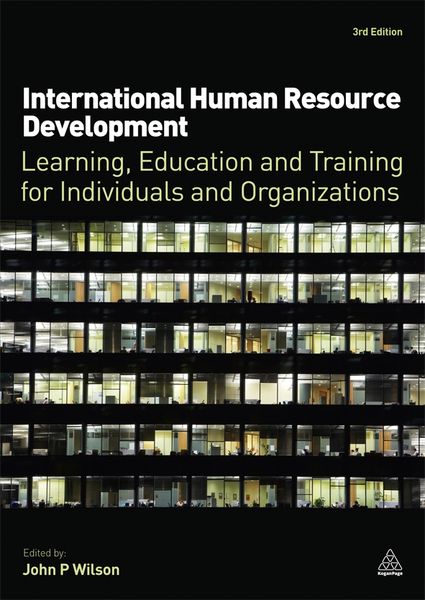
International Human Resource Development Learning, Education and Training for Individuals and Organizations

76,99 €

inkl. gesetzl. MwSt., Versandkostenfrei

Lieferung nach Hause

Beschreibung

Produktdetails

Einband

Gebundene Ausgabe

Erscheinungsdatum

03.01.2015

Herausgeber

John P. Wilson

Verlag

Kogan Page Ltd

Seitenzahl

536

Maße (L/B/H)

25/17,5/3,3 cm

Gewicht

956 g

Sprache

Englisch

ISBN

978-0-7494-7601-4

Beschreibung

Rezension

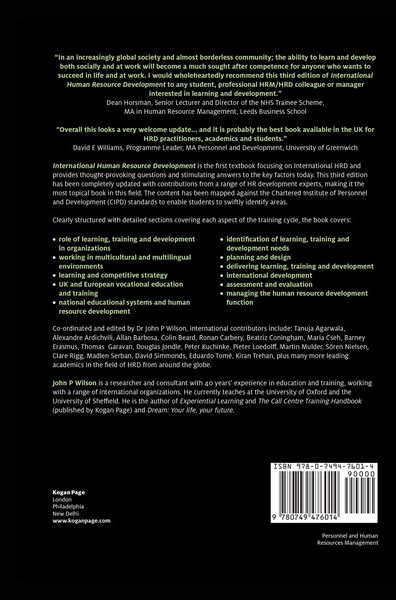
"Overall this looks a very promising publication with 24 both interesting and relevant chapters and is probably the best book available in the UK for domestic HRD practitioners, academics and students." ("David E Williams, Programme Leader- MA Personnel and Development, University of Greenwich")
"I would wholeheartedly recommend this third edition of International Human Resource Development to any student, professional HRM / HRD colleague or manager interested in the local, national and international arena of learning and development." ("Dean Horsman, Senior Lecturer and Director of the NHS Trainee Scheme, MA in Human Resource Management, Leeds Business School")

Produktdetails

Einband

Gebundene Ausgabe

Erscheinungsdatum

03.01.2015

Herausgeber

John P. Wilson

Verlag

Kogan Page Ltd

Seitenzahl

536

Maße (L/B/H)

25/17,5/3,3 cm

Gewicht

956 g

Sprache

Englisch

ISBN

978-0-7494-7601-4

Herstelleradresse

Libri GmbH
Europaallee 1
36244 Bad Hersfeld
DE

Email: GPSR Kontakt

Noch keine Bewertungen vorhanden

Verfassen Sie die erste Bewertung zu diesem Artikel

Helfen Sie anderen Kundinnen und Kunden durch Ihre Meinung.

Kundinnen und Kunden meinen

Bewertungen (0)

Die Leseprobe wird geladen.
  • Produktbild: International Human Resource Development
  • Produktbild: International Human Resource Development
  • List of figures
    List of tables
    List of in practice case studies
    Contributors
    Preface

    Part One: International human resource development and learning

    01 International human resource development
    John P Wilson

    Learning outcomes
    Introduction
    Defining education, training, development and learning
    Human resource development
    Human capital
    Conclusion
    Questions for reflection
    Further information sources
    References

    02 Strategic human resource development
    Thomas N Garacan and Ronan Carbery

    Learning outcomes
    Introduction
    Defining strategic HRD
    Understanding the contribution of SHRD to individual and business performance
    Theoretical models of SHRD
    Facilitating and enabling conditions for SHRD in organizations
    Conclusion
    Further information sources
    References

    03 What is learning?
    John P Wilson

    Learning outcomes
    Introduction
    Defining learning
    Behaviourism
    Cognitivism
    Social learning
    Humanistic learning
    Cognitive science and learning
    Conclusion
    Questions for reflection
    Further information sources
    References

    Part Two: Organizational Learning

    04 Change management and organizational development
    John P Wilson

    Learning outcomes
    Introduction
    Competition and the nature of change
    Organization development
    Strategies for change and organization development
    Conclusion
    Questions for reflection
    Further information sources
    References

    05 Knowledge management
    Eduardo Tomé

    Learning outcomes
    Introduction
    Concepts
    Historical perspective
    The knowledge-management perspective on intangibles
    Conclusion
    Questions for reflection
    Further information sources
    References

    Part Three: National and international learning, education, training and human resource development

    06 National systems of education
    John P Wilson

    Learning outcomes
    Introduction
    Education systems
    A brief history of UK education
    State intervention in early UK education
    Education for all
    Improving the US education system
    Improving the UK's education system: the race to the top
    The social benefits of education
    Equality of educational opportunity
    Conclusion
    Questions for reflection
    Further information sources
    References

    07 UK vocational education and training
    John P Wilson

    Learning outcomes
    Introduction
    A brief history of UK vocational education and training
    The UK vocational education and training system
    HRD roles
    Conclusion
    Questions for reflection
    Further information sources
    References

    08 European vocational education and training
    Martin Mulder

    Learning outcomes
    Introduction
    VET in Europe - CVT - HRD - LLL: fading boundaries
    European VET and national systems of education: wide diversity
    Conclusion
    Questions for reflection
    Further information sources
    References

    09 National human resource development strategies: comparing Brazil, Russia, India and China
    Alexandre Ardichvili, Elena K Zavyalova and Vera N Minina

    Learning outcomes
    Introduction
    National human resource development
    NHRD in Brazil
    NHRD in Russia
    NHRD in India
    NHRD in China
    NHRD in BRICs: comparative analysis
    Conclusion
    Questions for reflection
    Further information sources
    References

    10 International development: policy learning as an approach to VET reform in transition and development countries
    Sören Nielsen and Madlen Serban

    Learning outcomes
    Introduction
    The mission and role of the European Training Foundation
    From policy lending and borrowing towards policy learning
    VET policy challenges for countries in transition
    What can HRD policies learn from learning theories?
    Policy learning: applying the changing learning paradigm for facilitation of policy advice on VET reform in transition countries
    Policy learning in action: Phase I 2007-08: examples from Kyrgyzstan, Morocco and Turkey
    Policy learning in action: Phase II 2010 onwards: The Torino Process and evidence-informed policy development
    Conclusion
    Questions for reflection
    Notes
    Further information sources
    References

    11 Capacity development and human resource development
    Dalia Al-Zendi and John P Wilson

    Learning outcomes
    Introduction
    The evolution of capacity building and capacity development
    Defining capacity building and capacity development
    Capacity development for all nations
    Development as freedom
    The capacity development process
    Capacity building/capacity development and human resource development
    United Nations Development Programme
    The United Nations' Human Development Index
    Development for well-being
    The challenges facing capacity development
    Development and sustainability
    Capacity development results framework
    Conclusion
    Questions for reflection
    Further information sources
    References

    Part Four: The training cycle

    Part Four A: Identification of learning needs

    12 The identification of learning needs
    Richard Palmer, Allan Claudius Queiroz Barbosa, Leandro Pinheiro Cintra, Júnia Marçal Rodrigues and Juliana Barbosa e Oliveira

    Learning outcomes
    Introduction
    Undertaking a learning needs analysis
    Needs at the organizational level
    Needs at the departmental level
    Needs at occupational levels
    Needs at the individual level
    Defining the training priorities
    Conclusion
    Questions for reflection
    Further information sources
    References

    Part Four B: Design

    13 Designing learning events
    David Simmonds

    Learning outcomes
    Introduction
    Objectives
    Learners
    Content
    Location
    Time
    Methods
    Resources
    Conclusion
    Questions for reflection
    References

    14 Working in multicultural and multilingual environments: HRD professionals as learning and change agents in the global workplace
    Maria Cseh and Beatriz Coningham

    Learning outcomes
    Introduction
    What is a global workplace?
    What is the role of HRD professionals in the global workplace?
    How should the role of HRD professionals be enacted in the global workplace?
    What are the HRD approaches to learning and change in the global workplace?
    Conclusion
    Questions for reflection
    Further information sources
    References

    Part Four C: Delivery

    15 Delivering training
    John Kirkham and Jacqueline Pattison

    Learning outcomes
    Introduction
    Where to begin
    Setting the learning environment
    Working with learning objectives and session plans
    Learning activities
    Delivery styles
    Feedback
    Coaching during the workshop
    Team building in the classroom
    Motivation to learn
    Principles of self-development
    'Joint learning' for management, staff and staff representatives
    Legislation and the learning environment
    Dealing with difficult scenarios Conclusion
    Questions for reflection
    Further information sources
    References

    16 Informal, non-formal and work-based methods of learning
    Jacqueline Pattison, John Kirkham and Mariana Gabriela Hudrea

    Learning outcomes
    Introduction
    Is investment in formal learning worthwhile?
    Formal, informal and non-formal learning
    Lifelong learning and lifewide learning
    A-Z of learning, training and development methods
    Conclusion
    Questions for reflection
    Further information sources
    References

    17 Coaching and mentoring
    Stephanie T Sturges

    Learning outcomes
    Introduction
    Coaching and mentoring
    Types of coaching and mentoring
    Qualities and skills of coaching and mentoring
    Models of coaching
    Developmental or transformational coaching and mentoring
    Conclusion
    Questions for reflection
    Further information sources
    References

    Part Four D: Evaluation

    18 Assessment and evaluation
    Tanuja Agarwala

    Learning outcomes
    Introduction
    Definition
    Significance
    Objectives
    Evaluation approaches
    Choosing criterion measures
    Kirkpatrick's model of training evaluation (1959)
    Training evaluation: monetary benefits
    Experimental designs
    E-training evaluation
    Conclusion
    Questions for reflection
    References

    Part Five: Managing HRD

    19 Leadership and management development
    Ronan Carbery and Thomas N Garavan

    Learning outcomes
    Introduction
    Management and leadership development: the same or different?
    The context of management and leadership development
    Management and leadership competency models
    Selecting management and leadership development strategies
    Evaluating management and leadership development
    Conclusion
    Questions for reflection
    Further information sources
    References

    20 Managing human resource development functions and services
    Barney Erasmus and Pieter Loedolff

    Learning outcomes
    Introduction and learning objectives
    The importance of HRD
    The place and role of the HRD function in the structure of the organization
    Managing the HRD function
    Coordinating HRD functions and services in the organization
    Training and development budgets and cost analysis
    Conclusion
    Questions for reflection
    References

    21 HRD practice and research: investigating business issues through applied social science research
    K Peter Kuchinke

    Learning outcomes
    Introduction
    Social science research, management and human resource development
    Approaches to applied research
    Applied research, values and interests
    Conclusion: linking research to organization change, innovation and learning
    Questions for reflection
    References

    22 HRD and consultancy
    Kiran Trehan and Clare Rigg

    Learning outcomes
    Introduction
    HRD as consultancy
    Consultancy models
    Consulting techniques
    Problems and pitfalls in HRD consultancy
    Conclusion
    Questions for reflection
    References

    23 Learning spaces that change people and organizations
    Colin Beard and Ilfryn Price

    Learning outcomes
    Introduction
    Schools, colleges, universities and workspaces
    So what do we know about learning?
    A simple model of complexity
    Mirror image? Learning environments reflect learning theory complexity
    Learning and working: a convergent evolution
    Thinking spaces for learning, and working
    Innovation at work: spatial dynamics and conversations for innovation and learning
    Conclusion
    Questions for reflection
    Further information sources
    References

    24 HRD and business ethics
    Alexandre Ardichvili and Douglas Jondle

    Learning outcomes
    Introduction
    The increasing role of ethics training
    Ethical business cultures and organization change
    HRD activities in support of ethical business cultures
    Conclusion
    References

    Index