Beschreibung

Produktdetails

Einband

Taschenbuch

Erscheinungsdatum

09.05.2013

Herausgeber

Ernest J. Henley

Verlag

Springer Us

Seitenzahl

565

Maße (L/B/H)

23,5/15,5/3,1 cm

Gewicht

861 g

Auflage

Softcover reprint of the original 1st ed. 1979

Sprache

Englisch

ISBN

978-1-4613-2864-3

Beschreibung

Produktdetails

Einband

Taschenbuch

Erscheinungsdatum

09.05.2013

Herausgeber

Ernest J. Henley

Verlag

Springer Us

Seitenzahl

565

Maße (L/B/H)

23,5/15,5/3,1 cm

Gewicht

861 g

Auflage

Softcover reprint of the original 1st ed. 1979

Sprache

Englisch

ISBN

978-1-4613-2864-3

Herstelleradresse

Springer-Verlag GmbH
Tiergartenstr. 17
69121 Heidelberg
DE

Email: ProductSafety@springernature.com

Kundinnen und Kunden meinen

0 Bewertungen

Informationen zu Bewertungen

Zur Abgabe einer Bewertung ist eine Anmeldung im Konto notwendig. Die Authentizität der Bewertungen wird von uns nicht überprüft. Wir behalten uns vor, Bewertungstexte, die unseren Richtlinien widersprechen, entsprechend zu kürzen oder zu löschen.

Die Bewertungen sind nach Format, Anzahl Sterne und Datum sortiert.

Verfassen Sie die erste Bewertung zu diesem Artikel

Helfen Sie anderen Kund*innen durch Ihre Meinung

Kundinnen und Kunden meinen

0 Bewertungen filtern

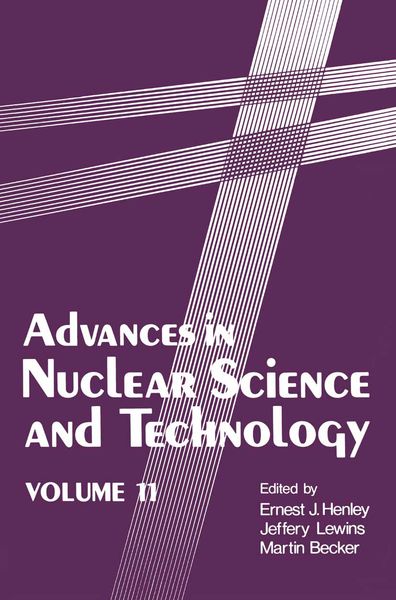
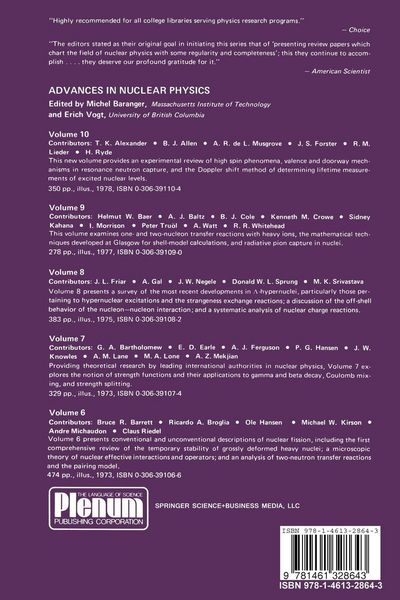
  • Produktbild: Advances in Nuclear Science and Technology
  • Produktbild: Advances in Nuclear Science and Technology
  • Nuclear Physics Data for Reactor Kinetics.- I. Principles of Reactor Kinetics and Data Requirements.- II. Evaluated Nuclear Data Libraries.- III. Fission-Product Nuclear Data.- IV. Data on Delayed Neutrons.- V. Data on Heavy Elements.- Acknowledgments.- References.- The Analysis of Reactor Noise: Measuring Statistical Fluctuations in Nuclear Systems.- I. Introduction.- II. Theory.- III. Models for Interpreting Experiments.- IV. Epilogue.- Acknowledgments.- References.- On-Line Computers in Nuclear Power Plants — A Review.- Abstract.- I. Introduction.- II. Computer Functions and Application Classes.- III. Functions.- IV. Applications Classes.- V. Computer Hardware and Software.- VI. Examples of Systems in Operation.- VII. Ergonomic Factors and Operator Acceptance.- VIII. Reliability.- IX. Obsolescence and Designing for Replaceability.- X. Project Management.- XI. Program and Data Security.- XII. Licensing of Initial Design and Modification During Life.- XIII. Future Development.- XIV. Concluding Remarks.- Acknowledgments.- References.- Fuel for the SGHWR.- I. Introduction.- II. Fuel Design.- III. Operational Experience.- IV. Performance Models: The Seer-Sleuth Computer Code.- V. Behavior in Accident Conditions.- VI. Transient Modeling.- VII. Future Development.- References.- The Nuclear Safety Research Reactor (NSRR) in Japan.- I. Introduction.- II. NSRR Facility and Experimental Capability.- III. Experimental Research Program.- IV. Some Results of the Fuel Failure Experiments.- V. Future Plans.- References.- Practical Usage of Plutonium in Power Reactor Systems.- I. Popular Notions about Plutonium.- II. Historical Perspective and Review of Plutonium Properties.- III. Plutonium Recycle Alternatives.- IV. Current Status and Conclusions.- References.- Computer Assisted Learning in Nuclear Engineering.- I. Introduction.- II. Educational Roles of the Digital Computer.- III. Claims for CAL.- IV. Computers in Nuclear Engineering Education.- V. The Role of Graphics in Computer-Assisted Learning.- VI. Current CAL Projects.- VII. A Typical CAL Program.- VIII. Transferring CAL Materials.- IX. Implementation.- X. Evaluation.- XI. Future Prospects for CAL in Nuclear Engineering.- XII. Summary and Conclusions.- References.- Nuclear Energy Centers.- I. Introduction.- II. Fuel Cycle and Facility Integration.- III. Modular Construction.- IV. Heat Rejection.- V. Conclusions.- References.