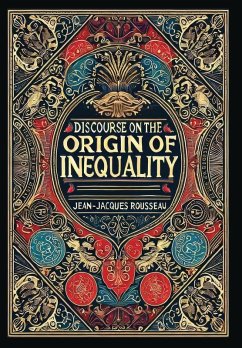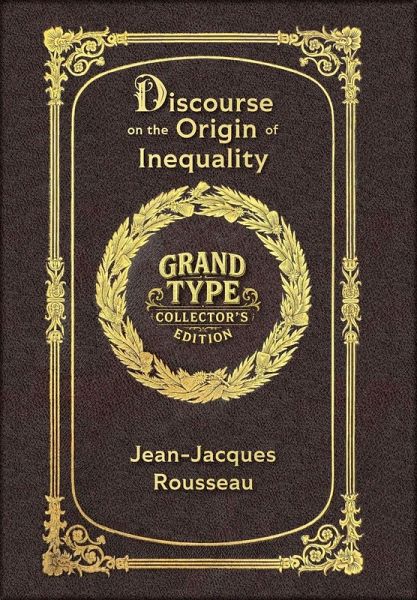
Large Print - Discourse on the Origin of Inequality - Grand Type Collector's Edition - Matte Hardcover with Dust Jacket
Versandkostenfrei!
Versandfertig in über 4 Wochen
41,99 €
inkl. MwSt.

PAYBACK Punkte
21 °P sammeln!

Experience timeless classics like never before in this Grand Type Collector's Edition With clear, easy-to-read formatting, this edition is designed for readers who prefer or require larger text without sacrificing the excitement of the original. Large Print Features: * 18-point font: Generously sized text for maximum readability and comfort. * Sans-serif font: Clean, modern typeface designed to reduce visual strain. * Italics are bolded: Important emphasis is maintained without thin, hard-to-see lettering. * Easy-to-read line lengths: Shorter rows of text (under 45 characters per line) make re...
Experience timeless classics like never before in this Grand Type Collector's Edition With clear, easy-to-read formatting, this edition is designed for readers who prefer or require larger text without sacrificing the excitement of the original. Large Print Features: * 18-point font: Generously sized text for maximum readability and comfort. * Sans-serif font: Clean, modern typeface designed to reduce visual strain. * Italics are bolded: Important emphasis is maintained without thin, hard-to-see lettering. * Easy-to-read line lengths: Shorter rows of text (under 45 characters per line) make reading smoother and less tiring. Human society, Rousseau argues, was not always shaped by inequality. In its earliest state, people lived simply and self-sufficiently, guided by natural goodness and freedom. But with the rise of private property came competition, dependency, and artificial hierarchies. Genuine liberty was replaced with social divisions, and human nature became corrupted by greed and pride. Through a sweeping philosophical examination, Rousseau questions whether civilization has truly improved the human condition or merely intensified injustice, urging readers to reflect on the cost of so-called progress. First published in 1755, Jean-Jacques Rousseau's Discourse on the Origin of Inequality delivered a radical critique of Enlightenment ideals. By arguing that inequality is socially constructed rather than natural, Rousseau challenged conventional notions of progress and justice. His bold ideas about property, power, and freedom influenced the French Revolution and shaped modern political philosophy. A timeless and provocative work, it continues to inspire debate on human rights, social justice, and the foundations of society itself.

Andere Kunden interessierten sich für