
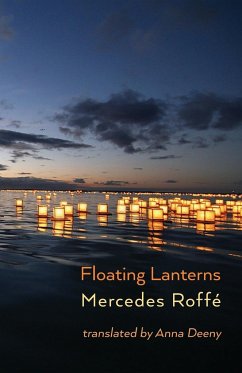
Floating Lanterns
Versandkostenfrei!
Versandfertig in 1-2 Wochen
16,99 €
inkl. MwSt.

PAYBACK Punkte
8 °P sammeln!

In Floating Lanterns, her eighth poetry collection, Mercedes Roffé draws from creation myths, sacred texts, philosophy and poetry that meditates upon human nature and our propensity for evil. This book brings together Buddhism, Tibetan Yoga, the Judeo-Christian Bible, the Kabbalah, Plato's Republic, T. S. Eliot, Beat poets, the oral traditions of Medieval Spain and Native North American cosmogonies.What binds these diverse materials is Roffé's use of anaphora. Anaphora emphasizes meaning in the repetition of a word or concept. However, as each word is repeated, it lets meaning go, allowing t...
In Floating Lanterns, her eighth poetry collection, Mercedes Roffé draws from creation myths, sacred texts, philosophy and poetry that meditates upon human nature and our propensity for evil. This book brings together Buddhism, Tibetan Yoga, the Judeo-Christian Bible, the Kabbalah, Plato's Republic, T. S. Eliot, Beat poets, the oral traditions of Medieval Spain and Native North American cosmogonies.What binds these diverse materials is Roffé's use of anaphora. Anaphora emphasizes meaning in the repetition of a word or concept. However, as each word is repeated, it lets meaning go, allowing the word to materialize in such a way that it bears sound more fully.... Through anaphora Roffé thus recalls the process of language building in the face of destruction. When catastrophes level cities, bodies and our loved ones, language too is leveled in our screams. However... poetic techniques can remind us of our subjective capacity to construct language again. They offer the possibility, or at least the hope, that a broken language, and from there the broken body, might also be remembered whole even if it is never to be recuperated. -Anna Deeny
Andere Kunden interessierten sich für