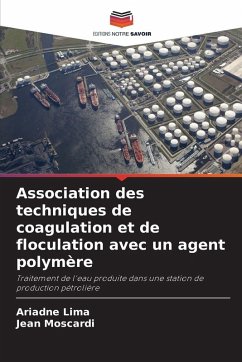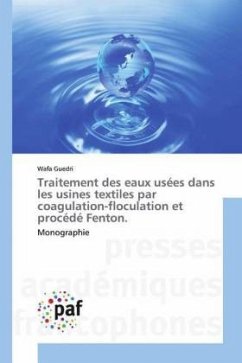
Combination of coagulation and flocculation techniques with polymeric agent
Treatment of water produced in oil production stations
Versandkostenfrei!
Versandfertig in 6-10 Tagen
33,99 €
inkl. MwSt.

PAYBACK Punkte
17 °P sammeln!

During the production period of an oil field, gas, oil, and water with impurities are formed simultaneously. The latter may originate from aquifers adjacent to hydrocarbon-bearing formations or may have been injected to increase oil production. Due to the characteristics of the effluent generated, the search for more effective treatment methods is due, among other factors, to increased industrial pollution. Considering the implications that may arise in the environment when large amounts of salts and other contaminants are present in the effluent generated in the oil production system, whether...
During the production period of an oil field, gas, oil, and water with impurities are formed simultaneously. The latter may originate from aquifers adjacent to hydrocarbon-bearing formations or may have been injected to increase oil production. Due to the characteristics of the effluent generated, the search for more effective treatment methods is due, among other factors, to increased industrial pollution. Considering the implications that may arise in the environment when large amounts of salts and other contaminants are present in the effluent generated in the oil production system, whether economic, social, technical, or environmental, the overall objective of this study was to evaluate the efficiency of combining coagulation and flocculation techniques with a polymeric agent in the treatment of water produced in an oil production station, specifically aiming to control turbidity, TSS, and TOC, while maintaining salinity levels.
Andere Kunden interessierten sich für