Biochemical Changes and Municipal Solid Waste Sorting
Implications for personal protective equipment availability and use
Versandkostenfrei!
Versandfertig in 1-2 Wochen
41,99 €
inkl. MwSt.

PAYBACK Punkte
21 °P sammeln!

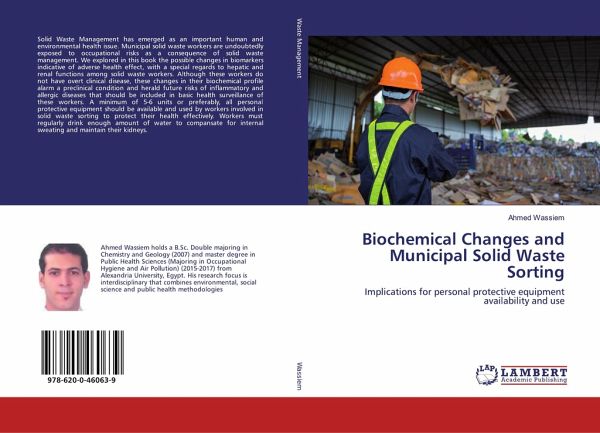
Solid Waste Management has emerged as an important human and environmental health issue. Municipal solid waste workers are undoubtedly exposed to occupational risks as a consequence of solid waste management. We explored in this book the possible changes in biomarkers indicative of adverse health effect, with a special regards to hepatic and renal functions among solid waste workers. Although these workers do not have overt clinical disease, these changes in their biochemical profile alarm a preclinical condition and herald future risks of inflammatory and allergic diseases that should be incl...
Solid Waste Management has emerged as an important human and environmental health issue. Municipal solid waste workers are undoubtedly exposed to occupational risks as a consequence of solid waste management. We explored in this book the possible changes in biomarkers indicative of adverse health effect, with a special regards to hepatic and renal functions among solid waste workers. Although these workers do not have overt clinical disease, these changes in their biochemical profile alarm a preclinical condition and herald future risks of inflammatory and allergic diseases that should be included in basic health surveillance of these workers. A minimum of 5-6 units or preferably, all personal protective equipment should be available and used by workers involved in solid waste sorting to protect their health effectively. Workers must regularly drink enough amount of water to compansate for internal sweating and maintain their kidneys.
Andere Kunden interessierten sich für