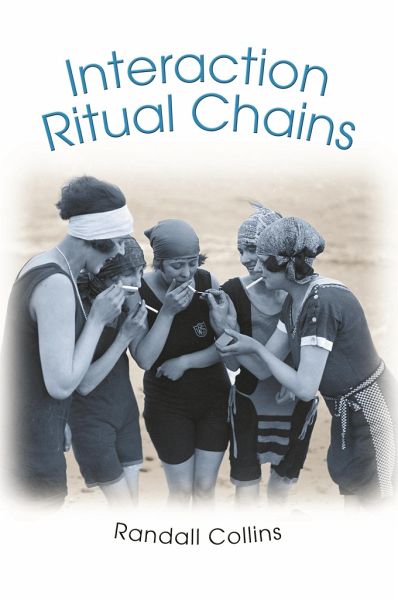
For example, the book addresses the emotional and symbolic nature
of sexual exchanges of all sorts - from hand-holding to
masturbation to sexual relationships with prostitutes - while
describing the interaction rituals they involve. This book will
appeal not only to psychologists, sociologists, and
anthropologists, but to those in fields as diverse as human
sexuality, religious studies, and literary theory.
Sex, smoking, and social stratification are three very different
social phenomena. And yet, argues sociologist Randall Collins, they
and much else in our social lives are driven by a common force:
interaction rituals. Interaction Ritual Chains is a major work of
sociological theory that attempts to develop a "radical
microsociology." It proposes that successful rituals create
symbols of group membership and pump up individuals with emotional
energy, while failed rituals drain emotional energy. Each person
flows from situation to situation, drawn to those interactions
where their cultural capital gives them the best emotional energy
payoff. Thinking, too, can be explained by the internalization of
conversations within the flow of situations; individual selves are
thoroughly and continually social, constructed from the outside
in.
The first half of Interaction Ritual Chains is based on the classic
analyses of Durkheim, Mead, and Goffman and draws on
micro-sociological research on conversation, bodily rhythms,
emotions, and intellectual creativity. The second half discusses
how such activities as sex, smoking, and social stratification are
shaped by interaction ritual chains. For example, the book
addresses the emotional and symbolic nature of sexual exchanges of
all sorts--from hand-holding to masturbation to sexual
relationships with prostitutes--while describing the interaction
rituals they involve. This book will appeal not only to
psychologists, sociologists, and anthropologists, but to those in
fields as diverse as human sexuality, religious studies, and
literary theory.
Review:
... Collins again demonstrates why he is considered one of the
leading social theorists. This . . . work of Collins, in
particular, transcends the boundaries of sociology. . . . This is
an outstanding work for theoretically oriented professional and
advanced students in sociology, social psychology, and psychology.
(Choice)
... Collins argues in this pathbreaking book that ritual--whether
in face-to-face conversations or at national presidential
funerals--is the key sociological factor that ties group structure
and collective beliefs together. . . . Collins plows new ground in
several ways. First, he argues that ritual is the central category
for all sociological analysis because ritual connects and mediates
group structure and beliefs. . . . Second, his work breaks new
paths because it proposes a comprehensive theory of ritual grounded
in everyday solutions. . . . Finally, Collins bushwhacks new paths
when he emphasizes the importance of the emotional energy, what he
calls 'collective effervescence,' that is generated by
ritual. Donald B. Kraybill(Christian Century)
... Collins's book is a major contribution to contemporary
sociological theory. His approach--a genuinely sociological
microfoundation of sociology--is well chosen and carefully carried
out . . . Interaction ritual theory helps to enrich our knowledge
about a core process of social life. Interaction Ritual Chains is a
book offering rich insights into this core process. Richard
Munch(American Journal of Sociology)
Table of contents:
List of Figures ix
Preface xi
Acknowledgments xxi
PART I. Radical Microsociology
Chapter 1
The Program of Interaction Ritual Theory 3
Situation rather than Individual as Starting Point 3
Conflicting Terminologies 7
Traditions of Ritual Analysis 9
Subcognitive Ritualism 9
Functionalist Ritualism 13
Goffman's Interaction Ritual 16
The Code-Seeking Program 25
The Cultural Turn 30
Classic Origins of IR Theory in Durkheim's Sociology of
Religion 32
The Significance of Interaction Ritual for General
Sociological Theory 40
Chapter 2
The Mutual-Focus / Emotional-Entrainment Model 47
Ritual Ingredients, Processes, and Outcomes 47
Formal Rituals and Natural Rituals 49
Failed Rituals, Empty Rituals, Forced Rituals 50
Is Bodily Presence Necessary? 53
The Micro-Process of Collective Entrainment in Natural Rituals
65
Conversational Turn-Taking as Rhythmic Entrainment 66
Experimental and Micro-Observational Evidence on Rhythmic
Coordination and Emotional Entrainment 75
Joint Attention as Key to Development of Shared Symbols 79
Solidarity Prolonged and Stored in Symbols 81
The Creation of Solidarity Symbols in 9/11 88
Rules for Unraveling Symbols 95
Chapter 3
Emotional Energy and the Transient Emotions 102
Disruptive and Long-Term Emotions, or Dramatic Emotions and
Emotional Energy 105
Interaction Ritual as Emotion Transformer 107
Stratified Interaction Rituals 111
Power Rituals 112
Status Rituals 115
Effects on Long-Term Emotions: Emotional Energy 118
Emotion Contest and Conflict Situations 121
Short-Term or Dramatic Emotions 125
Transformations from Short-Term Emotions into Long-Term EE
129
The Stratification of Emotional Energy 131
Appendix: Measuring Emotional Energy and Its Antecedents 133
Chapter 4
Interaction Markets and Material Markets 141
Problems of the Rational Cost-Benefit Model 143
The Rationality of Participating in Interaction Rituals 146
The Market for Ritual Solidarity 149
Reinvestment of Emotional Energy and Membership Symbols 149
Match-Ups of Symbols and Complementarity of Emotions 151
Emotional Energy as the Common Denominator of Rational Choice
158
I. Material Production Is Motivated by the Need for Resources
for Producing IRs 160
II. Emotional Energy Is Generated by Work-Situation IRs 163
III. Material Markets Are Embedded in an Ongoing Flow of IRs
Generating Social Capital 165
Altruism 168
When Are Individuals Most Materially Self-Interested? 170
The Bottom Line: EE-Seeking Constrained by Material Resources
171
Sociology of Emotions as the Solution to Rational Choice Anomalies
174
The Microsociology of Material Considerations 176
Situational Decisions without Conscious Calculation 181
Chapter 5
Internalized Symbols and the Social Process of Thinking 183
Methods for Getting Inside, or Back Outside 184
Intellectual Networks and Creative Thinking 190
Non-Intellectual Thinking 196
Anticipated and Reverberated Talk 197
Thought Chains and Situational Chains 199
The Metaphor of Dialogue among Parts of the Self 203
Verbal Incantations 205
Speeds of Thought 211
Internal Ritual and Self-Solidarity 218
PART II. Applications
Chapter 6
A Theory of Sexual Interaction 223
Sex as Individual Pleasure-Seeking 228
Sex as Interaction Ritual 230
Nongenital Sexual Pleasures as Symbolic Targets 238
Sexual Negotiation Scenes rather than Constant Sexual Essences
250
Prestige-Seeking and Public Eroticization 252
Chapter 7
Situational Stratification 258
Macro- and Micro-Situational Class, Status, and Power 263
Economic Class as Zelizer Circuits 263
Status Group Boundaries and Categorical Identities 268
Categorical Deference and Situational Deference 278
D-Power and E-Power 284
Historical Change in Situational Stratification 288
An Imagery for Contemporary Interaction 293
Chapter 8
Tobacco Ritual and Anti-Ritual: Substance Ingestion as a History of
Social Boundaries 297
Inadequacies of the Health and Addiction Model 299
Tobacco Rituals: Relaxation / Withdrawal Rituals, Carousing
Rituals, Elegance Rituals 305
Ritual Paraphernalia: Social Display and Solitary Cult 317
Failures and Successes of Anti-Tobacco Movements 326
Aesthetic Complaints and Struggle over Status Display Standards
327
Anti-Carousing Movements 328
The End of Enclave Exclusion: Respectable Women Join the Carousing
Cult 329
The Health-Oriented Anti-Smoking Movement of the Late Twentieth
Century 331
The Vulnerability of Situational Rituals and the Mobilization of
Anti-Carousing Movements 337
Chapter 9
Individualism and Inwardness as Social Products 345
The Social Production of Individuality 347
Seven Types of Introversion 351
Work-Obsessed Individuals 351
Socially Excluded Persons 353
Situational Introverts 354
Alienated Introverts 355
Solitary Cultists 356
Intellectual Introverts 357
Neurotic or Hyper-Reflexive Introverts 360
The Micro-History of Introversion 362
The Modern Cult of the Individual 370
Notes 375
References 417
Index 435
"Interaction Ritual Chains is a major statement by a major
scholar at the top of his game. Starting with a parsimonious set of
insights gleaned from the best current work in microsociology, the
author builds a compelling theory of how these insights can inform
models of the behavior of families, communities, organizations, and
nation-states. The book will measurably shape the way that social
scientists approach the business of understanding and explaining
human behavior."--Paul DiMaggio, Princeton University
"This book elaborates an original, bold theory about
fundamental social processes that is likely to generate
considerable debate among social scientists. It is also the most
important statement of one of sociology's most distinguished
theorists. Collins' contribution will be seminal not only
because it brings to the fore the often neglected emotional
dimension of social life, but also because it pushes further our
understanding of group boundaries in the production of social
inequality. It will become a must for all social scientists,
including those who will disagree."--Michèle Lamont, Professor
of Sociology, Harvard University, and author of The Dignity of
Working Men
Collins again demonstrates why he is considered one of the leading social theorists. This ... work of Collins, in particular, transcends the boundaries of sociology... This is an outstanding work for theoretically oriented professional and advanced students in sociology, social psychology, and psychology. Choice Collins argues in this pathbreaking book that ritual--whether in face-to-face conversations or at national presidential funerals--is the key sociological factor that ties group structure and collective beliefs together... Collins plows new ground in several ways. First, he argues that ritual is the central category for all sociological analysis because ritual connects and mediates group structure and beliefs... Second, his work breaks new paths because it proposes a comprehensive theory of ritual grounded in everyday solutions... Finally, Collins bushwhacks new paths when he emphasizes the importance of the emotional energy, what he calls 'collective effervescence,' that is generated by ritual. -- Donald B. Kraybill Christian Century Collins's book is a major contribution to contemporary sociological theory. His approach--a genuinely sociological microfoundation of sociology--is well chosen and carefully carried out ... Interaction ritual theory helps to enrich our knowledge about a core process of social life. Interaction Ritual Chains is a book offering rich insights into this core process. -- Richard Munch American Journal of Sociology
Randall Collins ist Inhaber des Dorothy-Swaine-Thomas-Lehrstuhls für Soziologie an der University of Pennsylvania und lehrt außerdem Soziologie im Fachbereich Kriminologie. Er erhielt zahlreiche Auszeichnungen, war als Gastprofessor an unterschiedlichen Universitäten tätig und ist Präsident der American Sociological Association. Seine große Bandbreite von Forschungsarbeiten zu Konfliktforschung, Bildung und Familie, Max Weber oder zur theoretischen Soziologie spiegelt sich in zahlreichen Buchpublikationen, die in mehrere Sprachen übersetzt wurden und von denen einige als Standardwerke gelten.
Inhaltsangabe
List of Figures ix Preface xi Acknowledgments xxi PART I. Radical Microsociology Chapter 1 The Program of Interaction Ritual Theory 3 Situation rather than Individual as Starting Point 3 Conflicting Terminologies 7 Traditions of Ritual Analysis 9 Subcognitive Ritualism 9 Functionalist Ritualism 13 Goffman's Interaction Ritual 16 The Code-Seeking Program 25 The Cultural Turn 30 Classic Origins of IR Theory in Durkheim's Sociology of Religion 32 The Significance of Interaction Ritual for General Sociological Theory 40 Chapter 2 The Mutual-Focus / Emotional-Entrainment Model 47 Ritual Ingredients, Processes, and Outcomes 47 Formal Rituals and Natural Rituals 49 Failed Rituals, Empty Rituals, Forced Rituals 50 Is Bodily Presence Necessary? 53 The Micro-Process of Collective Entrainment in Natural Rituals 65 Conversational Turn-Taking as Rhythmic Entrainment 66 Experimental and Micro-Observational Evidence on Rhythmic Coordination and Emotional Entrainment 75 Joint Attention as Key to Development of Shared Symbols 79 Solidarity Prolonged and Stored in Symbols 81 The Creation of Solidarity Symbols in 9/11 88 Rules for Unraveling Symbols 95 Chapter 3 Emotional Energy and the Transient Emotions 102 Disruptive and Long-Term Emotions, or Dramatic Emotions and Emotional Energy 105 Interaction Ritual as Emotion Transformer 107 Stratified Interaction Rituals 111 Power Rituals 112 Status Rituals 115 Effects on Long-Term Emotions: Emotional Energy 118 Emotion Contest and Conflict Situations 121 Short-Term or Dramatic Emotions 125 Transformations from Short-Term Emotions into Long-Term EE 129 The Stratification of Emotional Energy 131 Appendix: Measuring Emotional Energy and Its Antecedents 133 Chapter 4 Interaction Markets and Material Markets 141 Problems of the Rational Cost-Benefit Model 143 The Rationality of Participating in Interaction Rituals 146 The Market for Ritual Solidarity 149 Reinvestment of Emotional Energy and Membership Symbols 149 Match-Ups of Symbols and Complementarity of Emotions 151 Emotional Energy as the Common Denominator of Rational Choice 158 I. Material Production Is Motivated by the Need for Resources for Producing IRs 160 II. Emotional Energy Is Generated by Work-Situation IRs 163 III. Material Markets Are Embedded in an Ongoing Flow of IRs Generating Social Capital 165 Altruism 168 When Are Individuals Most Materially Self-Interested? 170 The Bottom Line: EE-Seeking Constrained by Material Resources 171 Sociology of Emotions as the Solution to Rational Choice Anomalies 174 The Microsociology of Material Considerations 176 Situational Decisions without Conscious Calculation 181 Chapter 5 Internalized Symbols and the Social Process of Thinking 183 Methods for Getting Inside, or Back Outside 184 Intellectual Networks and Creative Thinking 190 Non-Intellectual Thinking 196 Anticipated and Reverberated Talk 197 Thought Chains and Situational Chains 199 The Metaphor of Dialogue among Parts of the Self 203 Verbal Incantations 205 Speeds of Thought 211 Internal Ritual and Self-Solidarity 218 PART II. Applications Chapter 6 A Theory of Sexual Interaction 223 Sex as Individual Pleasure-Seeking 228 Sex as Interaction Ritual 230 Nongenital Sexual Pleasures as Symbolic Targets 238 Sexual Negotiation Scenes rather than Constant Sexual Essences 250 Prestige-Seeking and Public Eroticization 252 Chapter 7 Situational Stratification 258 Macro- and Micro-Situational Class, Status, and Power 263 Economic Class as Zelizer Circuits 263 Status Group Boundaries and Categorical Identities 268 Categorical Deference and Situational Deference 278 D-Power and E-Power 284 Historical Change in Situational Stratification 288 An Imagery for Contemporary Interaction 293 Chapter 8 Tobacco Ritual and Anti-Ritual: Substance Ingestion as a History of Social Boundaries 297 Inadequacies of the Health and Addiction Model 299 Tobacco Rituals: Relaxation / Withdrawal Rituals, Carousing Rituals, Elegance Rituals 305 Ritual Paraphernalia: Social Display and Solitary Cult 317 Failures and Successes of Anti-Tobacco Movements 326 Aesthetic Complaints and Struggle over Status Display Standards 327 Anti-Carousing Movements 328 The End of Enclave Exclusion: Respectable Women Join the Carousing Cult 329 The Health-Oriented Anti-Smoking Movement of the Late Twentieth Century 331 The Vulnerability of Situational Rituals and the Mobilization of Anti-Carousing Movements 337 Chapter 9 Individualism and Inwardness as Social Products 345 The Social Production of Individuality 347 Seven Types of Introversion 351 Work-Obsessed Individuals 351 Socially Excluded Persons 353 Situational Introverts 354 Alienated Introverts 355 Solitary Cultists 356 Intellectual Introverts 357 Neurotic or Hyper-Reflexive Introverts 360 The Micro-History of Introversion 362 The Modern Cult of the Individual 370 Notes 375 References 417 Index 435