Andere Kunden interessierten sich auch für
 High Performance Liquid Chromatography117,99 €
 Chemical Separations275,99 €
 Tandem Techniques362,99 €
 Gas Chromatography119,99 €
 Chromatography120,99 €
 Chromatographic Separations Based on Molecular Recognition258,99 €
 Hydrophilic Interaction Chromatography126,99 €
The first edition of Modern Size-Exclusion Liquid Chromatography was published in 1979. A significant amount of advancement has occurred in this field over the last 20 years, and the field of SEC and its industrial and research applications has grown as well. (It is widely used in industry.) As one of the reviewers points out, this book was one of the best SEC books written at the time of its publication and is still one of the best unified books on practice and theory, despite being 20 years old. Sales of the first edition (4,638 copies) and continued yearly sales, despite the book's age, support this reviewer's claim.
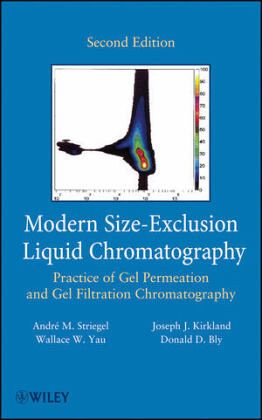
The Second Edition of Modern Size-Exclusion Chromatography offers a complete guide to the theories, methods, and applications of size-exclusion chromatography. It provides an unparalleled, integrated, up-to-date treatment of gel permeation and gel filtration chromatography. With its detailed descriptions of techniques, data handling, compilations of information on columns and column packings, and tables of important solvents and reference materials, the book offers readers everything they need to take full advantage of this popular macromolecular characterization technique.
Since publication of the first edition in 1979, there have been many important advances in the field of size-exclusion chromatography. This Second Edition brings the book thoroughly up to date, with expert coverage of:
New and emerging industrial and research applications
Practical aspects of size-exclusion chromatography (SEC) and multidetector and multidimensional SEC technologies for polymer architecture and copolymer analysis
Updated information on the latest equipment and techniques
New best practices for the lab
SEC in relation to polymer characterization techniques such as GPEC, LCCC, and rheology
Throughout the text, detailed examples guide you step by step through all the latest techniques and applications. With its extensive revisions and updates written by leading experts and pioneers in the field, Modern Size-Exclusion Liquid Chromatography remains the definitive resource for the broad range of researchers and scientists who use HPLC and GPC methods.
Hinweis: Dieser Artikel kann nur an eine deutsche Lieferadresse ausgeliefert werden.
The Second Edition of Modern Size-Exclusion Chromatography offers a complete guide to the theories, methods, and applications of size-exclusion chromatography. It provides an unparalleled, integrated, up-to-date treatment of gel permeation and gel filtration chromatography. With its detailed descriptions of techniques, data handling, compilations of information on columns and column packings, and tables of important solvents and reference materials, the book offers readers everything they need to take full advantage of this popular macromolecular characterization technique.
Since publication of the first edition in 1979, there have been many important advances in the field of size-exclusion chromatography. This Second Edition brings the book thoroughly up to date, with expert coverage of:
New and emerging industrial and research applications
Practical aspects of size-exclusion chromatography (SEC) and multidetector and multidimensional SEC technologies for polymer architecture and copolymer analysis
Updated information on the latest equipment and techniques
New best practices for the lab
SEC in relation to polymer characterization techniques such as GPEC, LCCC, and rheology
Throughout the text, detailed examples guide you step by step through all the latest techniques and applications. With its extensive revisions and updates written by leading experts and pioneers in the field, Modern Size-Exclusion Liquid Chromatography remains the definitive resource for the broad range of researchers and scientists who use HPLC and GPC methods.
Hinweis: Dieser Artikel kann nur an eine deutsche Lieferadresse ausgeliefert werden.