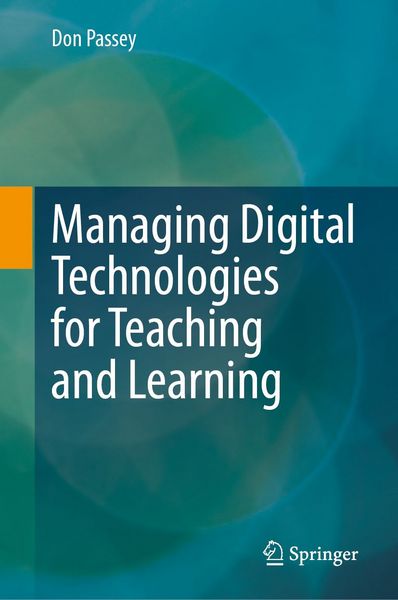
Managing Digital Technologies for Teaching and Learning
-
- Englisch ausgewählt
159,99 €
inkl. gesetzl. MwSt.,
Beschreibung
Produktdetails
Einband
Gebundene Ausgabe
Erscheinungsdatum
24.02.2027
Abbildungen
XX, 239 p. 7 illus., 6 illus. in color.
Verlag
SpringerSeitenzahl
239
Maße (B/H)
15,5/23,5 cm
Sprache
Englisch
ISBN
978-3-032-40894-5
Research has shown that digital technologies can positively support educational practices, for teaching and learning. However, the extent of the impact has been questioned, as it has not always been considered as extensive as it could be. One of the important factors that influences approaches and outcomes of teaching and learning impact is the management of digital technologies and their applications. This book is concerned with exploring the management of educational digital technologies in the context of school-based teaching and learning. It focuses on approaches to management that are involved and adopted by the number of groups that play an important role – not just pupils, teachers and school leaders, but also parents and guardians, educational authorities and agencies, educational advisors and inspectors, and policy makers at local, regional and national levels.
A key and distinctive feature of this book is the wide range of examples that are included to show how management of digital technologies has been accomplished and applied to educational processes that support the individual teacher and learner as well as groups of teachers and learners. The examples clearly show that management of educational applications that influence teaching and learning go beyond management practices in a school – parents and guardians, educational advisors and policy makers all play their part in a management that can lead to focused and successful outcomes. The examples provided offer a variety of approaches taken across a wide range of school types – primary, secondary and special schools as well as out-of-school provision. The examples are supported and framed by evidence from international and academic sources, and focus on contemporary challenges and concerns that pupils, teachers and parents and guardians face.
When the management of digital technologies is considered, key questions often asked concern how it has been achieved and what the results are. This book provides examples that provide details of how management has been handled, key factors involved, and outcomes that have resulted. Whilst the book provides contemporary examples, it is also focused on the future. The outcomes of research indicate that emphasis should be placed on the long-term, so that whatever is put in place can endure from a learning and teaching perspective. Whilst managing continuous change is vital, research and examples show that a curriculum can be created that can endure for much longer than the lifetime of a digital technology. Managing digital technology applications to and purposes for teaching and learning is paramount; digital technology replacement should follow careful monitoring and review of teaching and learning applications and purpose rather than leading these processes.
Noch keine Bewertungen vorhanden
Verfassen Sie die erste Bewertung zu diesem Artikel
Helfen Sie anderen Kundinnen und Kunden durch Ihre Meinung.
Kurze Frage zu unserer Seite
Vielen Dank für dein Feedback
Wir nutzen dein Feedback, um unsere Produktseiten zu verbessern. Bitte habe Verständnis, dass wir dir keine Rückmeldung geben können. Falls du Kontakt mit uns aufnehmen möchtest, kannst du dich aber gerne an unseren Kund*innenservice wenden.
zum Kundenservice