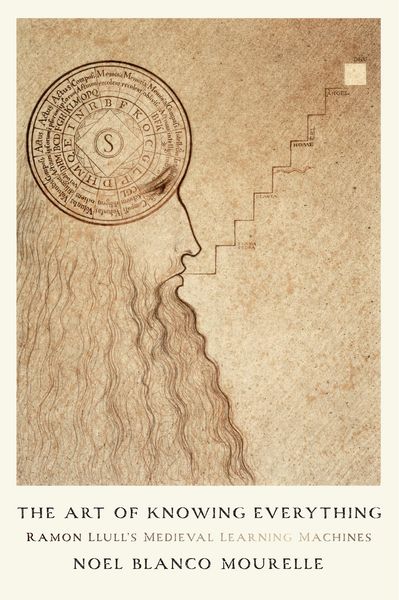
The Art of Knowing Everything Ramon Llull's Medieval Learning Machines
-
- Einzelkauf Download ausgewählt
-
Sprache:Englisch
64,99 €
inkl. gesetzl. MwSt.Beschreibung
Produktdetails
Format
ePUB
Kopierschutz
Nein
Family Sharing
Nein
Text-to-Speech
Ja
Erscheinungsdatum
28.07.2026
Verlag
Princeton University PressSeitenzahl
232 (Printausgabe)
Dateigröße
16803 KB
Sprache
Englisch
EAN
9781512829761
An exploration of medieval philosopher and theologian Ramon Llull and his philosophical system through medieval and early modern book technology
The Art of Knowing Everything explores the legacy of medieval philosopher and theologian Ramon Llull, tracing the transformation of Llull's philosophical system, known as the Art (Latin Ars), through medieval and early modern book technology. Operated by paper devices and combinatory diagrams, the Art was designed to generate a system of notation to prove the incontrovertibility of Christian faith. Llull envisioned the Art as an evangelizing tool that would combat the errors of unbelievers, transcend differences of language and culture, and universalize Christianity. In its afterlife, however, the Art was primarily deployed as a means to mechanize the process of producing knowledge about the world. This promise of the mechanization of universal knowledge claims, emblematized by the Art, captivated early modern students and readers of Llull's work.
Drawing on the Lullian tradition to develop a rigorous theory of technology and its role in knowledge production, Noel Blanco Mourelle shows how Llull and his disciples sought to disseminate the Art by perfecting the technology of the book, incorporating a series of geometrical figures and moveable circles to offer preachers and academics a new intellectual language. Between the fourteenth and the seventeenth centuries scholars and humanists gathered and experimented with the corpus of Llull's works in university libraries and royal courts. Through this material intellectual history of Llull and his reception, The Art of Knowing Everything reveals how the universalist aspirations of these thinkers were formative to early modern ideologies of imperial expansion and Christian universalism.
Noch keine Bewertungen vorhanden
Verfassen Sie die erste Bewertung zu diesem Artikel
Helfen Sie anderen Kundinnen und Kunden durch Ihre Meinung.
Kurze Frage zu unserer Seite
Vielen Dank für dein Feedback
Wir nutzen dein Feedback, um unsere Produktseiten zu verbessern. Bitte habe Verständnis, dass wir dir keine Rückmeldung geben können. Falls du Kontakt mit uns aufnehmen möchtest, kannst du dich aber gerne an unseren Kund*innenservice wenden.
zum Kundenservice