Beschreibung
Produktdetails
Einband
Gebundene Ausgabe
Erscheinungsdatum
28.10.2026
Abbildungen
XXXII, 1141 p. 1 illus.
Verlag
SpringerSeitenzahl
1141
Maße (L/B)
23,5/15,5 cm
Sprache
Englisch
ISBN
978-3-032-29511-8
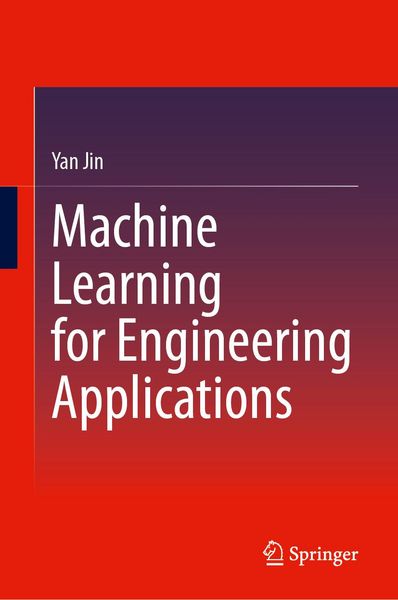
The book begins by presenting the necessary mathematical foundations in an accessible, engineering-centered way and then builds up machine learning (ML) concepts step by step, always linking them to engineering scenarios and real-world datasets. Engineering is being transformed by the data revolution: from smart manufacturing and sensor-rich infrastructure to predictive maintenance, autonomous systems, and intelligent product design. However, despite the explosion of ML in industry, there is a shortage of resources that systematically teach ML methods to engineers from a perspective of engineering applications and in a language and examples they understand. This book addresses this gap, helping engineers acquire both the mathematical confidence and ML know-how to lead and innovate in a rapidly evolving field.
The book demonstrates methods through both theoretical derivation and hands-on Python code, empowering readers to move from understanding to practical implementation. (An online Python code portal will be set up for the book.) Finally, the book covers emerging and specialized topics, such as physics-informed neural networks and agentic architectures, showing how ML can be tailored to leverage engineering knowledge and domain constraints for complex engineering applications.
Noch keine Bewertungen vorhanden
Verfassen Sie die erste Bewertung zu diesem Artikel
Helfen Sie anderen Kundinnen und Kunden durch Ihre Meinung.
Kurze Frage zu unserer Seite
Vielen Dank für dein Feedback
Wir nutzen dein Feedback, um unsere Produktseiten zu verbessern. Bitte habe Verständnis, dass wir dir keine Rückmeldung geben können. Falls du Kontakt mit uns aufnehmen möchtest, kannst du dich aber gerne an unseren Kund*innenservice wenden.
zum Kundenservice