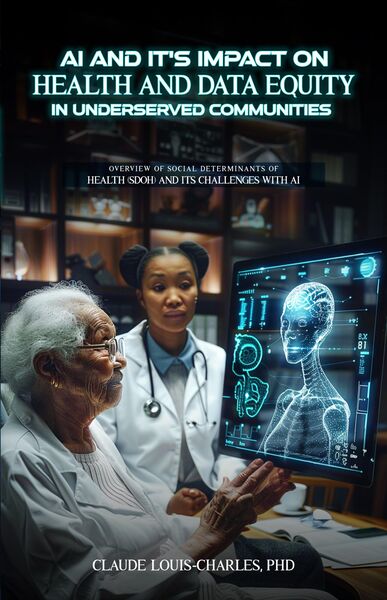
AI Impact on Health and Data Equity in Underserved Communities Overview of Social Determinants of Health (SDOH) and Health Related Social Needs (HRSN) and its Challenges
-
- Einzelkauf Download ausgewählt
-
Sprache:Englisch
8,89 €
inkl. gesetzl. MwSt.Beschreibung
Produktdetails
Format
ePUB 3
Kopierschutz
Nein
Family Sharing
Ja
Text-to-Speech
Ja
Erscheinungsdatum
08.10.2024
Verlag
PublishdriveSeitenzahl
232 (Printausgabe)
Dateigröße
17804 KB
Sprache
Englisch
EAN
9781972752371
Artificial intelligence is revolutionizing healthcare-but AI's potential to improve or worsen health disparities hinges on one question: whose data is represented, and whose is missing?
AI can reinforce health inequalities through biased algorithms, insufficient data on marginalized groups, and unequal access across socioeconomic lines. Or it can help address social determinants of health and improve population health outcomes for the communities that need it most. The difference is in how we design, deploy, and govern these systems.
This book is a comprehensive guide to that intersection.
You will learn how to:
. Understand the truth about poverty in America-who the underserved populations are, where they live, and why traditional healthcare systems fail them
. Distinguish between Social Determinants of Health (SDOH) and Health Related Social Needs (HRSN)-two related but distinct frameworks that shape how we address inequality
. See how mental health data and health equity intersect-the social, structural, and systemic determinants of mental health disparities
. Understand how AI creates and reinforces health and data inequality through developer bias, unrepresentative training data, and access barriers
. Discover how AI can help address inequalities when designed with inclusivity, representative data, and community participation
. Build inclusivity into strategic planning and incorporate community organizations into AI initiatives
. Check for bias in AI design-practical approaches to identifying and mitigating algorithmic discrimination before deployment
. Address mental health gaps and intervention strategies for underserved populations
. Understand metabesity and longevity disparities in underserved communities-and why the gap between U.S. health and wealth continues to widen
. Explore the human dimension and fragility of health in marginalized populations
. Navigate the shift from sick care to preventive medicine and understand how precision health can serve the underserved
. Understand pharmacy compounding and its role in healthcare access
. Learn how the FHIR Gravity Project standardizes SDOH data exchange across health systems
. Apply quality measures that capture equity, not just efficiency
. Implement AI governance frameworks that specifically protect underserved populations
. Train staff to understand the communities they serve-because technology without cultural competence is technology that fails
Includes a CDC case study on SDOH and chronic disease. Illustrated by Kyasia Morgan.
Noch keine Bewertungen vorhanden
Verfassen Sie die erste Bewertung zu diesem Artikel
Helfen Sie anderen Kundinnen und Kunden durch Ihre Meinung.
Kurze Frage zu unserer Seite
Vielen Dank für dein Feedback
Wir nutzen dein Feedback, um unsere Produktseiten zu verbessern. Bitte habe Verständnis, dass wir dir keine Rückmeldung geben können. Falls du Kontakt mit uns aufnehmen möchtest, kannst du dich aber gerne an unseren Kund*innenservice wenden.
zum Kundenservice