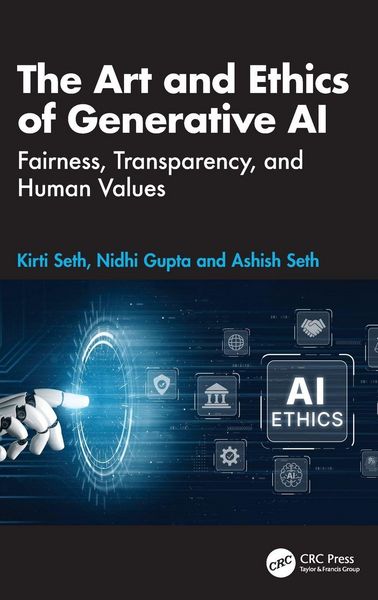
The Art and Ethics of Generative AI Fairness, Transparency, and Human Values
137,99 €
inkl. gesetzl. MwSt.,
Beschreibung
Produktdetails
Einband
Gebundene Ausgabe
Erscheinungsdatum
10.07.2026
Abbildungen
schwarz-weiss Illustrationen, Raster,schwarz-weiss, Zeichnungen, schwarz-weiss, Tabellen, schwarz-weiss
Verlag
Taylor & FrancisSeitenzahl
180
Maße (L/B/H)
23,4/15,6/1,3 cm
Gewicht
458 g
Sprache
Englisch
ISBN
978-1-04-119735-5
Generative artifical intelligence (AI) technologies are reshaping the way we create, communicate, and compute, presenting both unprecedented opportunities and profound challenges. As these systems increasingly influence decisions that shape our lives, it becomes clear that performance metrics alone cannot define their success. A deeper understanding of the intersection between technical innovation and human values is essential to navigate this transformative era.
The Art and Ethics of Generative AI: Fairness, Transparency, and Human Values provides a balanced exploration of generative AI, combining technical insights with ethical considerations. It explains generative model architectures and learning paradigms in an accessible way while addressing critical issues such as algorithmic bias, explainability challenges, and emerging regulatory approaches. Practical frameworks for responsible AI development are offered, alongside multidisciplinary perspectives that bridge technical and humanistic viewpoints. Abstract concepts are brought to life through practical illustrations, demonstrating how ethical considerations play out in real-world AI applications.
Designed for a wide audience, the book serves AI practitioners seeking actionable guidance for building responsible systems, researchers exploring nuanced ethical dimensions, educators and students looking for comprehensive learning materials, and policymakers needing governance insights. It is an essential resource for anyone engaged in the rapidly evolving AI ecosystem.
Noch keine Bewertungen vorhanden
Verfassen Sie die erste Bewertung zu diesem Artikel
Helfen Sie anderen Kundinnen und Kunden durch Ihre Meinung.
Kurze Frage zu unserer Seite
Vielen Dank für dein Feedback
Wir nutzen dein Feedback, um unsere Produktseiten zu verbessern. Bitte habe Verständnis, dass wir dir keine Rückmeldung geben können. Falls du Kontakt mit uns aufnehmen möchtest, kannst du dich aber gerne an unseren Kund*innenservice wenden.
zum Kundenservice