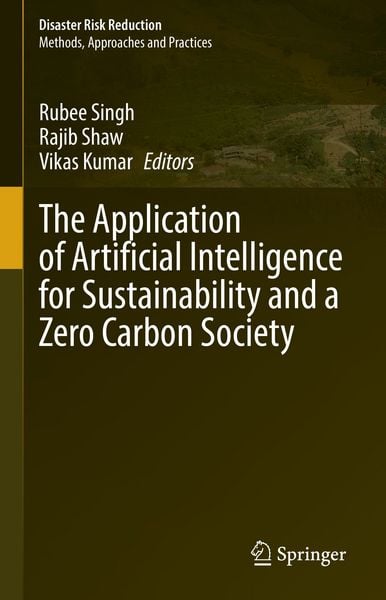
The Application of Artificial Intelligence for Sustainability and a Zero Carbon Society
-
- Englisch ausgewählt
171,99 €
inkl. gesetzl. MwSt.,
Beschreibung
Produktdetails
Einband
Gebundene Ausgabe
Erscheinungsdatum
28.10.2026
Abbildungen
XXIV, 280 p. 6 illus., 4 illus. in color.
Herausgeber
Rubee Singh + weitereVerlag
Springer SingaporeSeitenzahl
280
Maße (L/B)
23,5/15,5 cm
Auflage
1. Auflage
Sprache
Englisch
ISBN
978-981-9581-52-8
This book explores the transformative role of artificial intelligence (AI) in achieving the zero-carbon industry targets, as set by the Paris Agreement on climate change. It provides a comprehensive overview of how AI can be applied across sectors such as energy, transportation, manufacturing, and waste management to decarbonize industrial activities and promote sustainability. The volume also provides a comprehensive explanation, roadmap, and analysis of tactics and technological advancements. The book contributes to propel both developed and developing countries towards net zero societies, aligning themselves with the United Nations' urgent call to reduce carbon emissions and meet the goal of creating a more sustainable planet.
Focusing on the critical areas of emissions reduction, sustainable supply chains, and sustainability, the book offers practical insights for researchers, industry professionals, and students. By examining AI's ability to predict climate change consequences, optimize energy use, and forecast emissions from non-renewable energy sources, the book highlights innovative solutions for creating a resilient and sustainable industrial ecosystem in net zero economy.
The book consists of three parts, focusing on the application of AI in enhancing sustainability efforts, the critical role of human capital in driving the zero-carbon transition, and the integration of AI with key performance indicators for sustainable business practices. The volume also explores the necessary global policies, financial incentives, and international collaborations required to accelerate the zero-carbon transformation, offering actionable strategies for a wide array of industries. This book is a valuable resource for anyone involved in AI, sustainability, climate change, and zero-carbon strategies by providing valuable insights into how AI can address climate change challenges while fostering environmental sustainability.
Noch keine Bewertungen vorhanden
Verfassen Sie die erste Bewertung zu diesem Artikel
Helfen Sie anderen Kundinnen und Kunden durch Ihre Meinung.
Kurze Frage zu unserer Seite
Vielen Dank für dein Feedback
Wir nutzen dein Feedback, um unsere Produktseiten zu verbessern. Bitte habe Verständnis, dass wir dir keine Rückmeldung geben können. Falls du Kontakt mit uns aufnehmen möchtest, kannst du dich aber gerne an unseren Kund*innenservice wenden.
zum Kundenservice