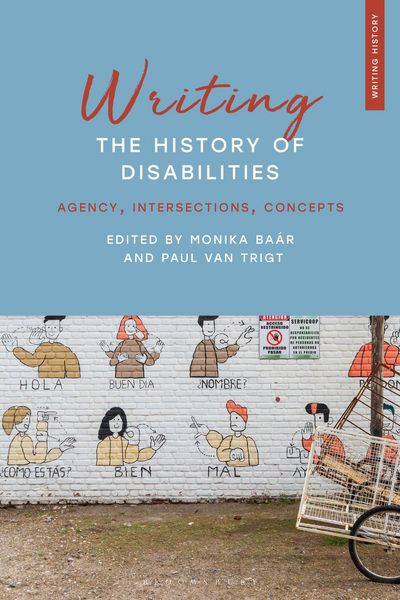
Writing the History of Disabilities Agency, Intersections, Concepts
-
- Englisch ausgewählt
89,99 €
inkl. gesetzl. MwSt.,
Beschreibung
Produktdetails
Einband
Gebundene Ausgabe
Erscheinungsdatum
12.11.2026
Herausgeber
Monika Baár + weitereVerlag
Bloomsbury AcademicSeitenzahl
256
Maße (L/B/H)
23,4/15,6/1,4 cm
Gewicht
366 g
Sprache
Englisch
ISBN
978-1-350-52173-5
This book uses a variety of case studies to examine how disability can be used as an analytical lens, and provide new perspectives on historical research.
Approximately 15-20% of the world's population is estimated to be disabled. Writing the History of Disabilities examines 13 case studies, ranging from the activism of Italian First World War veterans, to the social history of Tuberculosis in North America, and the history of disability in sport. Each chapter encourages wider historical engagement with the social and cultural impacts of disability, and demonstrates how the history of disability can interact with existing theoretical frameworks.
This book demonstrates the potential for disability as an analytical concept, both in its own right, and as a new approach to the study of history. Illuminating the intersections between disability and class, race, gender, and sexuality, this volume examines disability alongside a range of historical methodologies, and invites students to include disability in their analytical toolkit, and create more inclusive histories.
Noch keine Bewertungen vorhanden
Verfassen Sie die erste Bewertung zu diesem Artikel
Helfen Sie anderen Kundinnen und Kunden durch Ihre Meinung.
Kurze Frage zu unserer Seite
Vielen Dank für dein Feedback
Wir nutzen dein Feedback, um unsere Produktseiten zu verbessern. Bitte habe Verständnis, dass wir dir keine Rückmeldung geben können. Falls du Kontakt mit uns aufnehmen möchtest, kannst du dich aber gerne an unseren Kund*innenservice wenden.
zum Kundenservice