KI-Beratung Beta

Gutscheinbedingungen

**Gültig vom 23.11. bis 30.11.2026 | Gültig für nicht preisgebundene fremdsprachige Bücher | Einzelne Artikel können ausgeschlossen sein | Online auf www.bücher.de einlösbar | Click & Collect nur mit Online-Zahlung (Paypal/Kreditkarte) vorab | Nicht kombinierbar mit anderen Gutscheinen oder Preisaktionen | Nur einmal pro Einkauf einlösbar | Gutschein wird auf max. 500€ Bestellwert angerechnet | Keine Barauszahlung | Nicht gültig für Versandkosten und Services

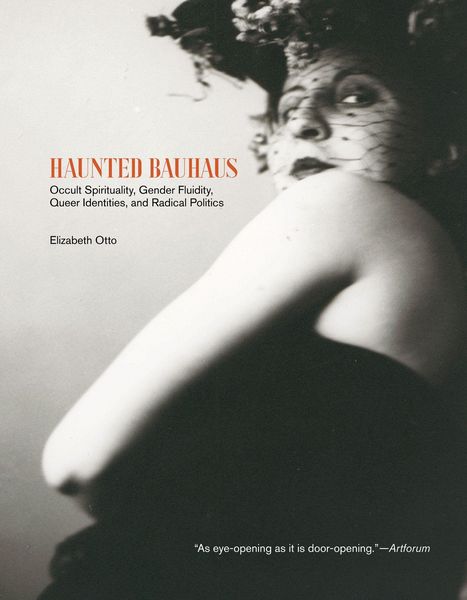
Produktbild: Haunted Bauhaus

Haunted Bauhaus Occult Spirituality, Gender Fluidity, Queer Identities, and Radical Politics

43,99 €

inkl. gesetzl. MwSt., Versandkostenfrei


Beschreibung

An investigation of the irrational and the unconventional currents swirling behind the Bauhaus's signature sleek surfaces and austere structures. The Bauhaus (1919–1933) is widely regarded as the twentieth century's most influential art, architecture, and design school, celebrated as the archetypal movement...

Beschreibung

An investigation of the irrational and the unconventional currents swirling behind the Bauhaus's signature sleek surfaces and austere structures.
The Bauhaus (1919–1933) is widely regarded as the twentieth century's most influential art, architecture, and design school, celebrated as the archetypal movement of rational modernism and famous for bringing functional and elegant design to the masses. In Haunted Bauhaus, art historian Elizabeth Otto liberates Bauhaus history, uncovering a movement that is vastly more diverse and paradoxical than previously assumed. Otto traces the surprising trajectories of the school's engagement with occult spirituality, gender fluidity, queer identities, and radical politics. The Bauhaus, she shows us, is haunted by these untold stories.
The Bauhaus is most often associated with a handful of famous artists, architects, and designers—notably Paul Klee, Walter Gropius, László Moholy-Nagy, and Marcel Breuer. Otto enlarges this narrow focus by reclaiming the historically marginalized lives and accomplishments of many of the more than 1,200 Bauhaus teachers and students (the so-called Bauhäusler), arguing that they are central to our understanding of this movement. Otto reveals Bauhaus members' spiritual experimentation, expressed in double-exposed “spirit photographs” and enacted in breathing exercises and nude gymnastics; their explorations of the dark sides of masculinity and emerging female identities; the “queer hauntology” of certain Bauhaus works; and the role of radical politics on both the left and the right—during the school's Communist period, when some of the Bauhäusler put their skills to work for the revolution, and, later, into the service of the Nazis.
With Haunted Bauhaus, Otto not only expands our knowledge of a foundational movement of modern art, architecture, and design, she also provides the first sustained investigation of the irrational and the unconventional currents swirling behind the Bauhaus's signature sleek surfaces and austere structures. This is a fresh, wild ride through the Bauhaus you thought you knew.

Produktdetails

Einband

Taschenbuch

Erscheinungsdatum

17.02.2026

Abbildungen

55 color photos, 26 b&w illustrations

Verlag The MIT Press

Produktdetails

Einband

Taschenbuch

Erscheinungsdatum

17.02.2026

Abbildungen

55 color photos, 26 b&w illustrations

Verlag The MIT Press
Seitenzahl

298

Maße (L/B/H)

22,6/18/1,7 cm

Gewicht

663 g

Sprache

Englisch

ISBN

978-0-262-05713-4

Herstelleradresse

Libri GmbH
Europaallee 1
36244 Bad Hersfeld
DE

Email: gpsr@libri.de

Noch keine Bewertungen vorhanden

Verfassen Sie die erste Bewertung zu diesem Artikel

Helfen Sie anderen Kundinnen und Kunden durch Ihre Meinung.

Kundinnen und Kunden meinen

Bewertungen (0)

Weitere Artikel findest du in

Die Leseprobe wird geladen.
  • Produktbild: Haunted Bauhaus
  • List of Illustrations
    Acknowledgments
    Introduction: Bauhaus Utopias
    Chapter 1: Bauhaus Spirits
    Chapter 2: New Visions of the Artist: The Artist-Engineer and Shadow Masculinity
    Chapter 3: Bauhaus Femininities in Transformation
    Chapter 4: Queer Bauhaus
    Chapter 5: Red Bauhaus, Brown Bauhaus
    Endnotes
    Bibliography
    Index