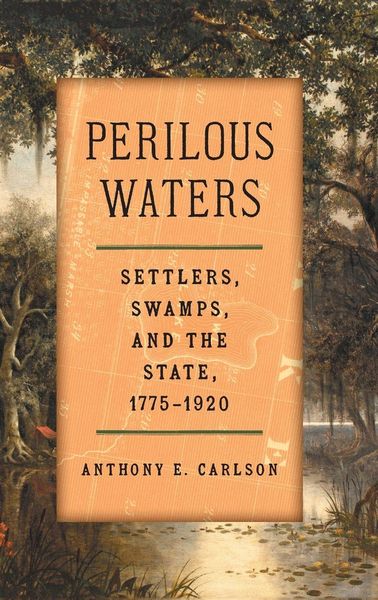
Perilous Waters Settlers, Swamps, and the State, 1775-1920
-
- Hardcover ausgewählt
- Taschenbuch
- eBook
-
Sprache:Englisch
116,99 €
inkl. gesetzl. MwSt.,
Lieferung nach Hause
Beschreibung
Produktdetails
Einband
Gebundene Ausgabe
Erscheinungsdatum
24.03.2026
Verlag
The University of North Carolina PressSeitenzahl
282
Maße (L/B/H)
24/16,1/2,1 cm
Gewicht
642 g
Sprache
Englisch
ISBN
978-1-4696-9479-5
Wetlands—particularly swamps—have evoked contradictory responses from different groups in the United States, from the early republic to the end of World War I. White, enslaved, and Indigenous peoples alternately envisioned swamps as future agricultural paradises, uninhabitable wastelands, portals to freedom, spaces to gather vital resources, eugenic sanctuaries, and future homes for settlers. This contested, evolving thinking shaped how Americans interacted with swamps, and Perilous Waters addresses how those interactions influenced their management. Anthony E. Carlson shows how settlers demonized swamps as one of the gravest environmental impediments to agricultural expansion and the establishment of secure and stable communities. In doing so, they enlisted the knowledge, resources, and authority of the state to organize institutions that enabled drainage and erased any vestiges of prior occupation and usage. By the mid-nineteenth century, drainage had become a paramount public policy objective, giving rise to new social institutions and the mobilization of state resources to assist settlers in fashioning dry, healthy, and domesticated landscapes. After 1900, all levels of government worked to implement cooperative social institutions and systemize environmental and technological knowledge to facilitate drainage and accelerate the transformation of the nation’s wet spaces into farms and crop fields.
Noch keine Bewertungen vorhanden
Verfassen Sie die erste Bewertung zu diesem Artikel
Helfen Sie anderen Kundinnen und Kunden durch Ihre Meinung.
Kurze Frage zu unserer Seite
Vielen Dank für dein Feedback
Wir nutzen dein Feedback, um unsere Produktseiten zu verbessern. Bitte habe Verständnis, dass wir dir keine Rückmeldung geben können. Falls du Kontakt mit uns aufnehmen möchtest, kannst du dich aber gerne an unseren Kund*innenservice wenden.
zum Kundenservice