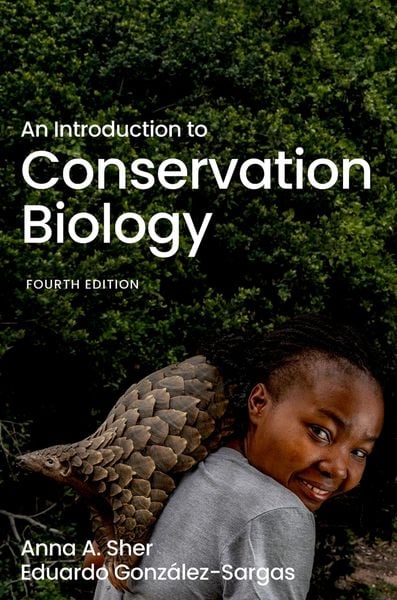
Produktbild: An Introduction to Conservation Biology

An Introduction to Conservation Biology

149,99 €

inkl. gesetzl. MwSt., Versandkostenfrei

Lieferung nach Hause

Beschreibung

Produktdetails

Einband

Taschenbuch

Erscheinungsdatum

10.05.2026

Verlag

Oxford Academic

Seitenzahl

558

Maße (L/B/H)

23,4/18,5/2,6 cm

Gewicht

1066 g

Auflage

4 Revised edition

Sprache

Englisch

ISBN

978-0-19-776275-2

Beschreibung

Produktdetails

Einband

Taschenbuch

Erscheinungsdatum

10.05.2026

Verlag

Oxford Academic

Seitenzahl

558

Maße (L/B/H)

23,4/18,5/2,6 cm

Gewicht

1066 g

Auflage

4 Revised edition

Sprache

Englisch

ISBN

978-0-19-776275-2

Herstelleradresse

Libri GmbH
Europaallee 1
36244 Bad Hersfeld
DE

Email: gpsr@libri.de

Noch keine Bewertungen vorhanden

Verfassen Sie die erste Bewertung zu diesem Artikel

Helfen Sie anderen Kundinnen und Kunden durch Ihre Meinung.

Kundinnen und Kunden meinen

Bewertungen (0)

  • Produktbild: An Introduction to Conservation Biology
    • 1 Defining Conservation Biology

    • 1.1 The New Science of Conservation Biology

    • The Roots of Conservation Biology

    • A New Science Is Born

    • The Interdisciplinary Approach: A Case Study with Sea Turtles

    • 1.2 The Organizational Values of Conservation Biology

    • 1.3 Looking to the Future

    • Summary

    • 2 What Is Biodiversity?

    • 2.1 Species Diversity

    • What Is a Species?

    • Measuring Species Diversity

    • 2.2 Genetic Diversity

    • How Does Genetic Diversity Arise?

    • Measuring Genetic Diversity

    • 2.3 Ecosystem Diversity

    • What Are Communities and Ecosystems?

    • Species Interactions Within Ecosystems

    • Trophic Levels

    • Food Chains and Food Webs

    • Keystone Species and Resources

    • Ecosystem Dynamics

    • 2.4 Biodiversity Worldwide

    • How Many Species Exist Worldwide?

    • Where Is the World's Biodiversity Found?

    • The Distribution of Species

    • Summary

    • 3 The Value of Biodiversity

    • 3.1 Ecological and Environmental Economics

    • Cost-Benefit Analysis

    • Financing Conservation

    • What Are Species Worth?

    • Ecosystem Services

    • 3.2 Use Values

    • Direct Use Values

    • Consumptive Use Value

    • Productive Use Value

    • Indirect Use Values

    • Ecosystem Productivity

    • Water and Soil Protection

    • Climate Regulation

    • Species Relationships and Environmental Monitors

    • Amenity Value

    • Educational and Scientific Value

    • 3.3 The Long-Term View: Option Value

    • 3.4 Existence Value

    • 3.5 Environmental Ethics

    • Ethical Values of Biodiversity

    • Deep Ecology

    • Summary

    • 4 Threats to Biodiversity: Habitat Change

    • 4.1 Human Population Growth and Its Impact

    • 4.2 Habitat Destruction

    • Tropical Rain Forests

    • Other Threatened Habitats

    • Desertification

    • 4.3 Habitat Fragmentation

    • Threats Posed by Habitat Fragmentation

    • Edge Effects

    • 4.4 Environmental Degradation and Pollution

    • Pesticide Pollution

    • Water Pollution

    • Air Pollution

    • 4.5 A Concluding Remark and Reason for Hope

    • Summary

    • 5 Climate Change and Other Threats to Biodiversity

    • 5.1 Global Climate Change

    • The Relationship Between Carbon and Temperature

    • Cascading Effects of Increased Temperature

    • Ocean Acidification, Warming, and Rising Sea Level

    • Shifting Species Ranges and Other Impacts

    • 5.2 Overexploitation

    • International Wildlife Trade

    • Commercial Harvesting

    • 5.3 Invasive Species

    • Threats Posed by Invasive Species

    • Invasive Species on Oceanic Islands

    • Invasive Species in Aquatic Habitats

    • The Ability of Species to Become Invasive

    • Control of Invasive Species

    • Genetically Modified Organisms and Conservation Biology

    • 5.4 Disease

    • 5.5 A Concluding Remark

    • Summary

    • 6 Extinction Risk

    • 6.1 The Meaning of "Extinct"

    • The Current, Human-Caused Mass Extinction

    • Extinction Rates in Aquatic Environments

    • 6.2 Measuring Extinction

    • Background Extinction Rates

    • Extinction Rate Predictions and the Island Biogeography Model

    • Extinction Rates and Habitat Loss

    • 6.3 Vulnerability to Extinction

    • 6.4 Problems of Small Populations

    • Loss of Genetic Diversity

    • Consequences of Reduced Genetic Diversity

    • Factors That Determine Effective Population Size

    • The Impact of Stochasticity

    • The Extinction Vortex

    • Summary

    • 7 Conserving Populations and Species

    • 7.1 Applied Population Biology

    • Researching Existing Information

    • New Data Through Fieldwork

    • Population Viability Analysis

    • Minimum Viable Population

    • Metapopulations

    • Long-Term Monitoring

    • 7.2 Conservation Categories

    • 7.3 Prioritization: What Should Be Protected?

    • The Species Approach

    • The Ecosystem Approach

    • The Wilderness Approach

    • The Hotspot Approach

    • 7.4 Legal Protection of Species

    • National Laws

    • International Agreements

    • Summary

    • 8 Establishing New Populations and Ex Situ Conservation

    • 8.1 Establishing and Reinforcing Populations

    • Special Considerations for Animal Programs

    • Behavioral Ecology of Released Animals

    • Establishing Plant Populations

    • The Status of New Populations

    • 8.2 Ex Situ Conservation Strategies

    • Zoos

    • Aquariums

    • Botanical Gardens

    • Seed Banks

    • 8.3 Can Technology Bring Back Extinct Species?

    • Summary

    • 9 Protected Areas

    • 9.1 Establishment and Classification of Protected Areas

    • Marine Protected Areas

    • The Effectiveness of Protected Areas

    • Measuring Effectiveness: Gap Analysis

    • 9.2 Designing Protected Areas

    • Protected Area Size and Characteristics

    • 9.3 Networks of Protected Areas

    • Habitat Corridors

    • 9.4 Landscape Ecology and Park Design

    • 9.5 Managing Protected Areas

    • Managing Sites

    • Monitoring Sites

    • Management and People

    • Zoning as a Solution to Conflicting Demands

    • Biosphere Reserves

    • 9.6 Challenges to Protected Area Management

    • Poaching

    • Trophy Hunting

    • Human-Animal Conflict

    • Degradation

    • Climate Change

    • Funding and Personnel

    • Summary

    • 10 Conservation Outside Protected Areas

    • 10.1 The Value of Unprotected Habitat

    • Military Land

    • Unprotected Ecosystems

    • Land That Is Undesirable to Humans

    • Private Land

    • 10.2 Conservation in Urban and Other Human-Dominated Areas

    • Urban Areas

    • Other Human-Dominated Landscapes

    • 10.3 Ecosystem Management

    • 10.4 Working with Local People

    • In Situ Agricultural Conservation

    • Extractive Reserves

    • Community-Based Initiatives

    • Payments for Ecosystem Services

    • Evaluating Conservation Initiatives That Involve Traditional Societies

    • 10.5 Case Studies: Namibia and Kenya

    • Summary

    • 11 Restoration Ecology

    • 11.1 Where to Start?

    • 11.2 Restoration in Urban Areas

    • 11.3 Restoration Using Animals

    • 11.4 Moving Targets of Restoration

    • 11.5 Restoration of Some Major Communities

    • Wetlands

    • Aquatic Systems

    • Grasslands

    • Tropical Dry Forest in Costa Rica

    • 11.6 The Future of Restoration Ecology

    • Summary

    • 12 Sustainable Development

    • 12.1 Sustainable Development at the Local Level

    • Local and Regional Conservation Regulations

    • Land Trusts and Related Strategies

    • Enforcement and Public Benefits

    • 12.2 Conservation at the National Level

    • 12.3 International Approaches to Sustainable Development

    • International Earth Summits

    • International Agreements That Protect Habitat

    • 12.4 Funding for Conservation

    • International Assistance

    • Other Sources of Funding

    • How Effective Is Conservation Funding in Achieving Sustainability Goals?

    • 12.5 Noneconomic Aspects of Sustainability

    • 12.6 Degrowth as a New Way to Approach Sustainable Development

    • Summary

    • 13 An Agenda for the Future

    • 13.1 Ongoing Problems and Possible Solutions

    • 13.2 The Role of Conservation Biologists

    • Responsible Use of Artificial Intelligence

    • Achieving the Agenda

    • Summary

    • Appendix

    • Glossary

    • Credits

    • References

    • Index