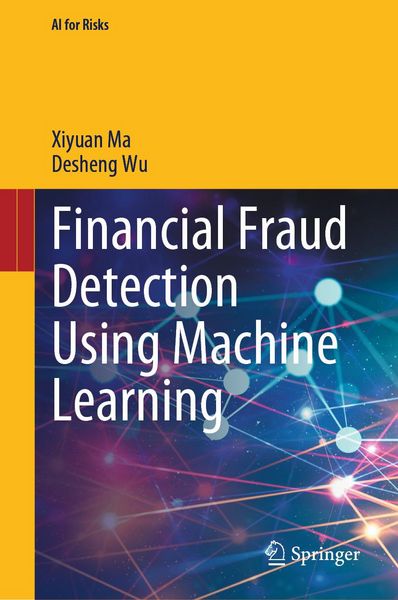
Financial Fraud Detection Using Machine Learning
160,49 €
inkl. gesetzl. MwSt.Beschreibung
Produktdetails
Format
Kopierschutz
Nein
Family Sharing
Nein
Text-to-Speech
Nein
Erscheinungsdatum
03.10.2025
Verlag
Springer Nature SingaporeSeitenzahl
212 (Printausgabe)
Dateigröße
18300 KB
Sprache
Englisch
EAN
9789819508402
This book serves as a comprehensive guide to learning various aspects of financial fraud, encompassing the related research, the current situation, potential causes, implementation process, detection methods, regulatory penalties and management challenges in publicly listed companies. In this book, readers learn about the fraudulent practices that may occur in corporate operations, the executing mechanisms, an identifying indicators framework, and diverse detection methods including qualitative and quantitative models. Quantitative models include discriminant analysis, econometric analysis, and machine learning (ML) models. This book highlights the application of ML algorithms to detect financial fraud detection and discusses their limitations, such as high false-positive costs, delayed detection, the demand for interdisciplinary expertise, dependency on specific application scenarios, and issues with fraud data quality. Each related chapter provides a structured overview of the problems addressed, the algorithms used, experimental result and comparisons. Additionally, this book examines the cost-benefit trade-offs faced by companies engaging in financial fraud, considering factors such as ethical dilemmas, opportunities, practical needs, exposure risks, and litigation costs. This book is written for financial regulation institutions, business leaders, auditors, academics, and anyone interested in financial fraud detection. It offers practical insights into effectively preventing and controlling financial fraud and an overview of the latest advancements in ML technologies. Through real-world case studies, readers will gain a deeper understanding of the financial fraud, how ML can be used to detect it, as well as its pitfalls and limitations. Overall, this book bridges the gap between theory and application, equipping readers to understand how to detect financial fraud with the power of accounting and ML in the modern business environment.
Noch keine Bewertungen vorhanden
Verfassen Sie die erste Bewertung zu diesem Artikel
Helfen Sie anderen Kundinnen und Kunden durch Ihre Meinung.
Kurze Frage zu unserer Seite
Vielen Dank für dein Feedback
Wir nutzen dein Feedback, um unsere Produktseiten zu verbessern. Bitte habe Verständnis, dass wir dir keine Rückmeldung geben können. Falls du Kontakt mit uns aufnehmen möchtest, kannst du dich aber gerne an unseren Kund*innenservice wenden.
zum Kundenservice