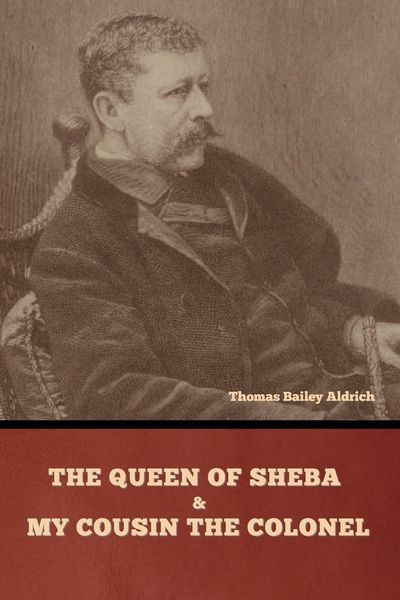
The Queen of Sheba and My Cousin the Colonel
-
- Hardcover
- Taschenbuch ausgewählt
- eBook
-
Sprache:Englisch
-
Verlag:Bibliotech Pr
16,99 €
inkl. gesetzl. MwSt.,
Beschreibung
Produktdetails
Einband
Taschenbuch
Erscheinungsdatum
04.09.2025
Verlag
Bibliotech PrSeitenzahl
148
Maße (L/B/H)
22,9/15,2/1 cm
Gewicht
252 g
Sprache
Englisch
EAN
9798897732456
This book features two charming, character-driven stories: The Queen of Sheba: Edward Lynde, a young man weary of routine life, embarks on a spontaneous journey through New England. Along the way, he meets a mysterious young woman who calls herself the "Queen of Sheba." Their brief but enchanting encounter leads to unexpected romance and self-reflection. My Cousin the Colonel: A humorous tale about a refined Southern gentleman-the Colonel-who visits his Northern relatives. Through his old-school charm and pride, the story explores post-Civil War cultural contrasts with wit and satire. Together, the stories blend romance, humor, and social commentary with Aldrich's graceful, witty style. About the Author Thomas Bailey Aldrich (November 11, 1836 - March 19, 1907) was an American writer, poet, critic, and editor. He is notable for his long editorship of The Atlantic Monthly, during which he published writers including Charles W. Chesnutt. He was also known for his semi-autobiographical book The Story of a Bad Boy, which established the "bad boy's book" subgenre in nineteenth-century American literature, and for his poetry. Aldrich wrote both in prose and verse. He was well known for his form in poetry. His successive volumes of verse, chiefly The Ballad of Babie Bell (1856), Pampinea, and Other Poems (1861), Cloth of Gold (1874), Flower and Thorn (1876), Friar Jerome's Beautiful Book (1881), Mercedes and Later Lyrics (1883), Wyndham Towers (1889), and the collected editions of 1865, 1882, 1897 and 1900, showed him to be a poet of lyrical skill and light touch. Critics believed him to show the influence of Robert Herrick. He was a critic of the dialect verse that was popular at the time. In a 1900 letter referencing contemporary poet James Whitcomb Riley, he wrote, "The English language is too sacred a thing to be mutilated and vulgarized". Aldrich's longer narrative or dramatic poems were not as successful.
Noch keine Bewertungen vorhanden
Verfassen Sie die erste Bewertung zu diesem Artikel
Helfen Sie anderen Kundinnen und Kunden durch Ihre Meinung.
Kurze Frage zu unserer Seite
Vielen Dank für dein Feedback
Wir nutzen dein Feedback, um unsere Produktseiten zu verbessern. Bitte habe Verständnis, dass wir dir keine Rückmeldung geben können. Falls du Kontakt mit uns aufnehmen möchtest, kannst du dich aber gerne an unseren Kund*innenservice wenden.
zum Kundenservice