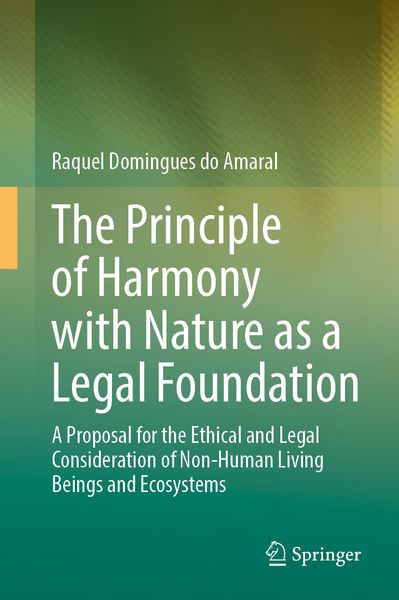
The Principle of Harmony with Nature as a Legal Foundation A Proposal for the Ethical and Legal Consideration of Non-Human Living Beings and Ecosystems
-
- Englisch ausgewählt
149,99 €
UVP
171,19 €
inkl. gesetzl. MwSt.,
Lieferung nach Hause
Beschreibung
Produktdetails
Einband
Gebundene Ausgabe
Erscheinungsdatum
16.10.2025
Verlag
SpringerSeitenzahl
308
Maße (L/B/H)
24,1/16/2,4 cm
Gewicht
596 g
Sprache
Englisch
ISBN
978-3-032-05474-6
This book offers a proposal for the theoretical basis for the normative character of harmony with nature in the statement of UN Resolution 64/196, which recognizes an immanent principle of the natural laws that govern the biosphere. This principle has been reproduced in human language through ethical narratives rooted in the ancient cultures of both Western and Eastern peoples, particularly in the ways of living of indigenous peoples.
The work aims to propose the ethical narrative of harmony with nature as a pre-legal and indisputable principle, which urgently needs to be recognized to ensure the flourishing of life on Earth, including human life. It also proposes the hypothesis of recognizing the normativity of harmony with nature as a general principle of law in the international environmental field, as covered by Article 38 of the International Court's statute. Considering the long history of nature's rights, from ancient times to the Rio Declaration on Environment and Development, harmony with nature was established in Principle 1, culminating in UN reports and resolutions under the title "Harmony with Nature."
Furthermore, the book demonstrates that Article 225, caput, of the Federal Constitution of Brazil, when referring to ecological balance, encompasses the normative core of the principle of harmony with nature. It shows that the principle of harmony with nature, in its integrative role, acts as a normative source of biological dignity, intrinsic value, and the legal personality of non-human living beings and holistic organic entities. Based on the concept of biological legal personality, it proposes the recognition of three biological personalities entitled to their intrinsic rights to vital impulse: the vegetable biological personality, the animal biological personality, and the systemic biological personality. Additionally, it demonstrates the compatibility of the principle of harmony with nature with the principle of human dignity in its ecological dimension.
As a multidisciplinary research, this book impacts not only the theory of law but also other spheres of knowledge such as ontology and ecological ethics. The book is intended for the academic public involved in research on the rights of nature, governmental and non-governmental organizations responsible for the construction of environmental policies to defend the rights of human and non-human living beings, as well as lawyers who advocate for the rights of nature.
Kundinnen und Kunden meinen
Verfassen Sie die erste Bewertung zu diesem Artikel
Helfen Sie anderen Kund*innen durch Ihre Meinung
Kurze Frage zu unserer Seite
Vielen Dank für dein Feedback
Wir nutzen dein Feedback, um unsere Produktseiten zu verbessern. Bitte habe Verständnis, dass wir dir keine Rückmeldung geben können. Falls du Kontakt mit uns aufnehmen möchtest, kannst du dich aber gerne an unseren Kund*innenservice wenden.
zum Kundenservice