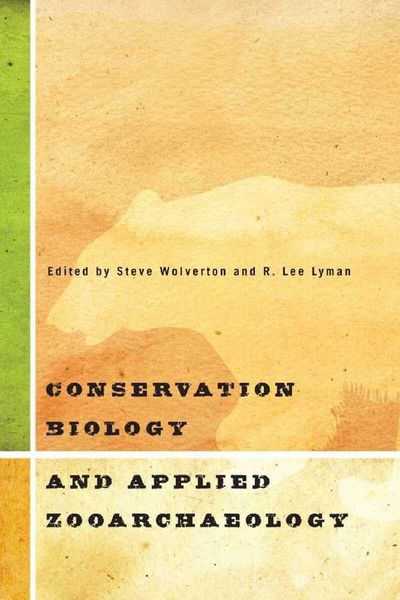
Conservation Biology and Applied Zooarchaeology
-
- Englisch ausgewählt
29,99 €
inkl. gesetzl. MwSt.,
Lieferung nach Hause
Beschreibung
Produktdetails
Einband
Taschenbuch
Erscheinungsdatum
10.06.2025
Abbildungen
30 illustrations, 20 tables
Herausgeber
Steve Wolverton + weitereVerlag
The University of Arizona PressSeitenzahl
256
Maße (L/B/H)
22,6/15/1,8 cm
Gewicht
373 g
Sprache
Englisch
ISBN
978-0-8165-5556-7
Until now, the research of applied zooarchaeologists has not had a significant impact on the work of conservation scientists. This book is designed to show how zooarchaeology can productively inform conservation science. Conservation Biology and Applied Zooarchaeology offers a set of case studies that use animal remains from archaeological and paleontological sites to provide information that has direct implications for wildlife management and conservation biology. It introduces conservation biologists to zooarchaeology, a sub-field of archaeology and ethnobiology, and provides a brief historical account of the development of applied zooarchaeology.
The case studies, which utilize palaeozoological data, cover a variety of animals and environments, including the marine ecology of shellfish and fish, potential restoration sites for Sandhill Cranes, freshwater mussel biogeography and stream ecology, conservation of terrestrial mammals such as American black bears, and even a consideration of the validity of the Pleistocene 'rewilding' movement. The volume closes with an important new essay on the history, value, and application of applied zooarchaeology by R. Lee Lyman, which updates his classic 1996 paper that encouraged zooarchaeologists to apply their findings to present-day environmental challenges.
Each case study provides detailed analysis using the approaches of zooarchaeology and concludes with precise implications for conservation biology. Essays also address issues of political and social ecology, which have frequently been missing from the discussions of conservation scientists. As the editors note, all conservation actions occur in economic, social, and political contexts. Until now, however, the management implications of zooarchaeological research have rarely been spelled out so clearly.
Noch keine Bewertungen vorhanden
Verfassen Sie die erste Bewertung zu diesem Artikel
Helfen Sie anderen Kundinnen und Kunden durch Ihre Meinung.
Kurze Frage zu unserer Seite
Vielen Dank für dein Feedback
Wir nutzen dein Feedback, um unsere Produktseiten zu verbessern. Bitte habe Verständnis, dass wir dir keine Rückmeldung geben können. Falls du Kontakt mit uns aufnehmen möchtest, kannst du dich aber gerne an unseren Kund*innenservice wenden.
zum Kundenservice