KI-Beratung Beta

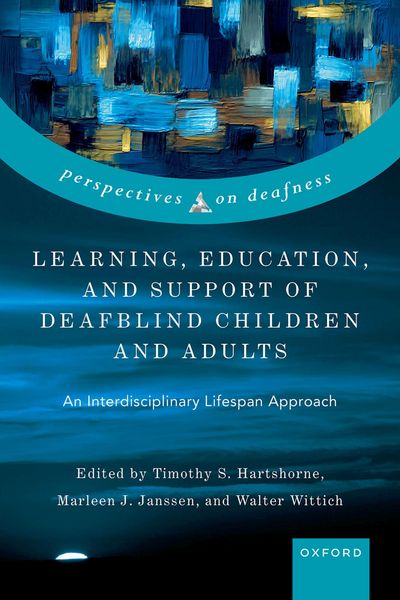
Produktbild: Learning, Education, and Support of Deafblind Children and Adults

Learning, Education, and Support of Deafblind Children and Adults An Interdisciplinary Lifespan Approach

159,99 €

inkl. gesetzl. MwSt., Versandkostenfrei


Beschreibung

Produktdetails

Einband

Gebundene Ausgabe

Erscheinungsdatum

11.12.2025

Herausgeber

Timothy S. Hartshorne + weitere

Verlag

Oxford University Press

Seitenzahl

444

Maße (L/B/H)

23,9/16,6/3,5 cm

Gewicht

820 g

Sprache

Englisch

ISBN

978-0-19-288722-1

Beschreibung

Produktdetails

Einband

Gebundene Ausgabe

Erscheinungsdatum

11.12.2025

Herausgeber

Verlag

Oxford University Press

Seitenzahl

444

Maße (L/B/H)

23,9/16,6/3,5 cm

Gewicht

820 g

Sprache

Englisch

ISBN

978-0-19-288722-1

Herstelleradresse

Libri GmbH
Europaallee 1
36244 Bad Hersfeld
DE

Email: gpsr@libri.de

Noch keine Bewertungen vorhanden

Verfassen Sie die erste Bewertung zu diesem Artikel

Helfen Sie anderen Kundinnen und Kunden durch Ihre Meinung.

Kundinnen und Kunden meinen

Bewertungen (0)

Weitere Artikel findest du in

Die Leseprobe wird geladen.
  • Produktbild: Learning, Education, and Support of Deafblind Children and Adults
    • Introduction
    • 1: Walter Wittich and Elio Riggillo: The Success Story of Elio Riggillo: A Case Study on Education
    • Section 1. Identification
    • 2: Megan Schmittel and Sharon Stelzer: Identification and Needs of Children with Deafblindness
    • 3: Peter Simcock: Bridging the Congenital - Acquired Divide: The Experiences of Those Aging with Deafblindness
    • 4: Bamini Gopinath: Prevalence, Incidence, and Risk Factors of Age-Related Deafblindness
    • 5: Kolbein Lyng and Else Marie Svingen: Identification and Rehabilitation of Severe Dual Sensory Losses in Old Age
    • Section 2. Specific Learning Areas and Interdisciplinary Support
    • 6: Jude Nicholas, Annika Maria Johannessen, and Trees van Nunen: Considering Tactile Cognition: Assessment of Learning Strategies Through Working Memory
    • 7: Hans Erik Frölander and Claes Möller: Deafblindness, Theory-of-mind, and Cognitive functioning in Alström Syndrome and Usher Syndrome Type 2
    • 8: Susan M. Bruce and Christopher Brum: Emergent Literacy in Individuals who are Deafblind
    • 9: Marguerite Tibaudo: The Implications of Cortical/Cerebral Visual Impairment (CVI) on Deafblind Educational Programming
    • 10: Natalina Martiniello: Touch Perception and Communication Across the Lifespan: Implications of Aging
    • 11: Natalina Martiniello: Braille Instruction after Acquired Deafblindness: Lessons from Adult Learning
    • Section 3. Learning, Self-determination, and Education
    • 12: Alexander Minnaert, Ineke Haakma, and Marleen J. Janssen: Autonomy-Support and Motivation in Learning of Students with Deafblindness
    • 13: Berit Rönnåsen: Learning Aspects from a Special Education Perspective
    • 14: Kate Chanock: Supporting a Deafblind Student's Learning at University: Case Study Of a Collaboration Between a Student, a Tactile Sign Interpreter, and a Learning Adviser
    • 15: Leda Kamenopoulou, Peter Simcock, Norman Robert Boie, and Walter Wittich: Exploring Education and Employment Facilitators in Low- and Middle-Income Countries: Remote Research with Deafblind Adults
    • Section 4. Participation, Work, and Recreation
    • 16: Atul Jaiswal and Walter Wittich: From Social Isolation to Social Inclusion through Social Participation among Individuals with Dual Sensory Impairment
    • 17: Mattias Ehn: Work-Life Balance in People with Usher Syndrome
    • 18: Lauren Lieberman and Pamela Beach: Deafblindness and Physical Activity
    • Section 5. Family Perspective
    • 19: Agneta Anderzén Carlsson, Maria Björk, Karina Huus, and Moa Wahlqvist: Health and Family Life in Families Where a Parent is Deafblind
    • 20: Rosemarie van den Breemer: Overcoming Epistemic Injustice in the Communicative Relationship Between Educational Professionals and Families with Children with Congenital Deafblindness
    • 21: Sarah M. Sykes and Timothy S. Hartshorne: Medical Experiences and Trauma in Children and Adolescents with Charge Syndrome
    • 22: Timothy S. Hartshorne: The Impact of CHARGE Syndrome on Parents and Siblings
    • 23: Saskia Damen and Eline Heppe: The Impact of Usher Syndrome on Families: A Closer Look at Their Support Needs
    • Section 6. Professionalization and Interdisciplinary Approaches
    • 24: Amy T. Parker, Lanya L. McKittrick, and Adam Graves: Considering Circles of Evidence to Inform Integrative Educational Standards for Personnel Serving Students who are Deafblind
    • 25: Lillian J. Slavin: Educational Planning for Students with CHARGE Syndrome
    • 26: Beth Kennedy: Trained Interveners Provide Access for People Who Are Deafblind
    • 27: Christopher Russell: Addressing Quality Pre-Service Training for Educators Working with Students who are Deafblind and have Cortical Visual Impairment (CVI) in the United States
    • 28: Julie Dufour, Marie-Claude Lavoie, Bernadette Gavouyère, and Catherine Houtekier: Deafblindness Rehabilitation Services in Quebec: A Unique and Interdisciplinary Approach
    • 29: Peter Simcock: What the Social Work Profession Can Offer Deafblind People: A Marginalized Area of Practice, with a Marginalized Population
    • Section 7. Research, Technology, and Innovations
    • 30: Jerry G. Petroff: Building Capacity for Successful Transition to Adult Life for Youth with Deafblindness: Creating and Promoting Evidence-Based and Promising Practices
    • 31: Elena Maceviciute, Raymond Holt, Astrid M.L. Kappers, Nasrine Olson, and Nils-Krister Persson: Haptic Navigation Technologies for Persons with Deafblindness
    • 32: Paul Mick and Natalie Morog: Cochlear Implantation for Individuals with Deafblindness
    • 33: Arathy Kartha and Gislin Dagnelie: Experiences of Retinal Prosthesis Wearers with Auditory Impairment