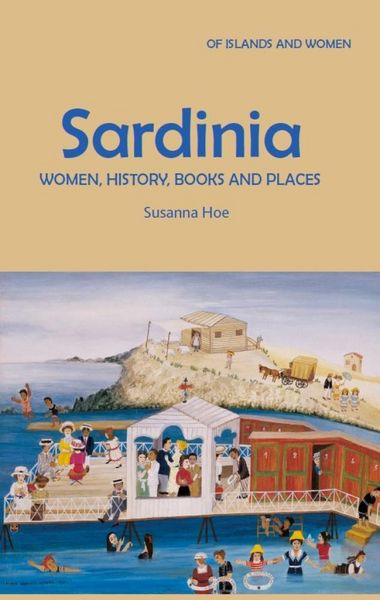
Sardinia: Women, History, Books and Places
-
- Einzelkauf Download ausgewählt
-
Sprache:Englisch
3,99 €
inkl. gesetzl. MwSt.Beschreibung
Produktdetails
Format
ePUB
Kopierschutz
Ja
Family Sharing
Ja
Text-to-Speech
Ja
Erscheinungsdatum
27.03.2025
Verlag
Mereo BooksSeitenzahl
(Printausgabe)
Dateigröße
9118 KB
Sprache
Englisch
EAN
9798230958796
Marianna Bussalai, the poet and anti-Fascist activist of the Barbagia region, wrote that she felt humiliated at school 'wondering why, in the history of Italy, Sardinia was never mentioned. I deduced that Sardinia was not Italy and had to have a separate history'. It is not surprising that islands tend to be different from the country to which they are in some way attached. But Sardinia's personality differs even more from that of Italy than one might expect. This book explores that difference through the island's women. Sardinia has been inhabited for longer than many European countries; of its earlier peoples, the best-known are the pre-historic Nuraghic. The hundreds of tall and mysterious megalithic towers which still grace the landscape are the most outward distinctive remnants of their civilisation. But it is from the myriad and tantalising clay statuettes found in ritual wells that it is possible to suggest aspects of women's lives. These are now in archaeological museums, such as that of Cagliari; many of the wells still exist. There followed invasions, colonisations and settlements - often bringing women exiles or landowners - by Phoenicians, Carthaginians, Romans, Muslims, Catalans, Genoese, Pisans, Spaniards and Savoyards, until finally the island became part of a united Italy, But, as the Swede Amelie Posse-Brazdova, sentenced to exile in Alghero during the First World War, was to write, 'For many centuries the Sardinians had been so fooled and exploited by the Italians, especially the Genoese merchants, that in the end they began to look upon them as their worst enemies.' However much that enmity is now little evident, Sardinia is still very much its own place, with its own languages. This is true of Alghero with its distinctive aura of Catalan occupation, of Marianna Bussalai's always intransigent Barbagia, and of Oristano where perhaps Sardinia's only well-known historical woman, Eleanora d'Arborea, ruled as Giudicessa in the fourteenth century. Although still particularly revered, she epitomised the strong and advanced women, from peasants to political activists, who emerge here from those often turbulent centuries.
Noch keine Bewertungen vorhanden
Verfassen Sie die erste Bewertung zu diesem Artikel
Helfen Sie anderen Kundinnen und Kunden durch Ihre Meinung.
Kurze Frage zu unserer Seite
Vielen Dank für dein Feedback
Wir nutzen dein Feedback, um unsere Produktseiten zu verbessern. Bitte habe Verständnis, dass wir dir keine Rückmeldung geben können. Falls du Kontakt mit uns aufnehmen möchtest, kannst du dich aber gerne an unseren Kund*innenservice wenden.
zum Kundenservice