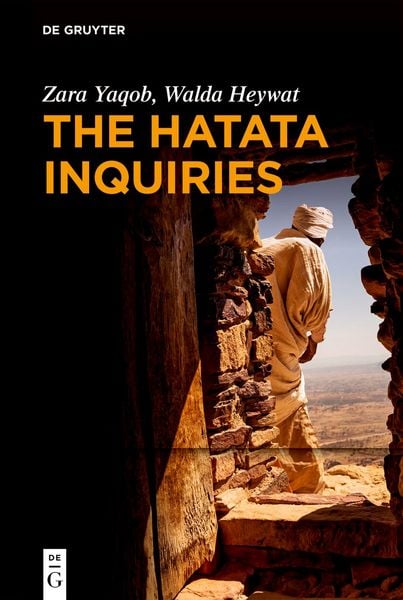
The Hatata Inquiries Two Texts of Seventeenth-Century African Philosophy from Ethiopia about Reason, the Creator, and Our Ethical Responsibilities
-
- Taschenbuch ausgewählt
- eBook
-
Sprache:Englisch
19,95 €
inkl. gesetzl. MwSt.,
Lieferung nach Hause
Beschreibung
Produktdetails
Verkaufsrang
46807
Einband
Taschenbuch
Erscheinungsdatum
30.06.2025
Abbildungen
9 b/w Illustrationen, schwarz-weiss Illustrationen
Herausgeber
Ralph Lee + weitereVerlag
De GruyterSeitenzahl
207
Maße (L/B/H)
23/15,5/1,3 cm
Gewicht
357 g
Auflage
1. Auflage
Übersetzt von
Ralph Lee + weitere
Sprache
Englisch
ISBN
978-3-11-221411-4
The Hatata Inquiries are two extraordinary texts of African philosophy composed in Ethiopia in the 1600s. Written in the ancient African language of Geʿez (Classical Ethiopic), these explorations of meaning and reason are deeply considered works of rhetoric. They advocate for women’s rights and rail against slavery. They offer ontological proofs for God and question biblical commands while delighting in the language of Psalms. They advise on right living. They put reason above belief, desire above asceticism, love above sectarianism, and the natural world above the human. They explore the nature of being as well as the nature of knowledge, the human, ethics, and the human relation with the divine. They are remarkable examples of something many assume doesn’t exist: early written African thought.
This accessible English translation of the Hatata Inquiries , along with extensive footnotes documenting the cultural and historical context and the work’s many textual allusions, enables all to read it and scholars to teach with it. The Hatata Inquiries are essential to understanding the global history of philosophy, being among the early works of rational philosophy.
The book includes a translation by Ralph Lee with Mehari Worku and Wendy Laura Belcher of the Hatata Zara Yaqob and the Hatata Walda Heywat . The appendices by Jeremy R. Brown provide information on the scribal interventions in and the differences between the manuscripts of the two Hatatas. The book also includes a map, chronology, summary of the translation principles, and a discussion of the authorship debate about the Hatata Inquiries .
Kundinnen und Kunden meinen
Verfassen Sie die erste Bewertung zu diesem Artikel
Helfen Sie anderen Kund*innen durch Ihre Meinung
Kurze Frage zu unserer Seite
Vielen Dank für dein Feedback
Wir nutzen dein Feedback, um unsere Produktseiten zu verbessern. Bitte habe Verständnis, dass wir dir keine Rückmeldung geben können. Falls du Kontakt mit uns aufnehmen möchtest, kannst du dich aber gerne an unseren Kund*innenservice wenden.
zum Kundenservice