Gutscheinbedingungen

**Gültig vom 07.09.2026 bis 09.09.2026 | Gültig für nicht preisgebundene fremdsprachige Bücher | Einzelne Artikel können ausgeschlossen sein | Online auf www.bücher.de einlösbar | Click & Collect nur mit Online-Zahlung (Paypal/Kreditkarte) vorab | Nicht kombinierbar mit anderen Gutscheinen oder Preisaktionen | Nur einmal pro Einkauf einlösbar | Gutschein wird auf max. 500€ Bestellwert angerechnet | Keine Barauszahlung | Nicht gültig für Versandkosten und Services

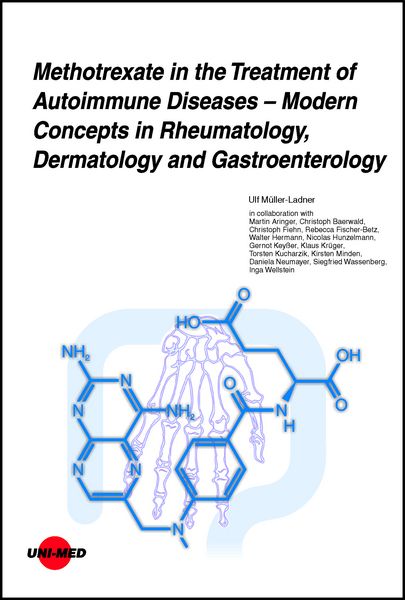
Produktbild: Methotrexate in the Treatment of Autoimmune Diseases – Modern Concepts in Rheumatology, Dermatology and Gastroenterology

Methotrexate in the Treatment of Autoimmune Diseases – Modern Concepts in Rheumatology, Dermatology and Gastroenterology

Aus der Reihe UNI-MED Science

4,95 €

inkl. gesetzl. MwSt., Versandkostenfrei


Beschreibung

Produktdetails

Einband

Gebundene Ausgabe

Erscheinungsdatum

27.02.2025

Abbildungen

23 Abb.

Verlag

Uni-Med

Seitenzahl

124

Maße (L/B/H)

1/17,7/24,6 cm

Gewicht

376 g

Auflage

1

Sprache

Englisch

ISBN

978-3-8374-1676-3

Beschreibung

Produktdetails

Einband

Gebundene Ausgabe

Erscheinungsdatum

27.02.2025

Abbildungen

23 Abb.

Verlag

Uni-Med

Seitenzahl

124

Maße (L/B/H)

1/17,7/24,6 cm

Gewicht

376 g

Auflage

1

Sprache

Englisch

ISBN

978-3-8374-1676-3

Herstelleradresse

UNI-MED
Alten Eichen 2|28359|Bremen|DE
info@uni-med.de

Noch keine Bewertungen vorhanden

Verfassen Sie die erste Bewertung zu diesem Artikel

Helfen Sie anderen Kundinnen und Kunden durch Ihre Meinung.

Kundinnen und Kunden meinen

Bewertungen (0)

  • Produktbild: Methotrexate in the Treatment of Autoimmune Diseases – Modern Concepts in Rheumatology, Dermatology and Gastroenterology
  • 1. Introduction 131.1. The current role of methotrexate in the treatment of rheumatoid arthritis 131.2. History of methotrexate treatment 131.2.1. The beginnings 131.2.2. Early studies for rheumatoid arthritis 141.2.3. Placebo-controlled short-term studies 141.2.4. Comparative studies with rarely used standard therapeutic agents 151.2.4.1. Meta-analysis of early DMARD comparative studies 181.2.5. Assessment of potential methotrexate toxicity 181.3. Recommendations and guidelines for the treatment of rheumatoid arthritis 191.4. References 202. Pharmacology of methotrexate 232.1. Structure 232.2. Absorption and route of administration 232.3. Pharmacokinetics and metabolization 242.4. Mechanism of action 252.5. Folic acid supplementation 272.6. Methotrexate effect as a combination partner with biologics 282.7. Genetic markers as predictors of methotrexate effect 282.8. Interactions 282.9. Dosage in elderly patients and in renal insufficiency 292.10. References 313. Methotrexate monotherapy in rheumatoid arthritis 343.1. Effectivity in long-term studies 343.1.1. Long-term observational studies 343.1.2. Influence on life expectancy and the Ratingen long-term study 343.2. Effectivity in old age, steroid-sparing effect 353.3. Influence on functional capacity 363.4. Duration of treatment as an indicator of effectivity 363.5. Comparison with leflunomide 373.6. Methotrexate monotherapy vs triple therapy 373.7. Comparison with biologics 383.7.1. Etanercept 383.7.2. Adalimumab 393.7.3. Abatacept 403.7.4. Tocilizumab 403.8. New substances, small molecules 413.8.1. Tofacitinib 413.8.2. Baricitinib 413.8.3. Upadacitinib 413.8.4. Filgotinib 423.8.5. Side effects of JAK inhibitors 423.9. References 424. Methotrexate as a component of combination therapy for rheumatoid arthritis 454.1. Studies with MTX/csDMARD combinations that are no longer or rarely used today 454.1.1. Azathioprine and D-penicillamine / bucillamine 454.1.2. Gold 464.1.3. Ciclosporin A 464.2. Studies with commonly used MTX-csDMARD combinations 474.2.1. Leflunomide 474.2.2. Triple combination MTX + SSZ + HCQ (O’Dell regimen) 484.2.3. Combinations MTX + SSZ and MTX + HCQ / MTX + CQ 504.2.4. Studies using the COBRA regimen 504.3. Studies on the combination of methotrexate + TNF inhibitors 514.3.1. Infliximab 514.3.2. Etanercept 524.3.3. Adalimumab 544.3.4. Certolizumab pegol and golimumab 544.4. Studies on the combination of methotrexate with non-TNF biologics 564.5. Studies on the combination of methotrexate with JAK inhibitors 604.6. References 615. Influence of methotrexate on radiographic progression 675.1. Radiographic progression in open long-term studies 675.2. Comparison of progression before and during methotrexate treatment 685.3. Comparison of progression using methotrexate vs other basic therapeutic agents 695.3.1. Comparison with azathioprine 695.3.2. Comparison with auranofin 695.3.3. Comparison with aurothiomalate 695.3.4. Comparison with sulfasalazine 705.3.5. Comparison with leflunomide 705.3.6. Comparison with various other DMARDs 705.4. Comparison of methotrexate / placebo with respect to inhibition of progression 705.5. Comparison of methotrexate / biologics or small molecules (JAK inhibitors) with respect to inhibition of progression 715.6. References 756. Methotrexate for spondyloarthritis, vasculitis and connective tissue diseases 786.1. Spondyloarthritis 786.1.1. Psoriatic arthritis 786.2. Arteritis and vasculitis 796.2.1. Giant cell arteritis 796.2.2. Vasculitis of small and medium-sized vessels 796.3. Connective tissue diseases 806.3.1. Systemic lupus erythematosus 806.3.2. Systemic sclerosis 806.3.3. Poly- and dermatomyositis 816.3.4. Mixed connective tissue disease 826.4. Summary 826.5. References 827. Methotrexate in childhood and adolescence 847.1. Efficacy in juvenile idiopathic arthritis 847.2. Juvenile idiopathic arthritis-associated uveitis 867.3. Predictors of treatment response in juvenile idiopathic arthritis 867.4. Dosage and form of administration of methotrexate in pediatric rheumatology 887.5. Tolerability of methotrexate 887.6. Adherence to therapy 897.7. References 918. Methotrexate for dermatological indications 938.1. Mechanisms of action of methotrexate in the skin 938.2. Methotrexate in the treatment of psoriasis vulgaris 938.2.1. Methotrexate as monotherapy for chronic plaque psoriasis 938.2.2. Methotrexate for other forms of psoriasis 948.2.2.1. Pustular psoriasis and nail psoriasis 948.2.3. Methotrexate in combination with other therapeutic agents 948.2.3.1. Combination with external therapeutic agents 948.2.3.2. Combinations with systemic therapeutics 958.2.4. Psoriasis-specific safety aspects of the use of methotrexate 968.3. Methotrexate in the treatment of localized scleroderma 988.4. Methotrexate in the treatment of bullous dermatoses 998.4.1. Bullous pemphigoid and related diseases 998.4.2. Pemphigus vulgaris 998.5. Methotrexate in the treatment of atopic dermatitis 998.6. Methotrexate for the treatment of rare skin diseases 1008.7. References 1009. Methotrexate in gastroenterology 1029.1. Methotrexate for Crohn’s disease 1029.2. Methotrexate for ulcerative colitis 1049.3. Mechanism of action of methotrexate in chronic inflammatory bowel disease 1049.4. Side effects of methotrexate therapy for gastrointestinal diseases 1059.5. Risk management when using methotrexate for chronic inflammatory bowel disease 1059.6. Methotrexate for other gastroenterological diseases 1069.7. Summary 1069.8. References 10610. Side effects of methotrexate 10810.1. Toxicity of methotrexate compared to other standard therapeutic agents 10810.2. Predictors of methotrexate toxicity 10810.3. Gastrointestinal side effects 10910.3.1. Hepatotoxicity 10910.4. Pulmonary toxicity 10910.5. Hematological toxicity 11010.6. Side effects affecting the skin, mucous membranes and subcutaneous tissue 11010.7. Infections 11110.8. Drug interactions 11110.9. Carcinogenicity 11210.10. Teratogenicity and pregnancy 11210.11. Rate of side effects depending on the route of administration and concomitant medication 11210.12. Summary 11310.13. References 11311. Methotrexate and family planning 11711.1. Planning a pregnancy 11711.2. Conception 11711.3. Consequences of (accidental) use during pregnancy 11811.4. Breastfeeding 11811.5. References 11812. Abbreviations 119 Index 121