KI-Beratung Beta

Gutscheinbedingungen

**Gültig vom 23.11. bis 30.11.2026 | Gültig für nicht preisgebundene fremdsprachige Bücher | Einzelne Artikel können ausgeschlossen sein | Online auf www.bücher.de einlösbar | Click & Collect nur mit Online-Zahlung (Paypal/Kreditkarte) vorab | Nicht kombinierbar mit anderen Gutscheinen oder Preisaktionen | Nur einmal pro Einkauf einlösbar | Gutschein wird auf max. 500€ Bestellwert angerechnet | Keine Barauszahlung | Nicht gültig für Versandkosten und Services

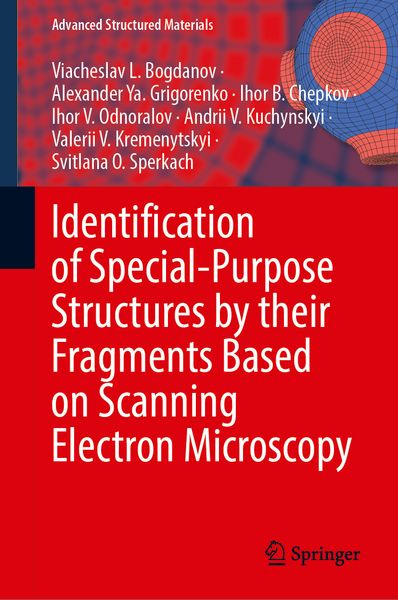
Produktbild: Identification of Special-Purpose Structures by Their Fragments Based on Scanning Electron Microscopy
Band 233 - 10%

Identification of Special-Purpose Structures by Their Fragments Based on Scanning Electron Microscopy

10% sparen

143,99 € UVP 160,49 €

inkl. gesetzl. MwSt., Versandkostenfrei


Beschreibung

This book contains previously classified information on the physical and chemical characteristics of metallic and composite materials used in the production of elements of special-purpose structures, and reveals the set of techniques and tools through which this information was obtained. It sets the...

Beschreibung

This book contains previously classified information on the physical and chemical characteristics of metallic and composite materials used in the production of elements of special-purpose structures, and reveals the set of techniques and tools through which this information was obtained. It sets the foundations for the methodology of systematic automated identification of the special-purpose structures by their fragments.


The main topics are theoretical foundations and practical results of scanning electron microscopy in determining chemical composition, structure, surface topography and frequency characteristics (reflection and absorption coefficients of electromagnetic waves) of fragments of the structures made of both metal alloys and composite materials.


Applied aspects such as the parameters of electromagnetic radiation recommended for effective identification of special-purpose structures made of composite radiation absorbent materials and coatings; development of a scientifically based system for automated identification of the structures by their fragments.


The book is aimed at solving the problem to prevent uncontrolled or "gray" transfer of special-purpose products, technologies and materials of military or dual use by forming a scientifically based automatic identification system (by class and country of origin) of special-purpose products by their fragments, using scanning electron microscopy to determine their chemical composition, structure, surface topography, and frequency characteristics.


The book is useful to a wide range of specialists in the field of materials science, as well as specialists in the defense sector of industry.

Produktdetails

Einband

Gebundene Ausgabe

Erscheinungsdatum

02.06.2025

Abbildungen

XIV, 406 p. 425 illus., 253 illus. in color.

Verlag Springer

Produktdetails

Einband

Gebundene Ausgabe

Erscheinungsdatum

02.06.2025

Abbildungen

XIV, 406 p. 425 illus., 253 illus. in color.

Verlag Springer
Seitenzahl

406

Maße (L/B/H)

24,1/16/2,7 cm

Gewicht

818 g

Sprache

Englisch

ISBN

978-3-031-88826-7

Herstelleradresse

Springer-Verlag GmbH
Europaplatz 3
69115 Heidelberg
DE

Email: ProductSafety@springernature.com

Noch keine Bewertungen vorhanden

Verfassen Sie die erste Bewertung zu diesem Artikel

Helfen Sie anderen Kundinnen und Kunden durch Ihre Meinung.

Kundinnen und Kunden meinen

Bewertungen (0)

  • Produktbild: Identification of Special-Purpose Structures by Their Fragments Based on Scanning Electron Microscopy

  • Analysis of Available Methods of Investigating Metallic and Composite Materials, and the Choice of Optimal Research Methods.- Using Scanning Electron Microscopy for Studying Metal Fragments of Special-Purpose Structures.- Application of Scanning Electron Microscopy for the Study of Fragments of Special-Purpose Structures Made of Composite Materials.- Application of Scanning Electron Microscopy for the Study of Fragments of Radio-Absorbing Composite Materials and Coatings.- Using Scanning Electron Microscopy to Identify Special-Purpose Structures by Their Fragments.