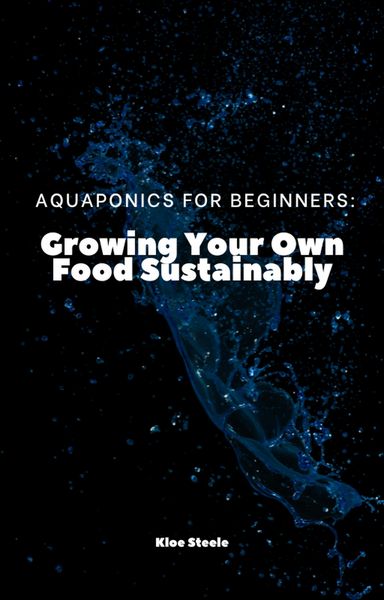
Aquaponics For Beginners: Growing Your Own Food Sustainably
-
- Einzelkauf Download ausgewählt
-
Sprache:Englisch
17,99 €
inkl. gesetzl. MwSt.Beschreibung
Produktdetails
Format
ePUB
Kopierschutz
Ja
Family Sharing
Ja
Text-to-Speech
Ja
Erscheinungsdatum
11.01.2024
Verlag
Kloe SteeleSeitenzahl
(Printausgabe)
Dateigröße
8482 KB
Sprache
Englisch
EAN
9798224802517
An aquaponic system can offer various benefits, both practical and environmental. In the world we live in today, being able to grow your own food is becoming essential. Here are several ways in which an aquaponic system can be advantageous:
Sustainable Food Production:
Aquaponics combines aquaculture (fish farming) and hydroponics (soilless plant cultivation), providing a sustainable method for growing both fish and plants.
Higher Crop Yields:
The nutrient-rich water from fish waste serves as an excellent fertilizer for plants. This nutrient cycling can result in faster and higher crop yields compared to traditional soil-based agriculture.
Water Efficiency:
Aquaponics uses significantly less water than traditional farming because water is recirculated between the fish tanks and grow beds. The system requires only a fraction of the water used in conventional agriculture.
Reduced Environmental Impact:
By minimizing the need for soil, pesticides, and synthetic fertilizers, aquaponics reduces the environmental impact associated with traditional farming practices.
Space Utilization:
Aquaponic systems can be set up vertically or in limited spaces, making them suitable for urban environments or areas with limited land availability.
Year-Round Production:
Indoor aquaponic systems allow for year-round production, unaffected by seasonal changes. This is especially advantageous in regions with harsh climates.
Diverse Crop Options:
Aquaponics supports the growth of a wide variety of crops, including leafy greens, herbs, tomatoes, and certain fruits. This diversity allows for a balanced and nutritious harvest.
Educational Value:
Aquaponics provides an educational platform for understanding ecosystems, biology, and sustainable agriculture. It can be a valuable learning tool for schools, communities, and individuals interested in self-sufficiency.
Reduced Dependency on External Inputs:
Unlike traditional farming, aquaponics minimizes the need for external fertilizers and chemicals. The closed-loop system relies on the natural symbiosis between fish and plants.
Proximity to Fresh Food:
Having an aquaponic system at home or in a community allows for direct access to fresh, organic produce, contributing to a healthier and more self-sufficient lifestyle.
Community Engagement:
Aquaponics can foster community engagement as individuals and groups work together to maintain and optimize the system. Community gardens and shared aquaponic setups can strengthen social bonds.
Profit Potential:
For those interested in selling their produce, aquaponics can be a source of income. Fresh, locally grown, and sustainably produced food can be in demand in many markets.
By combining the benefits of aquaculture and hydroponics, aquaponic systems offer a holistic and environmentally friendly approach to food production.
Noch keine Bewertungen vorhanden
Verfassen Sie die erste Bewertung zu diesem Artikel
Helfen Sie anderen Kundinnen und Kunden durch Ihre Meinung.
Kurze Frage zu unserer Seite
Vielen Dank für dein Feedback
Wir nutzen dein Feedback, um unsere Produktseiten zu verbessern. Bitte habe Verständnis, dass wir dir keine Rückmeldung geben können. Falls du Kontakt mit uns aufnehmen möchtest, kannst du dich aber gerne an unseren Kund*innenservice wenden.
zum Kundenservice