Beschreibung
Produktdetails
Format
Kopierschutz
Nein
Family Sharing
Nein
Text-to-Speech
Nein
Erscheinungsdatum
10.12.2024
Herausgeber
Muhammad Khalil Afzal + weitereVerlag
SpringerSeitenzahl
159 (Printausgabe)
Dateigröße
16243 KB
Sprache
Englisch
EAN
9783031736797
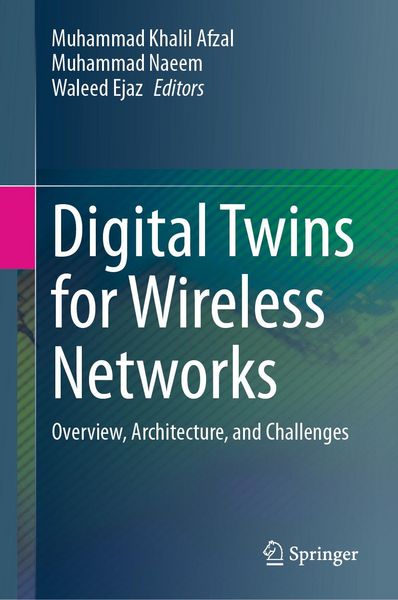
The sixth-generation (6G) communication systems are anticipated to provide network connectivity for an extensive range of use cases in a variety of emerging vertical industries. Consequently, a new set of challenging requirements and more stringent key performance indicators have to be considered, a novel architecture has to be designed, and unique enabling technologies shall be developed in order to fulfil the technical, regulatory, and business demands of the communication service customers.
6G networks are expected to offer even faster speeds, lower latency, and greater capacity compared to 5G networks, which will enable new applications and use cases that are currently not possible. Improved quality of life by enabling various applications (emerging Internet of everything applications) such as healthcare, brain-computer interactions, and extended reality is the main focus of future wireless services. Quality of experience, latency, and reliability are the key requirements of these applications. To meet these diverse requirements there is a need to assist wireless systems with unique technologies. Self-sustaining wireless systems (intelligence, seamless and ubiquitous connectivity) and proactive-online-learning-enables systems (Intelligent analytics) are two trends in future wireless systems. The digital twin technology is one of the most promising technologies that can be instrumental in realizing the technical and business objectives of 6G communication systems.
A digital twin is a virtual imitation of a physical object or system. In a wireless system, a digital twin can be used to model and analyse the behaviour of the network and its components, such as antennas, transmitters, receivers, sensors, and other devices in wireless networks. One of the key benefits of using a digital twin for a wireless system is that it can help network operators and engineers to optimize the performance of the wireless network by simulating different scenarios and configurations. Other benefits include improve efficiency, cost saving, and enhanced security. In 6G networks, a digital twin could be used to simulate and optimize the performance. This could include simulating different network topologies, testing the performance of different network protocols and algorithms, and optimizing the placement of network infrastructure.
To create a digital twin of a wireless network, a detailed model of the network and its components must be developed, based on real-world data and conditions. This model can then be used to simulate the behaviour of the network under different conditions and settings and to visualize the results in real time.
Kundinnen und Kunden meinen
Verfassen Sie die erste Bewertung zu diesem Artikel
Helfen Sie anderen Kund*innen durch Ihre Meinung
Kurze Frage zu unserer Seite
Vielen Dank für dein Feedback
Wir nutzen dein Feedback, um unsere Produktseiten zu verbessern. Bitte habe Verständnis, dass wir dir keine Rückmeldung geben können. Falls du Kontakt mit uns aufnehmen möchtest, kannst du dich aber gerne an unseren Kund*innenservice wenden.
zum Kundenservice