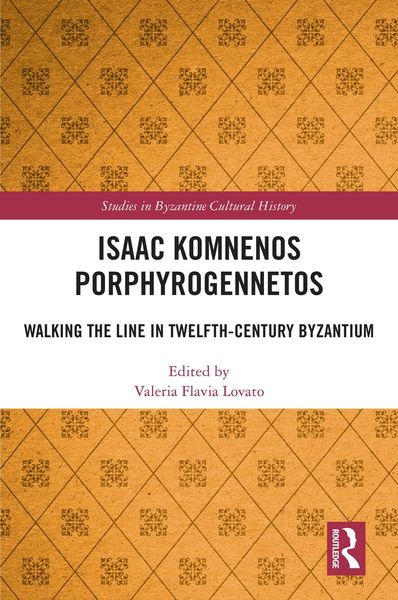
Isaac Komnenos Porphyrogennetos Walking the Line in Twelfth-Century Byzantium
-
- Hardcover
- Taschenbuch
- eBook ausgewählt
-
Form:Einzelkauf Download
-
Sprache:Englisch
-
eBook Format:PDF
- PDF 63,99 € ausgewählt
- ePUB 63,99 €
63,99 €
inkl. gesetzl. MwSt.Beschreibung
Produktdetails
Format
Kopierschutz
Ja
Family Sharing
Nein
Text-to-Speech
Nein
Erscheinungsdatum
01.10.2024
Herausgeber
Valeria Flavia LovatoVerlag
Taylor & Francis eBooksSeitenzahl
272 (Printausgabe)
Auflage
1. Auflage
Sprache
Englisch
EAN
9781040121290
Twelfth-century Byzantium is characterized by a striking artistic vitality and profound socio-political changes. The Constantinopolitan elites, led by the Komnenian dynasty initiated by Alexios I, were the driving force behind the renewed intellectual landscape and power dynamics of the century. Despite the wealth of studies devoted to the Komnenians, the sebastokrator Isaac (1093-after 1152) has received limited attention in modern scholarship.
Yet, Isaac is a fascinating figure at the crossroads of different worlds. He was an intellectual, the author of the first running commentary on the Iliad ever written in Byzantium. He was a patron, sponsoring magnificent buildings and supporting artists in and outside the capital. He was a would-be usurper, attempting to seize the throne several times. He was a shrewd diplomat, forging alliances with Armenian, Turkish, and Latin rulers.
Modern scholars have so far failed to see the interplay between Isaac's multiple personae. Isaac the scholar is rarely brought into conversation with Isaac the usurper, Isaac the patron, or Isaac the world traveller. Bringing together experts from a range of disciplines, this book fills a significant gap in the literature. As the first comprehensive study of one of the protagonists of the Komnenian era, it is essential reading for students of the Byzantine Empire. In addition, the portrait of Isaac presented here provides scholars of pre-modern civilizations with a relevant case study. By exposing the permeability of the theoretical and geographical 'borders' we use to conceptualize the past, Isaac epitomizes the interconnectedness at the heart of the so-called Global Middle Ages.
Noch keine Bewertungen vorhanden
Verfassen Sie die erste Bewertung zu diesem Artikel
Helfen Sie anderen Kundinnen und Kunden durch Ihre Meinung.
Kurze Frage zu unserer Seite
Vielen Dank für dein Feedback
Wir nutzen dein Feedback, um unsere Produktseiten zu verbessern. Bitte habe Verständnis, dass wir dir keine Rückmeldung geben können. Falls du Kontakt mit uns aufnehmen möchtest, kannst du dich aber gerne an unseren Kund*innenservice wenden.
zum Kundenservice