KI-Beratung Beta

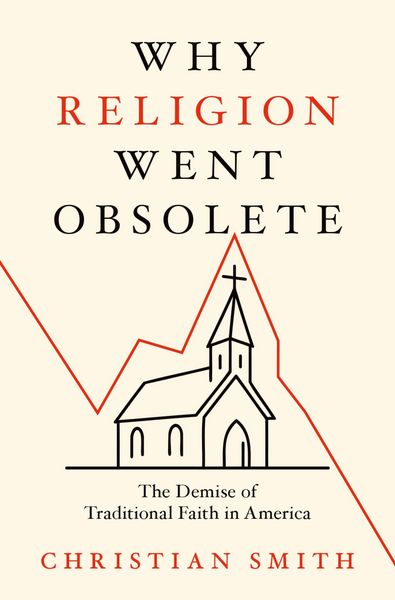
Produktbild: Why Religion Went Obsolete

Why Religion Went Obsolete The Demise of Traditional Faith in America

34,99 €

inkl. gesetzl. MwSt., Versandkostenfrei


Beschreibung

Is traditional American religion doomed? Traditional religion in the United States has suffered huge losses in recent decades. The number of Americans identifying as "not religious" has increased remarkably. Religious affiliation, service attendance, and belief in God have declined. More and more people...

Beschreibung

Is traditional American religion doomed? Traditional religion in the United States has suffered huge losses in recent decades. The number of Americans identifying as "not religious" has increased remarkably. Religious affiliation, service attendance, and belief in God have declined. More and more people claim to be "spiritual but not religious." Religious organizations have been reeling from revelations of sexual and financial scandals and cover-ups. Public trust in "organized religion" has declined significantly. Crucially, these religious losses are concentrated among younger generations. This means that, barring unlikely religious revivals among youth, the losses will continue and accelerate in time, as less-religious younger Americans replace older more-religious ones and increasingly fewer American children are raised by religious parents. All this is clear. But what is less clear is exactly why this is happening. We know a lot more about the fact that traditional American religion has declined than we do about why this is so. Why Religion Went Obsolete aims to change that. Drawing on survey data and hundreds of interviews, Christian Smith offers a sweeping, multifaceted account of why many Americans have lost faith in traditional religion. An array of large-scale social forces-everything from the end of the Cold War to the rise of the internet to shifting ideas about gender and sexuality-came together to render traditional religion culturally obsolete. For growing numbers of Americans, traditional religion no longer seems useful or relevant. Using quantitative empirical measures of big-picture changes over time as well as exploring the larger cultural environment--the cultural "zeitgeist"--Smith explains why this is the case and what it means for the future. Crucially, he argues, it does not mean a strictly secular future. Rather, Americans' spiritual impulses are being channelled in new and interesting directions. Why Religion Went Obsolete is a tour de force from one of our leading chroniclers of religion in America.

Produktdetails

Einband

Gebundene Ausgabe

Erscheinungsdatum

01.07.2025

Verlag Oxford University Press
Seitenzahl

426

Produktdetails

Einband

Gebundene Ausgabe

Erscheinungsdatum

01.07.2025

Verlag Oxford University Press
Seitenzahl

426

Maße (L/B/H)

24/15,8/3,6 cm

Gewicht

786 g

Sprache

Englisch

ISBN

978-0-19-780073-7

Herstelleradresse

Libri GmbH
Europaallee 1
36244 Bad Hersfeld
DE

Email: gpsr@libri.de

Noch keine Bewertungen vorhanden

Verfassen Sie die erste Bewertung zu diesem Artikel

Helfen Sie anderen Kundinnen und Kunden durch Ihre Meinung.

Kundinnen und Kunden meinen

Bewertungen (0)

Weitere Artikel findest du in

Die Leseprobe wird geladen.
  • Produktbild: Why Religion Went Obsolete
    • 0. Introduction
    • I. Setting the Stage
    • 1. What Needs Explaining
    • 2. Religion Is Good When...
    • 3. Some Complex Ways Culture Changes
    • II. Perfect Storms Converging
    • 4. Long-Term Social Trends
    • 5. The Developing Religious Environment
    • 6. The 1990s: Beginning of the End
    • 7. The 2000s: Obsolescence Assured
    • 8. Religious Self-Destructions
    • III. The Aftermath
    • 9. Contours of the Millennial Zeitgeist
    • 10. Through the Exit Door
    • Conclusion
    • Appendix: Social Locations of Not Religious Americans