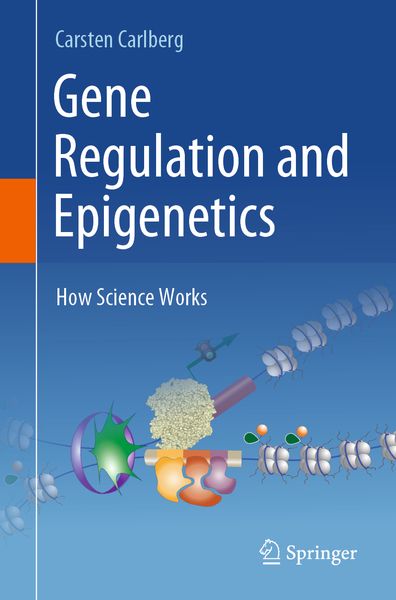
Gene Regulation and Epigenetics How Science Works
-
- Taschenbuch ausgewählt
- eBook
-
Sprache:Englisch
104,99 €
inkl. gesetzl. MwSt.,
Beschreibung
Produktdetails
Einband
Taschenbuch
Erscheinungsdatum
05.10.2024
Abbildungen
XIX, 258 p. 118 illus., 117 illus. in color.
Verlag
SpringerSeitenzahl
258
Maße (L/B/H)
23,5/15,5/1,5 cm
Gewicht
480 g
Auflage
2024
Sprache
Englisch
ISBN
978-3-031-68729-7
This book delves into the fascinating realm of eukaryotic gene regulation. The specific expression of genes shapes the phenotype of cells and tissues. The regulation of gene expression, including up- and downregulation, is a fundamental aspect of nearly all physiological processes, both in health and disease. These dynamic processes respond to various daily challenges, such as dietary changes and infections. Therefore, it is crucial for not only biologists and biochemists but also all students in biomedical disciplines to understand gene regulation concepts. This foundational knowledge will benefit them in their specialized fields. A comprehensive understanding of transcription factors and the mechanisms that alter their activity is a fundamental goal of modern life science research.
Epigenetics refers to the packaging and accessibility of the genome in each of the trillions of cells in our bodies. The prefix “epi” (meaning “upon,” “above,” or “beyond”) indicates that epigenetic processes do not alter the DNA sequence of our genome, adding a layer of information beyond that encoded in our genome. Genomic DNA is wrapped around complexes of histone proteins, helping it fit into a cell nucleus with a diameter of less than 10 μm. This protein-DNA complex is known as chromatin.
The content of this book is linked to the “Molecular Medicine and Genetics” course, which the author has lectured on in various forms since 2002 at the University of Eastern Finland in Kuopio. This book is an updated version of the textbooks “Mechanisms of Gene Regulation” and “Human Epigenomics.” It is divided into 16 chapters. Following two introductory chapters, four chapters explore gene regulation from the perspective of transcription factors, while another four chapters focus on chromatin and non-coding RNA. Three chapters then discuss the impact of epigenetics from a health perspective, and the final three chapters address epigenetics from the perspective of diseases. A glossary in the appendix explains the major specialist terms.
Noch keine Bewertungen vorhanden
Verfassen Sie die erste Bewertung zu diesem Artikel
Helfen Sie anderen Kundinnen und Kunden durch Ihre Meinung.
Kurze Frage zu unserer Seite
Vielen Dank für dein Feedback
Wir nutzen dein Feedback, um unsere Produktseiten zu verbessern. Bitte habe Verständnis, dass wir dir keine Rückmeldung geben können. Falls du Kontakt mit uns aufnehmen möchtest, kannst du dich aber gerne an unseren Kund*innenservice wenden.
zum Kundenservice