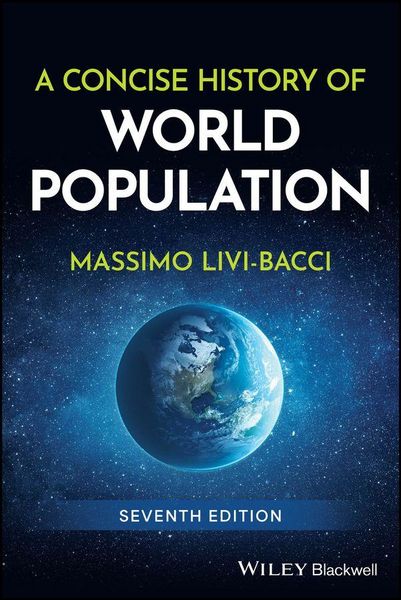
A Concise History of World Population, 7th Edition
-
- Taschenbuch ausgewählt
- eBook
-
Sprache:Englisch
62,99 €
inkl. gesetzl. MwSt.,
Beschreibung
Produktdetails
Einband
Taschenbuch
Erscheinungsdatum
15.12.2025
Verlag
WileySeitenzahl
384
Maße (L/B/H)
23/15,3/2,5 cm
Gewicht
556 g
Auflage
7. Auflage
Sprache
Englisch
ISBN
978-1-394-29574-6
Explores the forces that have shaped global population growth over millennia
Understanding the mechanisms that govern the size and trajectory of the human population is essential to navigating today's most pressing global challenges. A Concise History of World Population, offers a sweeping overview of the key demographic patterns that have defined human history and influenced the world's population structure. Drawing on disciplines as diverse as ecology, history, economics, and epidemiology, this new edition provides students and scholars with an interdisciplinary guide to the major forces-both natural and human-made-that have determined demographic growth, stagnation, or decline across civilizations.
Acclaimed demographer Massimo Livi-Bacci addresses enduring questions about the balance between people, resources, and environment through careful analysis of catastrophic disruptions, technological revolutions, and slowly evolving reproductive behaviors. Reader-friendly chapters provide the intellectual tools needed to understand the shifting dynamics of global population-paying special attention to emerging demographic trends and the sustainability challenges they pose in the twenty-first century. The result is not just a concise history, but a rich framework for thinking critically about the demographic future.
An essential resource for anyone seeking to understand how population and society co-evolve-and the delicate equilibrium they must maintain-A Concise History of World Population:
- Offers a clear and accessible narrative of global population history from pre-agricultural societies to the present
- Highlights demographic mechanisms often overlooked in traditional population studies
- Includes in-depth analysis of catastrophic events and their demographic impact, including pandemics and climate shocks
- Addresses sustainability and future population trends in the context of limited global resources
- Engages with long-term patterns and short-term fluctuations in population-resource equilibrium
Employing an interdisciplinary approach that integrates history, anthropology, ecology, economics, and political science, A Concise History of World Population, Seventh Edition, is perfect for advanced undergraduate and graduate courses such as Population Studies, Demographic History, Global History, and Political Demography within degree programs in Sociology, Political Science, History, and Development Studies.
Noch keine Bewertungen vorhanden
Verfassen Sie die erste Bewertung zu diesem Artikel
Helfen Sie anderen Kundinnen und Kunden durch Ihre Meinung.
Kurze Frage zu unserer Seite
Vielen Dank für dein Feedback
Wir nutzen dein Feedback, um unsere Produktseiten zu verbessern. Bitte habe Verständnis, dass wir dir keine Rückmeldung geben können. Falls du Kontakt mit uns aufnehmen möchtest, kannst du dich aber gerne an unseren Kund*innenservice wenden.
zum Kundenservice