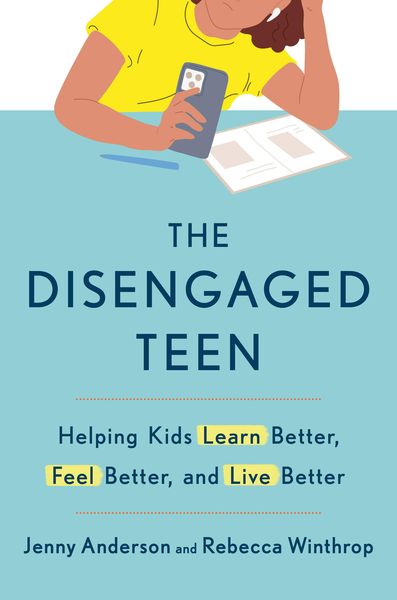
The Disengaged Teen Helping Kids Learn Better, Feel Better, and Live Better
-
- Hardcover ausgewählt
- Taschenbuch
- eBook
-
Sprache:Englisch
26,99 €
inkl. gesetzl. MwSt.,
Lieferung nach Hause
Beschreibung
Produktdetails
Einband
Gebundene Ausgabe
Erscheinungsdatum
07.01.2025
Verlag
Random House N.Y.Seitenzahl
352
Maße (L/B/H)
23,7/16,1/3,3 cm
Gewicht
530 g
Sprache
Englisch
ISBN
978-0-593-72707-2
A powerful toolkit for parents of both checked-out and stressed-out teens that shows exactly what to do (and stop doing) to support their academic and emotional flourishing.
Adolescents are hardwired to explore and grow, and learning is mainly how they do this. But a shocking majority of teens are disengaged from school, simultaneously bored and overwhelmed. This is feeding an alarming teen mental health crisis. As kids get older and more independent, parents often feel powerless to help. But fear not, there are evidence-backed strategies to guide them from disengagement to drive, in and out of school.
For the past five years, award-winning journalist Jenny Anderson and the Brookings Institution’s global education expert Rebecca Winthrop have been investigating why so many children lose their love of learning in adolescence. Now, weaving extensive original research with real-world stories of kids who transformed their relationships with learning, they identify four modes of learning that students use to navigate through the shifting academic demands and social dynamics of middle and high school, shaping the internal narratives about their skills, potential, and identity:
• Resister. When kids resist, they struggle silently with profound feelings of inadequacy or invisibility, which they communicate by ignoring homework, playing sick, skipping class, or acting out.
• Passenger. When kids coast along, consistently doing the bare minimum and complaining that classes are pointless. They need help connecting school to their skills, interests, or learning needs.
• Achiever. When kids show up, do the work, and get consistently high grades, their self-worth can become tied to high performance. Their disengagement is invisible, fueling a fear of failure and putting them at risk for mental health challenges.
• Explorer. When kids are driven by internal curiosity rather than just external expectations, they investigate the questions they care about and persist to achieve their goals.
Understanding your child’s learning modes is vital for nurturing their ability to become Explorers. Anderson and Winthrop outline simple yet counterintuitive parenting strategies for connecting with your child, tailoring your listening and communication styles to their needs, igniting their curiosity, and building self-awareness and emotional regulation.
Noch keine Bewertungen vorhanden
Verfassen Sie die erste Bewertung zu diesem Artikel
Helfen Sie anderen Kundinnen und Kunden durch Ihre Meinung.
Kurze Frage zu unserer Seite
Vielen Dank für dein Feedback
Wir nutzen dein Feedback, um unsere Produktseiten zu verbessern. Bitte habe Verständnis, dass wir dir keine Rückmeldung geben können. Falls du Kontakt mit uns aufnehmen möchtest, kannst du dich aber gerne an unseren Kund*innenservice wenden.
zum Kundenservice