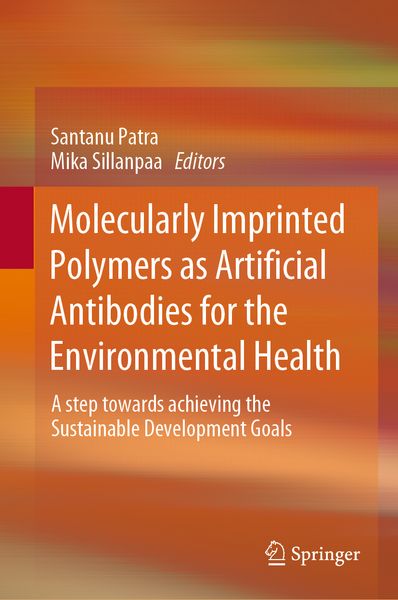
Molecularly Imprinted Polymers as Artificial Antibodies for the Environmental Health A Step Towards Achieving the Sustainable Development Goals
-
- Hardcover ausgewählt
- Taschenbuch
- eBook
-
Sprache:Englisch
213,99 €
UVP
267,49 €
inkl. gesetzl. MwSt.,
Beschreibung
Produktdetails
Einband
Gebundene Ausgabe
Erscheinungsdatum
22.06.2024
Abbildungen
VIII, 412 p. 93 illus., 76 illus. in color.
Herausgeber
Santanu Patra + weitereVerlag
SpringerSeitenzahl
412
Maße (L/B/H)
24,1/16/2,9 cm
Gewicht
793 g
Auflage
2024
Sprache
Englisch
ISBN
978-3-031-58994-2
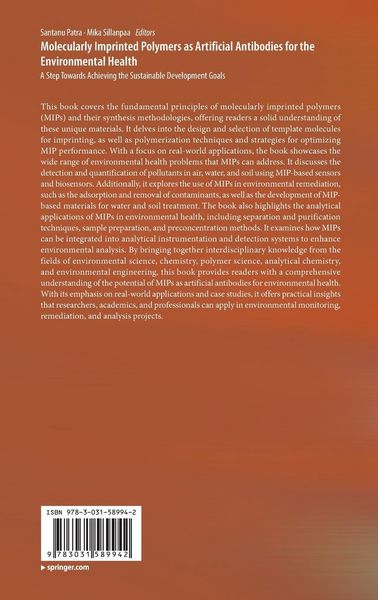
This book covers the fundamental principles of molecularly imprinted polymers (MIPs) and their synthesis methodologies, offering readers a solid understanding of these unique materials. It delves into the design and selection of template molecules for imprinting, as well as polymerization techniques and strategies for optimizing MIP performance. With a focus on real-world applications, the book showcases the wide range of environmental health problems that MIPs can address. It discusses the detection and quantification of pollutants in air, water, and soil using MIP-based sensors and biosensors. Additionally, it explores the use of MIPs in environmental remediation, such as the adsorption and removal of contaminants, as well as the development of MIP-based materials for water and soil treatment. The book also highlights the analytical applications of MIPs in environmental health, including separation and purification techniques, sample preparation, and preconcentration methods. It examines how MIPs can be integrated into analytical instrumentation and detection systems to enhance environmental analysis. By bringing together interdisciplinary knowledge from the fields of environmental science, chemistry, polymer science, analytical chemistry, and environmental engineering, this book provides readers with a comprehensive understanding of the potential of MIPs as artificial antibodies for environmental health. With its emphasis on real-world applications and case studies, it offers practical insights that researchers, academics, and professionals can apply in environmental monitoring, remediation, and analysis projects.
Noch keine Bewertungen vorhanden
Verfassen Sie die erste Bewertung zu diesem Artikel
Helfen Sie anderen Kundinnen und Kunden durch Ihre Meinung.
Kurze Frage zu unserer Seite
Vielen Dank für dein Feedback
Wir nutzen dein Feedback, um unsere Produktseiten zu verbessern. Bitte habe Verständnis, dass wir dir keine Rückmeldung geben können. Falls du Kontakt mit uns aufnehmen möchtest, kannst du dich aber gerne an unseren Kund*innenservice wenden.
zum Kundenservice