Beschreibung
Produktdetails
Einband
Gebundene Ausgabe
Erscheinungsdatum
13.06.2024
Abbildungen
Nearly 200 colour, and black and white images
Verlag
Great Northern Books LtdSeitenzahl
160
Maße (L/B/H)
18,6/25,3/1,7 cm
Gewicht
620 g
Sprache
Englisch
ISBN
978-1-914227-66-0
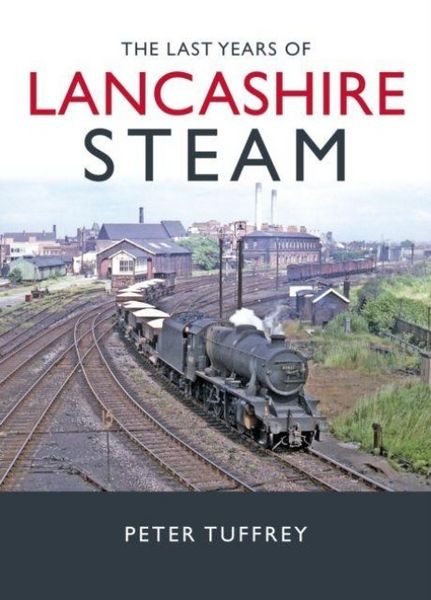
The historic county of Lancashire saw the birth of modern railways when the Liverpool & Manchester Railway opened in 1830. Thereafter, developed a complex network of lines serving passengers, businesses and industries of the area. The 'Beeching Axe' cut several railways in the 1960s and Lancashire was where the British steam era came to an end on 11th August 1968. The Last Years of Lancashire Steam charts the area under British Railways from the early 1950s to 1968. Using nearly 200 excellent colour and black-and-white images, the collection features routes around Liverpool and Manchester, which later split from the county as part of the Local Government Act 1972, as well as places such as: Accrington; Aintree; Bacup; Blackburn, Blackpool; Bolton; Burnley; Bury; Carnforth; Fleetwood; Gorton; Horwich; Lancaster; Lostock Hall; Morecambe; Oldham; Patricroft; Preston; Rochdale; Salford; Southport; Warrington; Widnes; Wigan. Captured at stations, sheds, the lineside and industrial locations, the steam locomotives featured consist of many ex-London Midland & Scottish Railway designs. These include Stanier's Pacifics, 4-6-0s, 2-8-0s and 2-6-4Ts, Fowler's 4-6-0s, 0-6-0s and 0-6-0Ts, Fairburn 2-6-4Ts and Hughes 2-6-0s. Supporting these in the county were BR's new Standard Classes - Britannia Pacific, Class 5 and 4 4-6-0s, Class 2 2-6-0, 9F 2-10-0. Some of the London & North Western and Lancashire & Yorkshire engines survived into the BR period, as did ex-Great Central Railway locomotives on the Cheshire Lines Committee routes. At industrial locations 0-6-0ST and 0-4-0ST engines were favoured. As an interesting and vibrant place for railways, Lancashire attracted many enthusiasts, both local and tourists, in the 1950s and 1960s. A number had their cameras on hand to record a transitional time in British history which has thankfully allowed this collection to be presented.
Noch keine Bewertungen vorhanden
Verfassen Sie die erste Bewertung zu diesem Artikel
Helfen Sie anderen Kundinnen und Kunden durch Ihre Meinung.
Kurze Frage zu unserer Seite
Vielen Dank für dein Feedback
Wir nutzen dein Feedback, um unsere Produktseiten zu verbessern. Bitte habe Verständnis, dass wir dir keine Rückmeldung geben können. Falls du Kontakt mit uns aufnehmen möchtest, kannst du dich aber gerne an unseren Kund*innenservice wenden.
zum Kundenservice