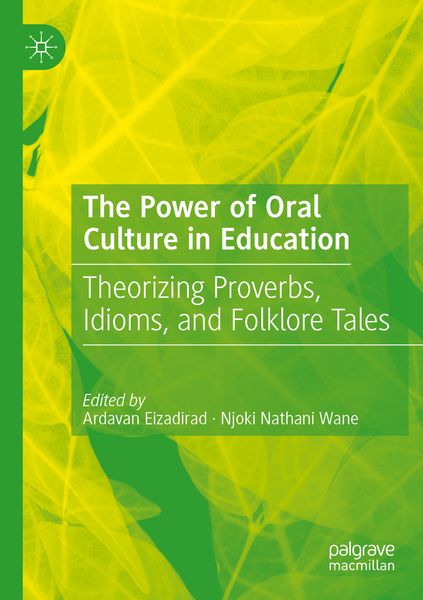
The Power of Oral Culture in Education Theorizing Proverbs, Idioms, and Folklore Tales
-
- Hardcover
- Taschenbuch ausgewählt
- eBook
-
Sprache:Englisch
138,99 €
UVP
160,49 €
inkl. gesetzl. MwSt.,
Lieferung nach Hause
Beschreibung
Produktdetails
Einband
Taschenbuch
Erscheinungsdatum
05.03.2024
Herausgeber
Ardavan Eizadirad + weitereVerlag
SpringerSeitenzahl
305
Maße (L/B/H)
21/14,8/1,8 cm
Gewicht
426 g
Sprache
Englisch
ISBN
978-3-031-18539-7
This volume explores the importance of inter-generational oral culture and stories that transcend time, space, and boundaries transmitted historically from one generation to the next through proverbs, idioms, and folklore tales in different geographical and spatial contexts. These important stories and their embedded life lessons are introduced, explained, and supplemented with pre and post educational activities and lesson plans to be used as learning resources. The centering of o rality as a tool and medium for educating the future generation is a reclamation and reaffirmation of Indigeneity, Indigenous knowledges. and non-hegemonic approaches to support students in a socio-culturally sustaining manner. Through this understanding, this book explores the interconnectedness between culture, traditions, language, and way of life through oral storytelling, sharing, and listening.
Noch keine Bewertungen vorhanden
Verfassen Sie die erste Bewertung zu diesem Artikel
Helfen Sie anderen Kundinnen und Kunden durch Ihre Meinung.
Kurze Frage zu unserer Seite
Vielen Dank für dein Feedback
Wir nutzen dein Feedback, um unsere Produktseiten zu verbessern. Bitte habe Verständnis, dass wir dir keine Rückmeldung geben können. Falls du Kontakt mit uns aufnehmen möchtest, kannst du dich aber gerne an unseren Kund*innenservice wenden.
zum Kundenservice