KI-Beratung Beta

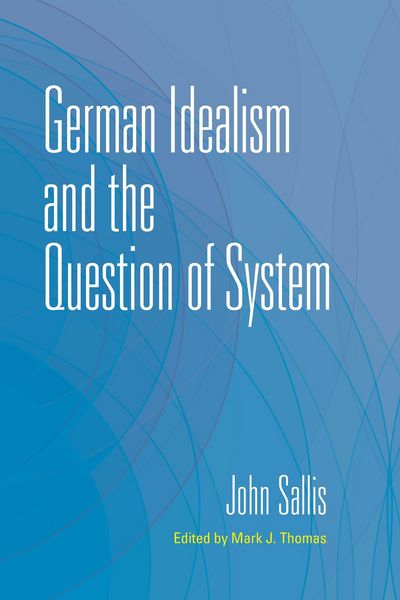
Produktbild: German Idealism and the Question of System

German Idealism and the Question of System

40,99 €

inkl. gesetzl. MwSt.

Beschreibung

This volume in the Collected Writings of John Sallis presents his lecture course on German Idealism, tracing its development from the reception of Kant through the works of Fichte and Schelling. With insightful interpretations of key texts, John Sallis demonstrates the enduring power of post-Kantian...

Beschreibung

This volume in the Collected Writings of John Sallis presents his lecture course on German Idealism, tracing its development from the reception of Kant through the works of Fichte and Schelling. With insightful interpretations of key texts, John Sallis demonstrates the enduring power of post-Kantian thought-especially with respect to freedom, the relation of subject to object, and the role of the imagination. He shows that what underlies the development of German Idealism is a concern with the question of system and the nature of philosophy itself.

The book begins with a treatment of Kant's philosophy and its new beginning. It then discusses the initial reception of Kant's philosophy, showing how criticisms of Kant set the stage for the subsequent development of German Idealism. The central chapters focus on Fichte, first introducing his central philosophical project (the Wissenschaftslehre) and then carefully analyzing its implementation in the 1794 Grundlage. The final chapters treat Schelling's early and middle philosophy, including the 1800 System of Transcendental Idealism and his famous 1809 treatise on freedom.

Beyond its insights into the thought of German Idealism, the book is distinctive for the clarity of Sallis's exposition, his attention to the implications for philosophy today, and the sense of wonder he evokes in his readers. Because of these features, the book will be of interest to general readers as well as specialists in German philosophy.

Produktdetails

Format

ePUB

Kopierschutz

Nein

Family Sharing

Nein

Text-to-Speech

Ja

Produktdetails

Format

ePUB

Format

eBooks im ePUB-Format erlauben eine dynamische Anpassung des Inhalts an die jeweilige Display-Größe des Lesegeräts. Das Format eignet sich daher besonders für das Lesen auf mobilen Geräten, wie z.B. Ihrem tolino, Tablets oder Smartphones.

Kopierschutz

Nein

Kopierschutz

Dieses eBook können Sie uneingeschränkt auf allen Geräten der tolino Familie, allen sonstigen eReadern und am PC lesen. Das eBook ist nicht kopiergeschützt und kann ein personalisiertes Wasserzeichen enthalten. Weitere Hinweise zum Lesen von eBooks mit einem personalisierten Wasserzeichen finden Sie unter Hilfe/Downloads.

Family Sharing

Nein

Family Sharing

Mit Family Sharing können Sie eBooks innerhalb Ihrer Familie (max. sechs Mitglieder im gleichen Haushalt) teilen. Sie entscheiden selbst, welches Buch Sie mit welchem Familienmitglied teilen möchten. Auch das parallele Lesen durch verschiedene Familienmitglieder ist durch Family Sharing möglich. Um eBooks zu teilen oder geteilt zu bekommen, muss jedes Familienmitglied ein Konto bei Thalia oder einem anderen tolino-Buchhändler haben. Weitere Informationen finden Sie unter Hilfe/Family-Sharing.

Text-to-Speech

Ja

Text-to-Speech

Bedeutet Ihnen Stimme mehr als Text? Mit der Funktion Text-to-Speech können Sie sich im tolino webReader und in der aktuellen Thalia – Lesen & Hören App das eBook vorlesen lassen. Weitere Informationen finden Sie unter Hilfe/Text-to-Speech.

Erscheinungsdatum

30.04.2024

Herausgeber Mark J. Thomas
Verlag Indiana University Press
Seitenzahl

184 (Printausgabe)

Dateigröße

2783 KB

Sprache

Englisch

EAN

9780253069733

Barrierefreiheit
  • ARIA-Rollen vorhanden
  • entspricht der Vorgabe WCAG v2.2
  • entspricht der Vorgabe WCAG Level AA

Noch keine Bewertungen vorhanden

Verfassen Sie die erste Bewertung zu diesem Artikel

Helfen Sie anderen Kundinnen und Kunden durch Ihre Meinung.

Kundinnen und Kunden meinen

Bewertungen (0)

Weitere Artikel findest du in

Die Leseprobe wird geladen.
  • Produktbild: German Idealism and the Question of System