KI-Beratung Beta

  • Produktbild: Technology-Enhanced Language Teaching and Learning
  • Produktbild: Technology-Enhanced Language Teaching and Learning

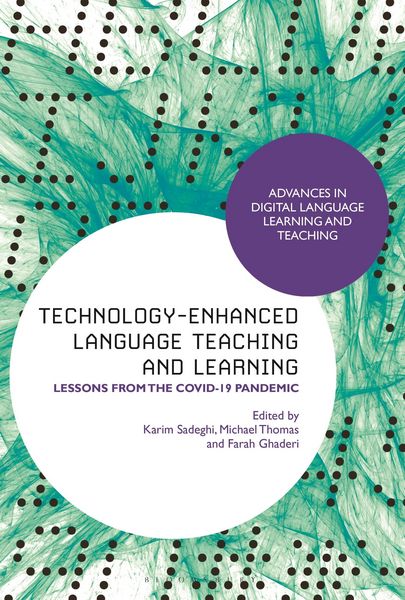
Technology-Enhanced Language Teaching and Learning Lessons from the Covid-19 Pandemic

37,99 €

inkl. gesetzl. MwSt., Versandkostenfrei


Beschreibung

Produktdetails

Einband

Taschenbuch

Erscheinungsdatum

31.10.2024

Abbildungen

10 bw illus

Herausgeber

Karim Sadeghi + weitere

Verlag

Bloomsbury Academic

Seitenzahl

276

Maße (L/B/H)

23,4/15,6/1,5 cm

Gewicht

392 g

Sprache

Englisch

ISBN

978-1-350-27105-0

Beschreibung

Produktdetails

Einband

Taschenbuch

Erscheinungsdatum

31.10.2024

Abbildungen

10 bw illus

Herausgeber

Verlag

Bloomsbury Academic

Seitenzahl

276

Maße (L/B/H)

23,4/15,6/1,5 cm

Gewicht

392 g

Sprache

Englisch

ISBN

978-1-350-27105-0

Herstelleradresse

Libri GmbH
Europaallee 1
36244 Bad Hersfeld
DE

Email: gpsr@libri.de

Noch keine Bewertungen vorhanden

Verfassen Sie die erste Bewertung zu diesem Artikel

Helfen Sie anderen Kundinnen und Kunden durch Ihre Meinung.

Kundinnen und Kunden meinen

Bewertungen (0)

Weitere Artikel findest du in

Die Leseprobe wird geladen.
  • Produktbild: Technology-Enhanced Language Teaching and Learning
  • Produktbild: Technology-Enhanced Language Teaching and Learning
  • List of Figures
    List of Tables
    List of Contributors
    Foreword, Jozef Colpaert (University of Antwerp, the Netherlands)
    Acknowledgments
    1. Introduction: Options and Issues in CALL, Karim Sadeghi (Urmia University, Iran), Michael Thomas (Liverpool John Moores University, UK), Farah Ghaderi (Urmia University, Iran)
    Part I: Emergency CALL at the Time of a Pandemic
    2. A Distracted Learning Pandemic: The Aftermath of Synchronous Online Courses, Larry L. LaFond (Southern Illinois University Edwardsville, USA)
    3. Italian as a Second Language in Schools during the Covid-19 Pandemic: Exploring Teachers' Perspectives, Stefania Ferrari (Eastern Piedmont University, Italy)
    4. From Emergency Transitions to Teaching English Online: Three Cases, Carla Meskill, Wuri Kusumastuti, Dongni Guo (University at Albany, State University of New York, USA)
    Part II: Responses to CALL during the Emergency
    5. Anger, Excitement, Shame, and Pride: Adult English Learners' Attitudes, Perceptions, and Emotional Experiences toward Online Learning, Lisa Cox (Jefferson Community and Technical College, USA) and Juyoung Song (Murray State University, USA)
    6. Study Abroad from Home: Development of L2 Learner Autonomy in an Unprecedented Online Program during the COVID-19 Pandemic, Akihiko Sasaki (Mukogawa Women's University, Japan) and Osamu Takeuchi (Kansai University, Japan)
    7. Technology-Enhanced Out-of-Class Autonomous Language Learning in Times of Covid-19 Pandemic: A Shifting Perspective for Advanced Learners, Simone Torsani (University of Genoa, Italy)
    8. Invisibly Vulnerable: A Corpus-Based Investigation of Media Representations of Australian EAL/D Students in COVID-19 Lockdown, Jessica Morcom and Richard (Jianxin) Liu (Charles Sturt University, Australia)
    Part III: Technology Integration into Teaching at the Time of the Pandemic
    9. Lockdown with La Casa de Papel: From Social Isolation to Social Engagement with Language, Antonie Alm (University of Otago, New Zealand)
    10. Online Learning in the Time of Coronavirus: Paradigmatic Lessons Learned Through Critical Participatory Action Research, John I. Liontas (University of South Florida, USA)
    11. Technology-Mediated Writing Tasks in the Online English Classroom: Focus on Form via Synchronous Videoconferencing, Valentina Morgana Valentina Morgana (Università Cattolica del Sacro Cuore, Milan, Italy) and Michael Thomas (Liverpool John Moores University, UK)
    Part IV: E-Assessment during the COVID-19 Pandemic
    12. Formative Assessment in Synchronous Language Teaching in Higher Education during the COVID-19 Pandemic, María Luisa Carrió-Pastor (Universidad Politécnica de Valencia, Spain)
    13. E-Portfolios as a Technology-Enabled Assessment: Surviving or Accommodating Covid-19,
    Ricky Lam, Marcus Lau and Joanna Wong (Hong Kong Baptist University, Hong Kong)
    14. Keeping Them Honest: Assessing Learning in Online and Digital Contexts, Peter Davidson (Zayed University, UAE) and Christine Coombe (Dubai Men's College, Higher Colleges of Technology, UAE)
    Part V: Beyond Emergency CALL, Post COVID-19 Lessons
    15. Moving Back into the Classroom While Moving Beyond Current Paradigms: Lessons for Post-Covid Language Education, Melinda Dooly (Universitat Autònoma de Barcelona, Spain)
    16. Deconstructing the 'Normalisation' of CALL: Digital Inequalities, Decolonisation and Post-Pandemic Futures, Michael Thomas (Liverpool John Moores University, UK)
    17. Conclusion: Learning the Lessons from the Pandemic, Michael Thomas (Liverpool John Moores University, UK), Karim Sadeghi (Urmia University, Iran), and Farah Ghaderi (Urmia University, Iran)
    Index