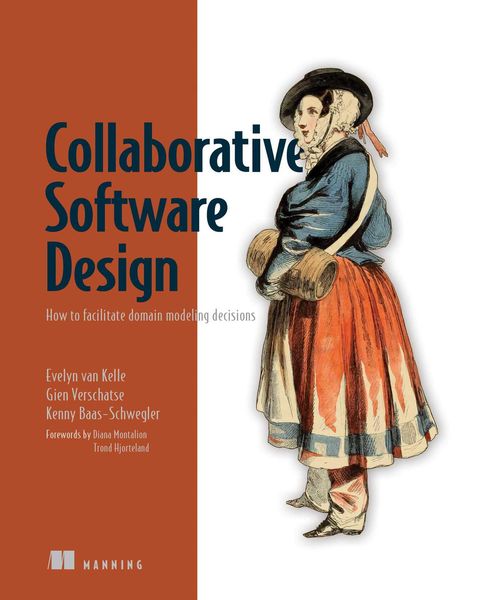
Collaborative Software Design
59,99 €
inkl. gesetzl. MwSt.,
Lieferung nach Hause
Beschreibung
Produktdetails
Einband
Gebundene Ausgabe
Erscheinungsdatum
28.11.2024
Verlag
Pearson AcademicSeitenzahl
416
Maße (L/B/H)
23,1/18,7/2,4 cm
Gewicht
762 g
Sprache
Englisch
ISBN
978-1-63343-925-2
Emerging practices, collaboration tools, and effective techniques for incorporating your key stakeholders into the software design process.
Don’t spend months building the wrong software! Collaborative Software Design is a unique and practical guide for effectively involving all stakeholders in the design of software to ensure sustainable design decisions.
In Collaborative Software Design you’ll learn how to:
• Prepare and facilitate collaborative modeling sessions with tools such as Business Model Canvas, Event Storming, Domain Storytelling, Example Mapping, and Wardley Mapping
• Pick and apply heuristics for modeling software design
• Techniques for getting all needed knowledge from the group
• The influence of ranking
• The impact and opportunities of cognitive bias
• Resistance and conflict resolution
• Practices for following up after a modeling session
• Document the session and report to stakeholders
Collaborative Software Design combines its authors’ deep experience in behavioral science, decision-making theory and software architecture into an essential guide for making collaborative design decisions. You’ll learn to use process visualizations, engaging sessions, and social dynamic management to ensure every stakeholder is contributing their vital insights to a project. Best of all, the skills you’ll learn make it easy for software teams to develop software directly with their stakeholders—no need to rely on a centralized or top-down design.
Forewords by Diana Montalion and Trond Hjorteland.
Purchase of the print book includes a free eBook in PDF and ePub formats from Manning Publications.
About the technology
Delivering high-quality software requires the active participation of all stakeholders in the design process. But how do you align individuals with different roles, perspectives, and priorities to create sustainable software? Collaborative Software Design presents proven strategies that you can use to foster productive decision making, resolve conflicts and uncertainties, and elevate the quality of design outcomes.
About the book
In Collaborative Software Design, you’ll explore principles, techniques, and tools to promote safe communication as you discover business problems, formalize requirements, and implement a software project. It highlights established collaborative modeling tools like Event Storming, Example Mapping, Wardley Mapping, and Domain Storytelling, and introduces unique approaches for managing cognitive biases, conflict, and organizational hierarchy. Whether you’re a business stakeholder, a technical contributor, or a professional facilitator, you’ll learn how to hear and benefit from every voice in the room.
What's inside
• Prepare and lead collaborative modeling sessions
• Turn conflict into innovation
• Make sustainable software design decisions
• Improve software design from a sociotechnical perspective
About the reader
For anyone involved in the software development process.
About the author
Evelyn van Kelle, Gien Verschatse, and Kenny Baas-Schwegler are internationally recognized experts in collaborative modeling and organizational decision making for sociotechnical systems.
The technical editor on this book was Charlie Schafer.
Table of Contents
1 The need for collaborative software design
2 What is collaborative modeling?
3 Using collaborative modeling for design and architecture
4 The ingredients of collaborative modeling
5 Facilitating collaborative modeling
6 The influence of ranking
7 The effect and opportunities of cognitive bias
8 Resistance and conflict resolution
9 Making sustainable design decisions
10 Managing unsolvable problems
11 Communicating and documenting decisions
12 Collaborative modeling beyond software design
Appendix A
Don’t spend months building the wrong software! Collaborative Software Design is a unique and practical guide for effectively involving all stakeholders in the design of software to ensure sustainable design decisions.
In Collaborative Software Design you’ll learn how to:
• Prepare and facilitate collaborative modeling sessions with tools such as Business Model Canvas, Event Storming, Domain Storytelling, Example Mapping, and Wardley Mapping
• Pick and apply heuristics for modeling software design
• Techniques for getting all needed knowledge from the group
• The influence of ranking
• The impact and opportunities of cognitive bias
• Resistance and conflict resolution
• Practices for following up after a modeling session
• Document the session and report to stakeholders
Collaborative Software Design combines its authors’ deep experience in behavioral science, decision-making theory and software architecture into an essential guide for making collaborative design decisions. You’ll learn to use process visualizations, engaging sessions, and social dynamic management to ensure every stakeholder is contributing their vital insights to a project. Best of all, the skills you’ll learn make it easy for software teams to develop software directly with their stakeholders—no need to rely on a centralized or top-down design.
Forewords by Diana Montalion and Trond Hjorteland.
Purchase of the print book includes a free eBook in PDF and ePub formats from Manning Publications.
About the technology
Delivering high-quality software requires the active participation of all stakeholders in the design process. But how do you align individuals with different roles, perspectives, and priorities to create sustainable software? Collaborative Software Design presents proven strategies that you can use to foster productive decision making, resolve conflicts and uncertainties, and elevate the quality of design outcomes.
About the book
In Collaborative Software Design, you’ll explore principles, techniques, and tools to promote safe communication as you discover business problems, formalize requirements, and implement a software project. It highlights established collaborative modeling tools like Event Storming, Example Mapping, Wardley Mapping, and Domain Storytelling, and introduces unique approaches for managing cognitive biases, conflict, and organizational hierarchy. Whether you’re a business stakeholder, a technical contributor, or a professional facilitator, you’ll learn how to hear and benefit from every voice in the room.
What's inside
• Prepare and lead collaborative modeling sessions
• Turn conflict into innovation
• Make sustainable software design decisions
• Improve software design from a sociotechnical perspective
About the reader
For anyone involved in the software development process.
About the author
Evelyn van Kelle, Gien Verschatse, and Kenny Baas-Schwegler are internationally recognized experts in collaborative modeling and organizational decision making for sociotechnical systems.
The technical editor on this book was Charlie Schafer.
Table of Contents
1 The need for collaborative software design
2 What is collaborative modeling?
3 Using collaborative modeling for design and architecture
4 The ingredients of collaborative modeling
5 Facilitating collaborative modeling
6 The influence of ranking
7 The effect and opportunities of cognitive bias
8 Resistance and conflict resolution
9 Making sustainable design decisions
10 Managing unsolvable problems
11 Communicating and documenting decisions
12 Collaborative modeling beyond software design
Appendix A
Kundinnen und Kunden meinen
Verfassen Sie die erste Bewertung zu diesem Artikel
Helfen Sie anderen Kund*innen durch Ihre Meinung
Kurze Frage zu unserer Seite
Vielen Dank für dein Feedback
Wir nutzen dein Feedback, um unsere Produktseiten zu verbessern. Bitte habe Verständnis, dass wir dir keine Rückmeldung geben können. Falls du Kontakt mit uns aufnehmen möchtest, kannst du dich aber gerne an unseren Kund*innenservice wenden.
zum Kundenservice