Beschreibung
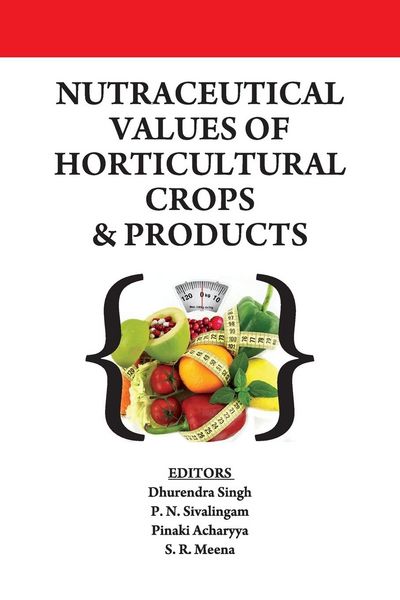
The motivation to conduct further research in the field of plant-based diets and their potential to address public health issues has been driven by the growing interest of government, industry, and research institutes. Marker Assisted Selection has emerged as a promising approach in plant breeding, as it holds the potential to expedite the development of crop varieties with desirable characteristics. Significant progress has been made in mapping and tagging numerous genes that are important for horticultural purposes using morphological, biochemical, and molecular markers. This foundation serves as the basis for marker-assisted selection in crops. These methods offer great potential for improving the efficiency of conventional plant breeding by selecting on molecular markers linked to traits of interest rather than directly on the trait itself. Plant cell and callus culture systems have emerged as a promising area of bio-processing and production of useful metabolites with nutraceutical importance. These methods have been advanced through the use of bioreactor technology. Research and development are critical to the rapidly evolving field of functional foods and nutraceuticals. Producers are seeking new opportunities to increase farm income, processors are looking for value-added food products, health ingredients, and new uses for agricultural production, by-products, and new products for new and existing markets. Consumers worldwide are seeking increased assurance of the safety and quality of the food system and enhanced environmental performance of the agriculture and agri-food sector. Provinces and communities are seeking economic development opportunities in the field of horticulture. This book will be an invaluable resource for better understanding the utilization of crop diversity, underutilized crops, and their residues, as well as the improvement of post-harvest technology and the development of new functional foods with greater use of bioactive compounds and other quality traits.
Portrait
Dr. Dhurendra Singh obtained Ph.D. in Horticulture from Rajasthan Agricultural University, Bikaner in 1994.
Dr. Singh has more than 20 years experience in the advanced area of academic assignments, multidisciplinary, multi institutional, inter-institutional & multi location research, extension and resource generation programmes. He has worked with Professor M G Nair at Bioactive Natural Products and Phytoceuticals (BNPP) laboratory, Michigan State University, USA for investigations on improvement of quality of horticultural crops through marker assisted selection with reference to bioactive compounds/beneficial phytoceuticals in fruit crops for health-beneficial qualities. Technical aspects of utilization of biodiversity with reference to bioactive compound and identification of pre breeding lines and source of gene for marker assisted breeding was also being explored by him. He has also been successful in establishing functional food quality of pods (Sangri) of Khejri (Prosopis cineraria)- An important plant of arid zone. Presently he is Principal Scientist and Head, Division of Crop Improvement at ICAR-Central Institute for Arid Horticulture, Bikaner. He has been recipient of fellowships of several societies and associated as member and reviewer of several Journals of repute.
Dr. P.N. Sivalingam obtained his B.Sc (Ag) from TNAU, Coimbatore, M.Sc (Ag) from GBPUA&T, Pantnagar and Ph.D. from IARI, New Delhi. Presently, he is working as Senior Scientist (Agricultural Biotechnology) at ICAR- National Institute of Biotic Stress Management, Raipur. Earlier he was working as Scientist (Plant Biotechnology) at ICAR-Central Institute for Arid Horticulture, Bikaner for eight years. He has made significant contributions for the last 10 years in the field of Molecular characterization of plant pathogens affecting yield and quality of tomato, chilli and potato, Characterization of genetic resources of bioactive compounds rich under-utilized arid horticultural crops such as khejri, ber, lasoda etc. and molecular understanding of abiotic stress in Ziziphus nummularia. He was a visiting scientist to Samuel Roberts Noble Foundation, Ardmore, Oklahoma, USA to understand complex nature of gene expression. He has received six national awards from IARI, ICAR, New Delhi, NASI, Allahabad and Professional Societies. He had published more than 25 research papers in national and international peer reviewed journals. He is a member of National Academy of Science, India and reviewer of more than five international journals and three national journals.
Dr. Pinaki Acharyya obtained his graduation, postgraduate and Doctoral degree in Horticulture from Institute of Agricultural Sciences, Banaras Hindu University. Presently, he is serving as Head and Associate Professor in the Department of Horticulture, University of Calcutta. Prior to this he served as Senior Scientist at ICAR-Central Institute for Arid Horticulture. He has more than 16 years of teaching and research experience. He has so far guided five Ph.D and twenty five M.Sc.(Ag.) students in Horticulture, has registered several Gene/ Marker sequences in Genebank, NCBI, USA, published popular articles and has more than 60 publications in national and international peer reviewed journals, authored ten book chapters and edited one book. Dr. Acharyya is a member of a number of professional bodies and societies and reviewer of several national and international journals.
Dr. S.R. Meena obtained Ph.D. in Agricultural Extension from IARI, Pusa, New Delhi. Presently, he is working as Senior Scientist (Agricultural Extension) at ICAR-Central Institute for Arid Horticulture, Bikaner. He has made significant contributions for the last 17 years in the field of transfer of technology and development of extension methodology for dissemination of scaled up technologies related