Gutscheinbedingungen

**Gültig vom 24.08.2026 bis 26.08.2026 | Gültig für nicht preisgebundene fremdsprachige Bücher | Einzelne Artikel können ausgeschlossen sein | Online auf www.bücher.de einlösbar | Click & Collect nur mit Online-Zahlung (Paypal/Kreditkarte) vorab | Nicht kombinierbar mit anderen Gutscheinen oder Preisaktionen | Nur einmal pro Einkauf einlösbar | Gutschein wird auf max. 500€ Bestellwert angerechnet | Keine Barauszahlung | Nicht gültig für Versandkosten und Services

Produktbild: Anchor Technology in Concrete and Masonry for Practitioners and Engineers

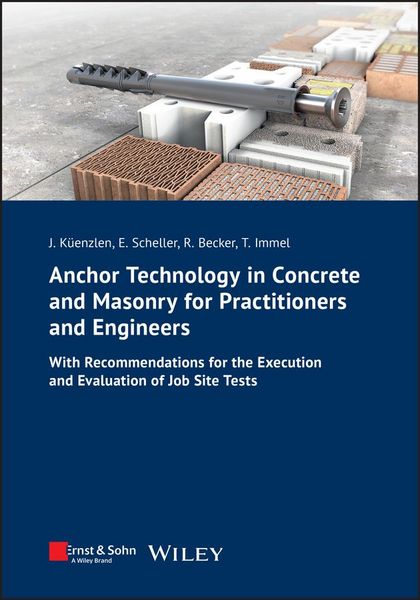
Anchor Technology in Concrete and Masonry for Practitioners and Engineers With Recommendations for the Execution and Evaluation of Job Site Tests

Aus der Reihe Bauingenieur-Praxis

89,00 €

inkl. gesetzl. MwSt., Versandkostenfrei


Beschreibung

Produktdetails

Einband

Taschenbuch

Erscheinungsdatum

04.12.2024

Abbildungen

254

Verlag

Ernst & Sohn

Seitenzahl

320

Maße (L/B/H)

24,1/16,8/1,7 cm

Gewicht

666 g

Auflage

1. Auflage

Sprache

Englisch

ISBN

978-3-433-03205-3

Beschreibung

Produktdetails

Einband

Taschenbuch

Erscheinungsdatum

04.12.2024

Abbildungen

254

Verlag

Ernst & Sohn

Seitenzahl

320

Maße (L/B/H)

24,1/16,8/1,7 cm

Gewicht

666 g

Auflage

1. Auflage

Sprache

Englisch

ISBN

978-3-433-03205-3

Herstelleradresse

Ernst W. + Sohn Verlag
Rotherstraße 21
10245 Berlin
DE

Email: info@ernst-und-sohn.de

Noch keine Bewertungen vorhanden

Verfassen Sie die erste Bewertung zu diesem Artikel

Helfen Sie anderen Kundinnen und Kunden durch Ihre Meinung.

Kundinnen und Kunden meinen

Bewertungen (0)

  • Produktbild: Anchor Technology in Concrete and Masonry for Practitioners and Engineers

  • 1 Introduction


    1.1 General


    1.2 By way of an introduction: a real conversation about anchors in a private situation


    1.3 Anchor technology for professionals


    2 European regulations


    2.1 General


    2.2 European Technical Assessment (ETA)


    2.3 CE marking


    2.4 The most important regultions referred to in this book


    3 Base material - In what material do I want to fasten my anchors?


    3.1 General


    3.2 Identifying the base material on the construction site


    3.2.1 Identifying the base material by means of construction documents


    3.2.2 Identifying the base material without construction documents


    4 Base materials in detail


    4.1 Concrete


    4.1.1 General


    4.1.2 Cracked (reinforced) concrete


    4.1.3 Uncracked concrete


    4.1.4 Types of concrete


    4.1.5 Compressive strength classes


    4.2 Masonry


    4.2.1 General


    4.2.2 Solid and vertically perforated clay bricks


    4.2.3 Solid and perforated calcium silicate units


    4.2.4 Solid and hollow lightweight concrete blocks


    4.2.5 Aerated concrete blocks


    4.2.6 Autoclaved aerated concrete: wall, floor and roof panels


    4.2.7 Solid and hollow masonry units made from normal-weight concrete


    4.2.8 Natural stone


    4.2.9 Base materials subsequently insulated


    5 Environment - Which external influences affect my fastenings?


    5.1 General


    5.2 Temperature


    5.3 Freezing Temperatures


    5.4 Fire


    5.5 Corrosion


    5.5.1 Advice in the approvals for anchors


    5.5.2 Advice for anchoring fastenings in concrete according to EN 1992-4


    5.5.3 Additional helpful information


    6 Member dimensions - Where can I install my anchor?


    6.1 Definitions of important terms and dimensions in anchor technology


    6.2 (Minimum) member thickness


    6.2.1 Concrete


    6.2.2 Masonry


    6.3 Edge distance c


    6.3.1 Concrete


    6.3.2 Masonry


    6.4 Spacing s


    6.4.1 Concrete


    6.4.2 Masonry


    6.5 Regulations for approved plastic anchors


    7 Fixtures and anchor plates - What do I want to fasten?


    7.1 General


    7.2 The theory behind fixtures and anchor plates


    7.3 The support of the fixture


    7.3.1 General


    7.3.2 Fixture with statically determinate supports - single fastening


    7.3.3 Fixture with statically indeterminate supports - multiple fastenings


    7.3.4 Summary with one example


    7.4 Clearance holes in fixtures


    7.5 Types of installation


    7.5.1 General


    7.5.2 Pre-positioned installation


    7.5.3 In-place installation


    7.6 Hole patterns in fixtures (arrangement of fastenings)


    7.7 Fixtures and anchor plates in practice


    8 Actions - Which loads act on my fastening?


    8.1 General


    8.2 Loading directions (nature of the loading)


    8.3 Action effects (types of load)


    8.4 Design is the job of the planning team!


    8.5 An example to illustrate action effects


    8.5.1 General


    8.5.2 Structural system


    8.5.3 Self-weight - dead load


    8.5.4 Imposed loads


    8.5.5 Actions on the anchors due to dead and imposed loads


    8.5.6 Dynamic loads


    8.5.7 Summary


    9 Anchor systems


    9.1 Introduction


    9.2 Anchor systems for anchorages in concrete


    9.2.1 Metal anchors


    9.2.2 Bonded anchors


    9.3 Anchor systems for anchorages in concrete and masonry - plastic anchors


    9.4 Anchor systems for anchorages in masonry - injection systems


    10 Design


    11 Installation


    11.1 Installation technicians - qualified personnel


    11.2 Drill bits - drilling - cleaning out drilled holes


    11.2.1 General


    11.2.2 Position of the hole


    11.2.3 Drilling methods


    11.2.4 Cleaning the drilled hole


    11.2.5 Aborted holes


    11.3 Temperature - processing time - curing time


    12 Typical mistakes and what we can do differently or better


    12.1 General


    12.2 Environment - corrosion


    12.3 Member dimensions - edge distances and spacings


    12.4 Anchor systems


    12.5 Installation of anchors


    13 Summary - How do I solve my fastening task?


    14 Determining the resistances of plastic anchors and metal injection anchors by means of job site tests


    14.1 Introduction


    14.2 Principles for job site tests involving masonry base materials


    14.3 Responsibilities


    14.4 Technical Rule 'Execution and evaluation of job site tests of plastic anchors for use in concrete and masonry with ETA'


    14.5 Practical example 1: Tension tests on plastic anchors (tests to failure) - fastening of a façade support structure


    14.6 Technical Rule 'Execution and evaluation of job site tests of injection anchor systems for use in masonry with ETA'


    14.7 Practical example 2: Tension tests for injection anchors (tests to failure) - fastening a balustrade for a French balcony


    14.8 Summary


    Appendix 1 Execution and evaluation of job site tests of plastic anchors for use in concrete and masonry with ETA in accordance with EAD 330284-00-0604 or ETAG 020


    Appendix 2 Execution and evaluation of job site tests of injection anchor systems for use in masonry with ETA in accordance with EAD 330076-00-0604 or ETAG 029