KI-Beratung Beta

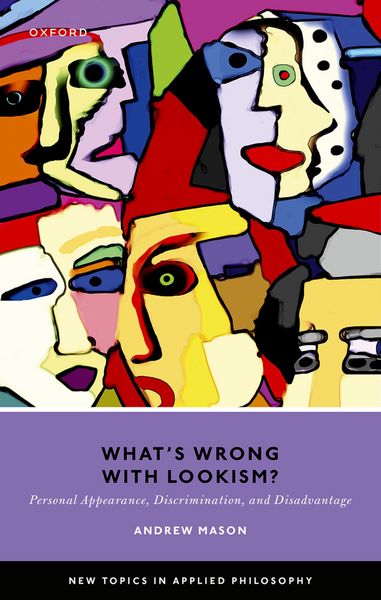
Produktbild: What's Wrong with Lookism?

What's Wrong with Lookism? Personal Appearance, Discrimination, and Disadvantage

63,99 €

inkl. gesetzl. MwSt.

Beschreibung

People are treated differently as a result of their looks. But when is appearance discrimination, or "lookism" as it is often called, morally objectionable? This issue is important for at least two reasons. First, the benefits that flow to people who are regarded as visually attractive are sizeable and...

Beschreibung

People are treated differently as a result of their looks. But when is appearance discrimination, or "lookism" as it is often called, morally objectionable? This issue is important for at least two reasons. First, the benefits that flow to people who are regarded as visually attractive are sizeable and are enjoyed in a number of contexts, including employment, personal relationships, education, politics, and the criminal justice system. Second, appearance discrimination is of moral interest not only in its own right, but also in terms of its connection to other forms of discrimination. Appearance norms, that is, norms concerning how we should look, often place greater burdens on disadvantaged groups. As a result, discrimination on the basis of appearance, when it rewards people who conform to these norms, may involve, or interact with, the effects of, wrongful discrimination on the basis of features other than appearance, in a way that aggravates existing injustices. What's Wrong with Lookism? examines the morality of appearance discrimination in three contexts: employment decisions; the choice of friends or romantic partners; and the everyday practice of judging and commenting upon people's looks. Andrew Mason develops a pluralist theory of what makes discrimination wrong that identifies three wrong-making features, namely, disrespect, deliberative unfairness, and contributing to unjust consequences, and demonstrates how the presence of one or more of these features in each of these contexts problematises the lookism that takes place in it.

Produktdetails

Format

PDF

Kopierschutz

Ja

Family Sharing

Nein

Text-to-Speech

Nein

Produktdetails

Format

PDF

Format

eBooks im PDF-Format haben eine festgelegte Seitengröße und eignen sich daher nur bedingt zum Lesen auf einem tolino eReader oder Smartphone. Für den vollen Lesegenuss empfehlen wir Ihnen bei PDF-eBooks die Verwendung eines Tablets oder Computers.

Kopierschutz

Ja

Kopierschutz

Zum Lesen dieses eBooks auf Geräten der tolino Familie sowie auf sonstigen eReadern und am PC benötigen Sie eine ByteBook-ID. Weitere Hinweise zum Lesen von kopiergeschützten eBooks finden Sie unter Hilfe/Downloads.

Family Sharing

Nein

Family Sharing

Mit Family Sharing können Sie eBooks innerhalb Ihrer Familie (max. sechs Mitglieder im gleichen Haushalt) teilen. Sie entscheiden selbst, welches Buch Sie mit welchem Familienmitglied teilen möchten. Auch das parallele Lesen durch verschiedene Familienmitglieder ist durch Family Sharing möglich. Um eBooks zu teilen oder geteilt zu bekommen, muss jedes Familienmitglied ein Konto bei Thalia oder einem anderen tolino-Buchhändler haben. Weitere Informationen finden Sie unter Hilfe/Family-Sharing.

Text-to-Speech

Nein

Text-to-Speech

Bedeutet Ihnen Stimme mehr als Text? Mit der Funktion Text-to-Speech können Sie sich im tolino webReader und in der aktuellen Thalia – Lesen & Hören App das eBook vorlesen lassen. Weitere Informationen finden Sie unter Hilfe/Text-to-Speech.

Erscheinungsdatum

12.07.2023

Verlag Oxford University Press
Seitenzahl

272 (Printausgabe)

Dateigröße

1307 KB

Sprache

Englisch

EAN

9780192675941

Barrierefreiheit
  • keine Information zur Barrierefreiheit bekannt

Noch keine Bewertungen vorhanden

Verfassen Sie die erste Bewertung zu diesem Artikel

Helfen Sie anderen Kundinnen und Kunden durch Ihre Meinung.

Kundinnen und Kunden meinen

Bewertungen (0)

Weitere Artikel findest du in

Die Leseprobe wird geladen.
  • Produktbild: What's Wrong with Lookism?